For some great amazing reason there are many of us that walk around with our water issues in our head. All day long. In our dreams. It’s what we think about when we are driving the car and when we wake up in the morning. It’s what has brought us together. The overwhelming need to fix this.
Way before we were doing this Mary Barley was on the case.
Fairy Godmothers are magically-gifted women who monitor magical forces across the kingdoms. Whenever events are right for a fairy tale to recur, the relevant Fairy Godmother steps in to make sure that the tale in question runs its course with as few fatalities as possible.
Mary Barley has been watching out for our clean water for a long time. She has fought the dragons. She has the vision of the Everglades, of clean water, of no more discharges.
Having served as Chairperson of The Everglades Foundation since her husband’s untimely death in 1995 in a plane crash while on Everglades business, Mary Barley currently serves as vice chairperson of the Foundation. She is also President of The Everglades Trust, and serves on the Boards of the National Coalition for Marine Conservation, World Wildlife Fund Marine Leadership Committee, Atlantic Salmon Federation (U.S.), and the Sierra Club Foundation.
In her fight for Everglades restoration and taxpayer equity, Mary has crisscrossed not only the State of Florida but the nation, to bring the plight of America’s Everglades to the public’s attention.
As one of the nation’s preeminent Everglades conservationists, Mary spearheaded the passage of two Everglades protection amendments to the Florida Constitution.
For more than a decade, Barley has waged a campaign to save the Everglades, one unprecedented for engaging all the region’s power players (some of them grudgingly, to be sure) to work for real change across a collapsing ecosystem. A self-described “environmental rabblerouser,” Barley is a millionaire widow who took up her husband’s cause after his death in a 1995 plane crash that occurred as he was on his way to meet with the US Army Corps of Engineers about the Everglades.
The next year Barley faced off with the region’s potent sugar industry herself, helping win a state constitutional amendment requiring polluters to bear the brunt of cleanup costs. In 2000, she was there when President Clinton committed to an $8 billion restoration effort.
The Everglades Foundation
The Everglades Foundation was formed by a group of outdoor enthusiasts, environmentalists and residents of Florida who were concerned over the decline of the Everglades and the resulting damage in the nearby natural and protected areas such as Florida Bay. The original founding members, George Barley, a wealthy Orlando developer, and billionaire Paul Tudor Jones II, spearheaded the organization’s growth, and shared the same concern over the steady decline of the environmental balance in this unique and delicate ecosystem, due to poor water management and pollution.[2]
The Foundation was created and founded in 1993, and is currently operated as a not-for-profit 501(c)(3) charitable organization. This organization is supported by noteworthy performers, professional athletes, and business persons. Included in the list is Jimmy Buffett and golfer Jack Nicklaus.
George Barely unfortunately died in an airplane crash on the way to meet to acoe.
MIAMI, June 24— George McKim Barley Jr., a real estate developer and leader of efforts to preserve the Everglades, died on Friday morning in a plane crash near his home in Orlando, Fla. He was 61.
Mr. Barley, Florida’s leading opponent of price supports for the sugar industry, was on his way to Jacksonville to meet with the Army Corps of Engineers to discuss the restoration of the Everglades when his chartered twin-engine Beechcraft 58 went down. The Federal Aviation Administration said engine failure might have caused the crash.
Mr. Barley was widely known for his statewide campaign to levy a penny-a-pound tax on Florida sugar to help pay for pollution damage to the Everglades.
Mr. Barley, who was born in Jacksonville and graduated from Harvard University in 1956, founded George Barley Inc., a real estate brokerage and consulting company, in 1961.
Mr. Barley is survived by his wife, Mary, and three daughters, Lauren, Catherine and Mary, also of Orlando, and five grandchildren.
Mary Barley, president of the Trust whose husband, George was a founding member of the Everglades Foundation, said in a statement: “As toxic algae and pollution threaten our waterways, we draw attention to the hypocrisy of politicians who claim to care about our environment, but instead protect the corporate interests, like Big Sugar, that contribute tens of thousands of dollars to their campaigns.”
The legislature taketh and then they taketh some more.
“How do I know the funds will be spent wisely?
Florida’s conservation programs have a great track record of spending these funds wisely. Amendment 1 ensures that funds are used solely for conservation purposes and cannot be used for any other purpose by the Legislature. Using the state’s existing successful programs as a model, objective criteria will continue to determine how funds are spent in order to keep politics out of the process.
Now that Amendment 1 has passed, who will be in charge of the money?
While citizens can dedicate funding for water and land conservation in the state constitution, we cannot appropriate funds via the constitution. Appropriations are solely the Legislature’s responsibility.”
Citizen Amendments explained by the University of California.
Florida’s constitution of 1968 allows citizens to amend the constitution by initiative. The initiative provision was first put to use in 1976, when voters adopted an amendment sponsored by Governor Ruben Askew requiring public disclosure of campaign contributions. During the period 1968-2006, voters over 80 percent of initiated amendments, the highest approval rate among active states. Most amendments have been placed on the ballot by the legislature — of the 110 amendments approved through 2006, 22 were initiatives and 88 were legislative measures.
The state legislature and courts have frequently sought to curtail citizen lawmaking. In response to passage of the first initiative in 1976, the legislature approved bills that banned the collection of signatures at polling places, and imposed a 10-cent-per-signature “verification fee” on submitted petitions.
In 2000, environmentalists won a major victory with passage of an initiative mandating creation of a high-speed rail system capable of speeds in excess of 120 miles per hour, and in 2002 voters approved a constitutional amendment guaranteeing a minimum living space for pregnant pigs, an amendment that was ridiculed by some officials as trivializing the constitution. Unhappy with these amendments, in 2003 Governor Jeb Bush vetoed funding for the high speed rail project and in 2004 led a successful initiative campaign to repeal the high-speed amendment. In 2006 the legislature placed an amendment on the ballot requiring a 60 percent affirmative vote to approve initiated constitutional amendments. With the passage of the 60-percent majority amendment, Florida became one of only two states in the nation to require a supermajority for constitutional amendments, and the only initiative state with such a requirement.
In recent years, state courts have been very aggressive enforcing the single subject rule, striking several measures from the ballot after signatures had already been collected.”
Remember the part about the single subject rule.
Our legislature is making is harder and harder for us to have a voice.
Anything to gag us. Because we elected kings, queens, lords apparently they feel like they have no responsibility towards us. Only for their corporate welfare.
Any group of people that have taken away my right to free speech have got to go.
a room full of voters
My friends worked really hard for amendment one. Then they worked hard begging for land to build reservoir only to have our water management district, our legislatures and rick scott kicked us and our water in the heads.
Three environmental groups filed a lawsuit this afternoon against the Florida legislature, claiming lawmakers misappropriated funds intended for land and water conservation and land purchases to protect the environment.
The 10-page lawsuit was filed by EarthJustice, a non-profit public interest law firm that has represented environmental groups in more than 20-years of lawsuit over restoration of the Everglades. The groups who launched the lawsuit are the Florida Wildlife Federation, St. Johns Riverkeeper, the Environmental Confederation of Southwest Florida and Manley Fuller, president of the Florida Wildlife Federation.
“The constitutional amendment is clear,” said Earthjustice attorney David Guest. “A third of the tax on real estate deals is to be used to prevent every last inch of Florida land from getting chewed up by development. But most lawmakers are simply not listening. That’s why we have to go to court.”
The lawsuit was filed in Leon County Circuit Court in Tallahassee.
As managing attorney for the Earthjustice office in Tallahassee, I have savored waging litigation wars with big corporations and their friends in government agencies. In courtrooms around Florida I have tried environmental cases for almost 30 years. In one way or another, they have been mostly about water. Before development, half of Florida was under water during the wet season and its 1,500 miles of coastline were teeming with life. But its beauty invited its consumption. Millions of acres were drained and converted into agricultural, industrial, and urban developments. As a result, rivers and lakes are being polluted and closed off to the public, ground waters are being depleted by uncontrolled withdrawals from aquifers, and the ecosystems that depend on water are threatened.
Most of my career has focused on going to court to fight for everything that can still be saved. Protecting rivers and lakes has not just required many weeks of bitterly contested trials against big corporations in their hometowns. It has also meant late nights poring over ancient maps, military records, and 150-year-old handwritten diaries. It has meant interviewing hundreds of witnesses in dingy restaurants and motels. (One interview was interrupted while the witness removed a 4-foot Black snake from the living room and chased it out the screen door with a broom.) And it has meant many hot days wading waist-deep in alligator infested rivers, marshes, and swamps, finding relief only with the driving rain of the late afternoon.
In the course of my work for Earthjustice, I have moved to the cities of the phosphate mining district of Southwest Florida for trials long and short. I once moved my whole office to a town of 3,000 on the shore of Lake Okeechobee for a six-week jury trial. And I have spent weeks at a time living out of motel rooms in small coastal towns while trying cases to protect manatees from speeding motor boats, estuary sea life from marina development, and sea turtles from the destruction of their nesting beaches.
My earlier water pollution cases were against the EPA, pulp mills and sugar companies. Now, I have come to realize that water contamination is an increasingly serious public health threat to disempowered people. My new cases are trying to halt the growing number of algae outbreaks in Florida lakes, streams and estuaries that kill wildlife and sicken humans.
Solving the hardest environmental problems by taking on the worst actors head-to-head can change people’s attitudes about what is possible. That’s why I’m with Earthjustice.
and here is a good article about Manly Fuller, President of the Florida Wildlife Federation.
Manley Fuller has a history of speaking out for rivers. First, in 1982, there was the battle over the extent of protections offered by the North Carolina Wilderness Act — he succeeded in getting a tract of wetlands and rare coastal peat forest protected. Then there was the controversy over the proposed dam on the New River along the North Carolina-Virginia border — the dam was never built. Then there was the dam on Alligator River . . . and many others
I’ve been involved in land conservation and battles over wetlands and rivers for twenty years now,” Fuller tells me over the phone, “But this time I wasn’t actively looking for a local conservation issue. This problem I just couldn’t avoid because it was right in front of my face.”
Here is the video from Saturday.
and this is a clip from our rally last summer.
In 1993, Fuller, who is president of the Florida Wildlife Federation, moved into a small ranch house two miles south of Wakulla Springs State Park. Like others, he was drawn to Wakulla County because it’s still quiet and rural and home to one of the most beautiful spring-fed rivers in the state. Wakulla Springs, however, also lies just eight miles from the sprawling interface of Tallahassee, and most residents knew it was only a matter of time before the developers began knocking at their doors.
Here is his video from the Big Sugar Summit
Our legislators may have lost their muchiness but the people who want clean water still have their humanity and for that I am thankful.
Sierra Club’s Big Sugar Summit a HIT! A Call to Action!
Many thanks to Sierra Club, Florida for an amazing day and the yummy food. Sierra Club Florida packed a day with every thing we really need to know to begin our journey to be experts on the subject of Big Sugar. You could done an entire day on each section but I think ( and correct me if I’m wrong) this gave us the perfect overview as a place to start. I can see each part be broken down more because there is a lot information to get and loads of work to do.
Lucky for all of you there is loads of video. I shot a lot but there was an awesome videographer there who shot every single moment and that will be available soon. He will include all the bells and whistles and bless him for doing so. So consider this your very long teaser to when the big version comes out. A call to action! I’m going to put all my video here and then I’m going to break it down. When the whole video is complete you’ll be the first to know.
There are so many aspects to be interested in and I can see us picking the one or a few to really focus on. So I’m hoping we can put committee together to work on that special subject we were interested in. Saturday was was our associate degrees in Big Sugar. Now we need to work towards our BS, MS and PHD.
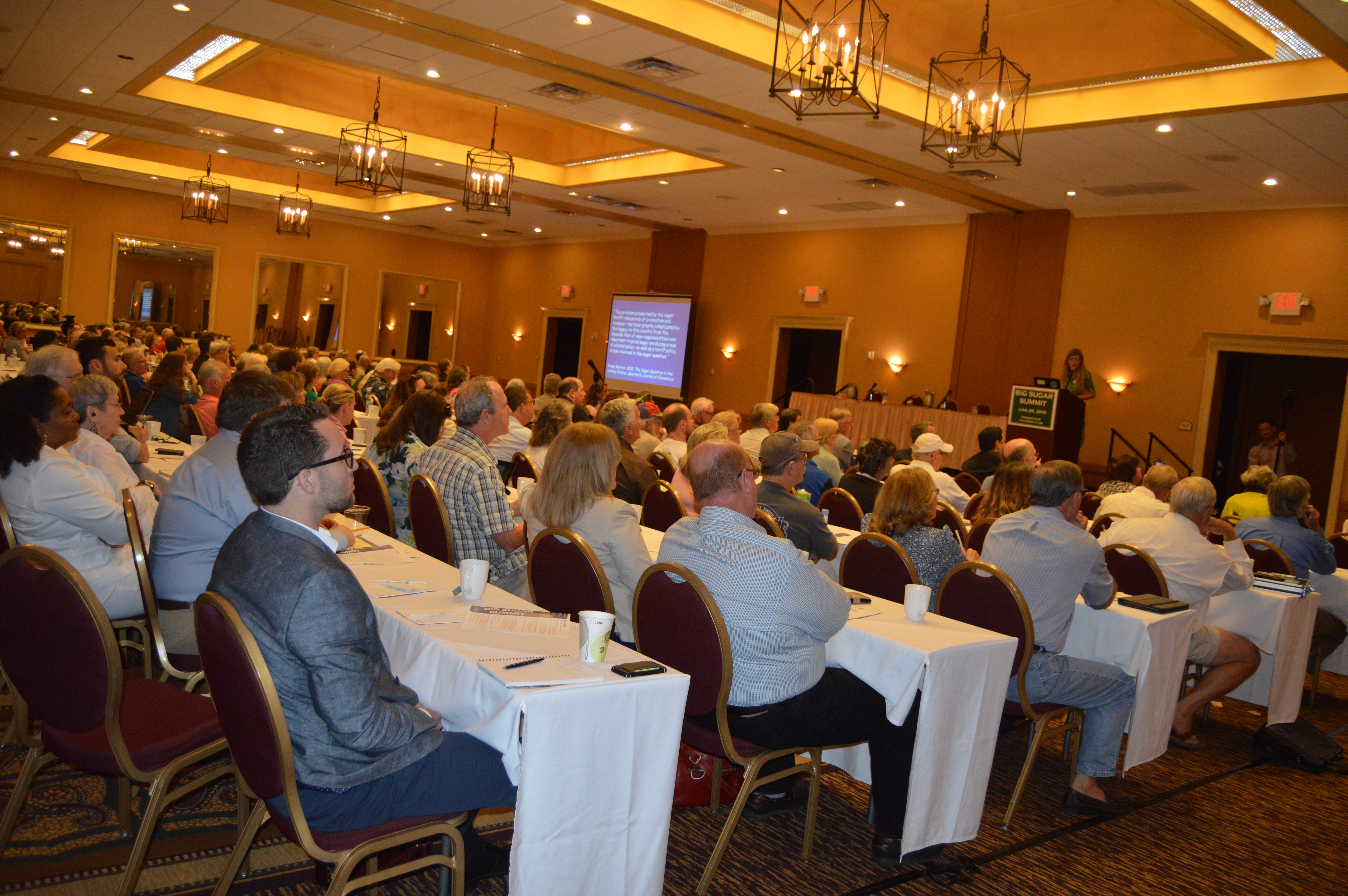
a packed room
There were a lot of different people and I hoped you all walked away with the good feeling I did- a feeling of hope that we can find our way through this together. There are things that must be done and we need to find a way to do it. WE
The water must go south. We must stop the discharges, save our drinking water and stop the salt water intrusion. We must.
We must help our friends the Miccosukee’s to fix their water issues.
Not listening is no longer an option.
So here you go. This should keep you busy for a while and give you something to think about. Please share in the most positive way.
Sierra Club’s Big Sugar Summit
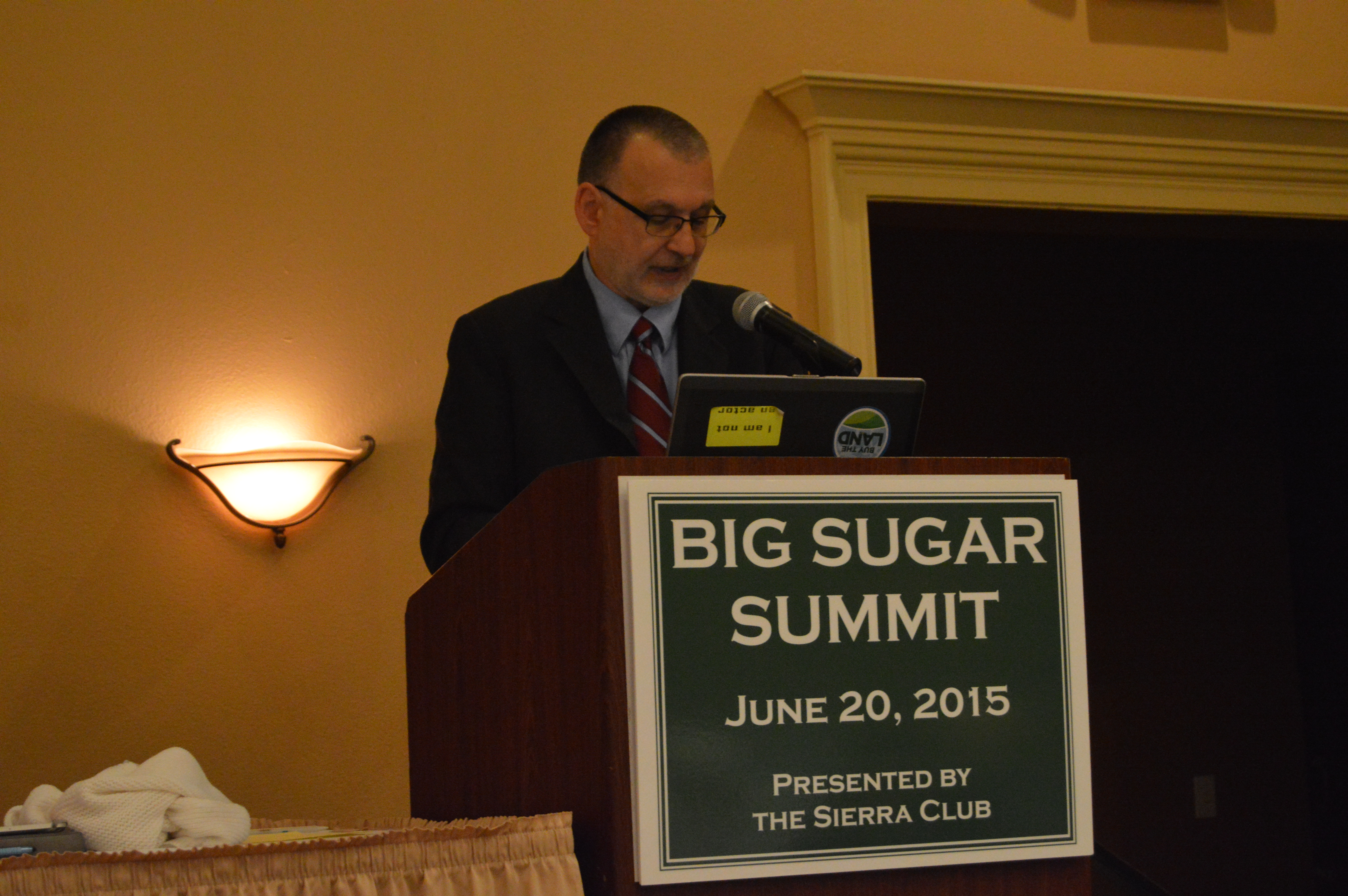
Introduction by Frank Jackalone,Frank is the SierraClub’s senior field organizing manager for Florida.
frank
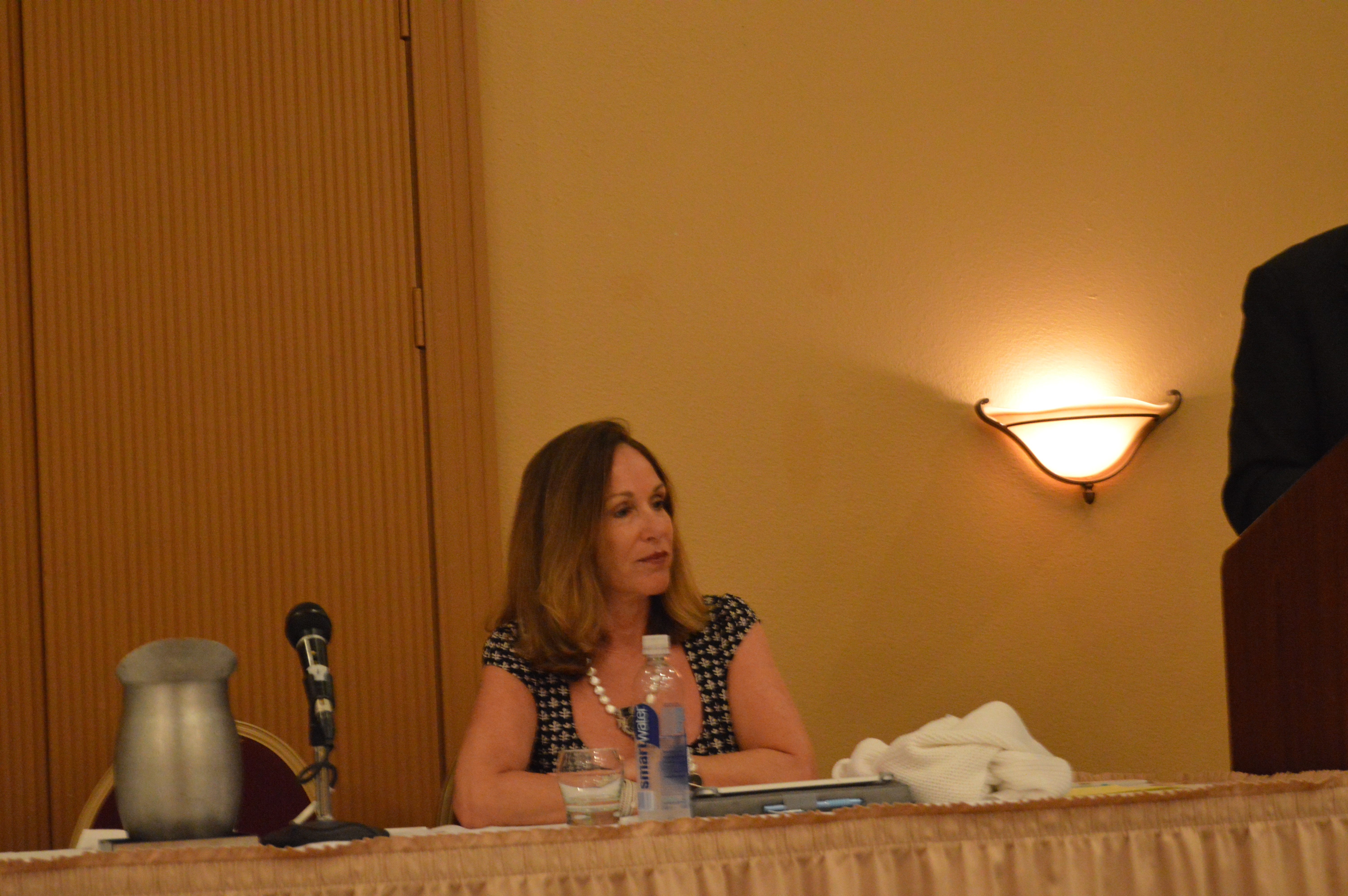
Here is Mary Barley. Our Fairy Godmother! Thank you Mary Barley for your wisdom and leadership!
mary barley
Dr Gail Hollander ,Associate Professor of Geography, Department of Global and Sociocultural Studies, Florida International University. Author, Raising Cane in the “Glades”: The Global Sugar Trade and the transformation of Florida.
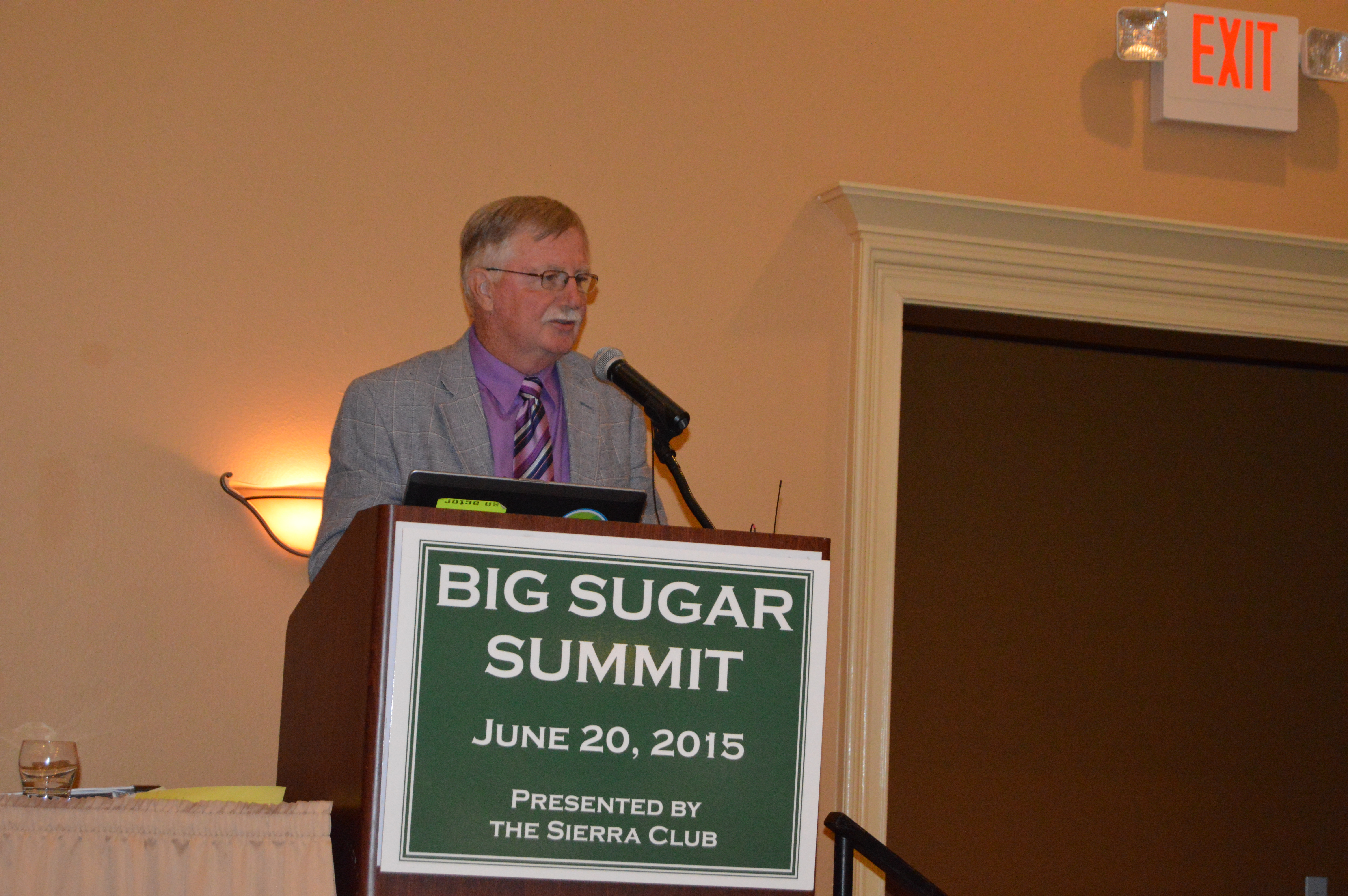
Dr Stephen Davis is wetland ecologist at the Everglades Foundation.
Richard Grosso, Director, Environmental and Land Use Law Clinic, Shepard Broad Law Center, Nova Southeastern University
Julia Hathaway
Dr Enrique Cesar Santejo Silveira
Molecular Oncology Research Center
Barretos Cancer Hospital
Barretos, SP, Brazil
Jim Stormer
Retired Environmental Administrator, Palm Beach County Health Department
David Guest, Managing Attorney, Earthjustice, Florida Office
Wolfram Alderson , Founding member of the Institute for Responsible Nutrition.
Instead, as Craig Pittman and Michael Auslen of the Tampa Bay Times reported, that great pile of Amendment 1 money is going to pay for items that normally would have been funded out of the regular budget. For stuff like park maintenance.
But the legislators, in cynical disregard of their constituents’ intent, earmarked $13.65 million of the Amendment 1 money to bail out a water storage project that auditors from the South Florida Water Management District had found was wildly out of whack in terms of cost effectiveness.
That’s just $3.75 million less than what Florida Forever will be getting for new land purchases.
The $13.65 million will bail out agricultural outfits like Alico, with major Florida holdings in citrus, ranching, farming and the very lucrative operations known as “water farming.”Alico is the largest of landowners around Lake Okeechobee paid to store water behind earth berms, meant to keep it from exacerbating the problems of the polluted estuaries of the St. Lucie and Caloosahatchee rivers. As the Tampa Bay Times reported, a 57-page auditor’s report last year found these water farming contracts cost the public 10 times more if these than storage projects had been built on public land. Water farming is a massive boondoggle.
Which might have been beside the point, given that the South Florida Water Management District had run out of money to fund water farming anyway. But all that Florida Forever money presented the likes of Alico another fat funding source.
The money will be used for water and land conservation, management, and restoration in Florida. The funds dedicated by Amendment 1 will:
Restore, manage, and acquire lands necessary to protect Florida’s drinking water sources and protect the water quality in our rivers, lakes and streams;
Protect our beaches and shores;
Protect and restore the Everglades and other degraded natural systems and waterways;
Manage fish and wildlife habitat, protect forests and wetlands, and restore conservation lands that are an important part of Florida’s economy and quality of life;
Provide funding to manage existing state and local natural areas, parks, and trails for water supply, habitat and recreation.
All this will be achieved with no increase in taxes.
Why did we need to amend the state constitution?
Since 2009, the Legislature has dramatically reduced funding for water and land protection, cutting key programs by more than 95%. Amendment 1 would ensure that water and land conservation projects are adequately funded – the funds cannot be diverted to other purposes – without increasing taxes. The only way to secure significant, sustainable resources for water and land conservation, management and restoration for the long-term is to take this issue directly to Florida voters through a constitutional amendment.
The legislature taketh and then they taketh some more.
How do I know the funds will be spent wisely?
Florida’s conservation programs have a great track record of spending these funds wisely. Amendment 1 ensures that funds are used solely for conservation purposes and cannot be used for any other purpose by the Legislature. Using the state’s existing successful programs as a model, objective criteria will continue to determine how funds are spent in order to keep politics out of the process.
Florida Forever and its predecessor Preservation 2000, for example, have been the most successful state land conservation programs in the nation, protecting more than 2.4 million acres of critical water resources, natural areas, wildlife habitat, parks, greenways and trails. Restoration of the Florida Everglades is the most comprehensive ecological restoration project in history. Florida’s land managing agencies and water management districts have done a tremendous job restoring degraded natural systems, including the state’s longleaf pine forests, the upper St. Johns River watershed and Rookery Bay. Amendment 1 ensures funding so that this critical restoration work will continue.
Now that Amendment 1 has passed, who will be in charge of the money?
While citizens can dedicate funding for water and land conservation in the state constitution, we cannot appropriate funds via the constitution. Appropriations are solely the Legislature’s responsibility. Fortunately, Florida has a number of excellent programs already in place for making project selection decisions. The state has a stellar track record of selecting conservation projects based on objective criteria and science, which includes review by citizens and oversight panels composed of experts from the appropriate fields. The existing Acquisition and Restoration Council is one good example. Amendment 1 does not change these existing project selection systems. So while the Legislature must appropriate the funds, the existing tried and true systems in place for project selection would not change now that Amendment 1 has been ratified.
One source for money to revive the water-farming contracts was money from the taxpayers from the rest of the state, via the Legislature. But the water district’s governing board, under state law, is not allowed to hire its own lobbyists to pursue funding.
Instead, Alico did it for them.
The company employed 16 lobbyists last year, and it turned them loose on the Legislature to get $13 million to pump new life into the project. Alico spokeswoman Sarah Bascom said the company was just helping out a state agency in need, and its lobbyists did not specifically ask for money for Alico’s own contract.”
We analyzed the influence of emissions from burning sugar cane on the respiratory system during almost 1 year in the city of Piracicaba in southeast Brazil. From April 1997 through March 1998, samples of inhalable particles were collected, separated into fine and coarse particulate mode, and analyzed for black carbon and tracer elements. At the same time, we examined daily records of children (< 13 years of age) and elderly people (> 64 years of age) admitted to the hospital because of respiratory diseases. Generalized linear models were adopted with natural cubic splines to control for season and linear terms to control for weather. Analyses were carried out for the entire period, as well as for burning and nonburning periods. Additional models were built using three factors obtained from factor analysis instead of particles or tracer elements. Increases of 10.2 μg/m3 in particles ≥ 2.5 μm/m3 aerodynamic diameter (PM2.5) and 42.9 μg/m3 in PM10 were associated with increases of 21.4% [95% confidence interval (CI), 4.3–38.5] and 31.03% (95% CI, 1.25–60.21) in child and elderly respiratory hospital admissions, respectively. When we compared periods, the effects during the burning period were much higher than the effects during nonburning period. Elements generated from sugar cane burning (factor 1) were those most associated with both child and elderly respiratory admissions. Our results show the adverse impact of sugar cane burning emissions on the health of the population, reinforcing the need for public efforts to reduce and eventually eliminate this source of air pollution.
Keywords: air pollution, biomass burning, children, elderly people, health effects, Poisson regression, respiratory diseases, time series
Simon said there are two kinds of rhinitis, the medical term for excess mucus, congestion and sneezing. Cane smoke causes irritant or environmental rhinitis, where particles clog or irritate nasal passages.
“The smoke from sugar cane is an irritant,” Simon said. “It’s a lot like being in a smoky bar, where you end up coughing and sneezing.”
This is what the Sierra Club has to say about burning sugar cane.
“Dirty toilets,” I repeat. “They signal customers and employees that management does not care about them as people. Most people take toilets seriously. A dirty toilet is an affront to people who care about themselves, their families, and their fellow citizens. Management can always blame the users of the toilets for persistent filth and disarray, but ultimately it’s management’s responsibility.”
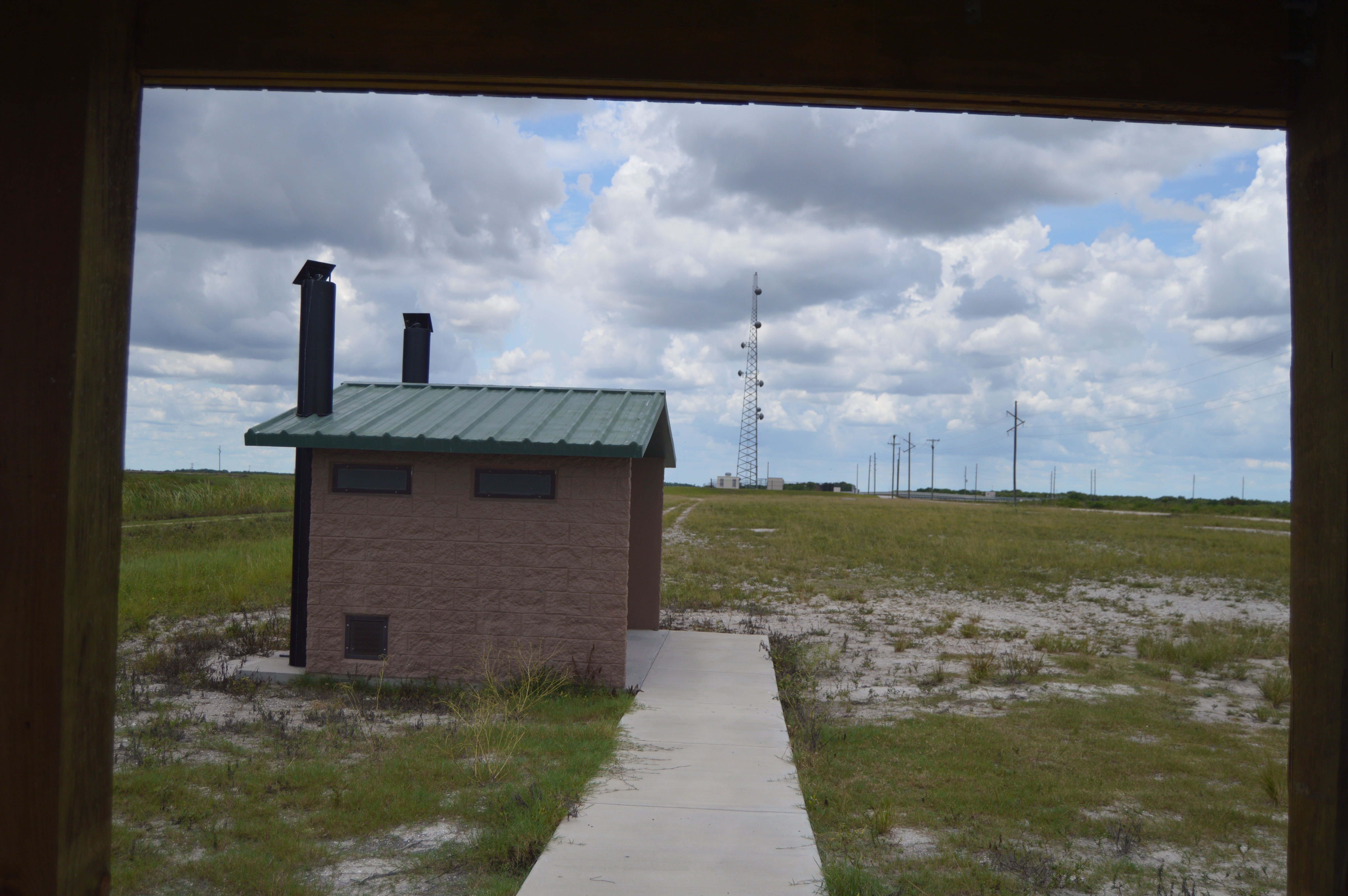
The Bathroom at STA 5/6 gross inside and filled with spiders.
Here are instructions. Please share with your staff.
Today I want to talk about toilets. I’m a nurse. It goes with the territory. I know I’m totally perseverating but that toilet at STA5/6 was really disgusting. Does the toilet at the facility reflect on the people who run that facility? Does that then reflect on its bosses? If that’s the case then SFWMD does a really crappy job. I hardly doubt that anyone from the Board of Governors have been to this place.
“Located on approximately 17,000 acres in eastern Hendry County, Stormwater Treatment Area 5/6 (STA-5/6) has become one of the premier bird-watching areas in Florida through a long-standing partnership with the Hendry-Glades Audubon Society. More than 200 bird species have been spotted at STA-5/6 on the seasonal, guided bird-watching tours offered by the local Audubon chapter. The site is also popular as a waterfowl hunting area managed by the Florida Fish and Wildlife Conservation Commission (FWC).
Access to STA-5/6 was expanded in 2013 with a public use area with shell-rocked parking, an informational kiosk, restrooms and a trail that includes a covered shade shelter and a boardwalk. Hiking, bicycling and bird-watching are among the activities visitors can enjoy from the public use area. In addition, a portion of the Florida National Scenic Trail runs along the L-3 levee on the west side of the STA.”
I’m quite used to out houses. When I was kid our camp at Sebago Lake in Maine was the first camp in the area to have a toilet. Yet, we all loved the Balin’s outhouse across the road.
My dad took us camping in the woods of New Hampshire.
When my son was in 9th Grade we went on a camping trip to Oleno State Park near Gainesville.
Three youth camping areas, each with a covered pavilion, campfire circle, cold showers and restroom facilities. This is primitive camping with NO ELECTRIC. Youth Camping Area reservation can be made up to 11 months in advance by calling the park office at 386-454-1853. Sweetwater Lake Camping Area – primitive camping with fire circle and privy. You must hike approximately 6.5 miles to camping area and pack in all supplies needed including water. Horse Barn Camping Area – primitive camping with fire circle, centrally located bathhouse and 20 stall horse barn are available. Please call the park office at 386-454-1853 for more information.
This place was no problem even for West Boca Ninth Graders.
BIG SUGAR ENTERTAINMENT or not: Fanjul’s try to control movies, TV, what’s next? Maybe a reality show. That would be fun. (The making part. Not the thousands of swarming lawyers trying to stop you)
Kudo’s to all these documentary filmmakers. One especially Amy Serrano. And big Kudos to my friend Michael Posner, founder of the Delray Beach Film Festival. Read on and you’ll see why.
I did a little recon to see what else is out there on the subject of Big Sugar and I found:
CBC Big Sugar 1 of 2 Documentary on the Political History of the Sugar Industry
Very interesting eye-opener. Very well made film that makes the viewer understand that the name Big Sugar is as fitting for describing the business as Big Tobacco is to tobacco. Very similar businesses indeed. It was quite shocking to learn that the industry today probably is worse than tobacco industry, as I am aware of there are no slaves in the present tobacco industry… And shocking to learn that the industry is so heavily subsidized in the USA. It’s funny that what may eventually make people use less sugar is not the corruption, lies and misuse of power that the industry represents, but instead the effect it has on their own health. Who cares about other people, specially the poor?
Story in TIME magazine and CNN explaining the Fanjul Casa de Campo sugar business:
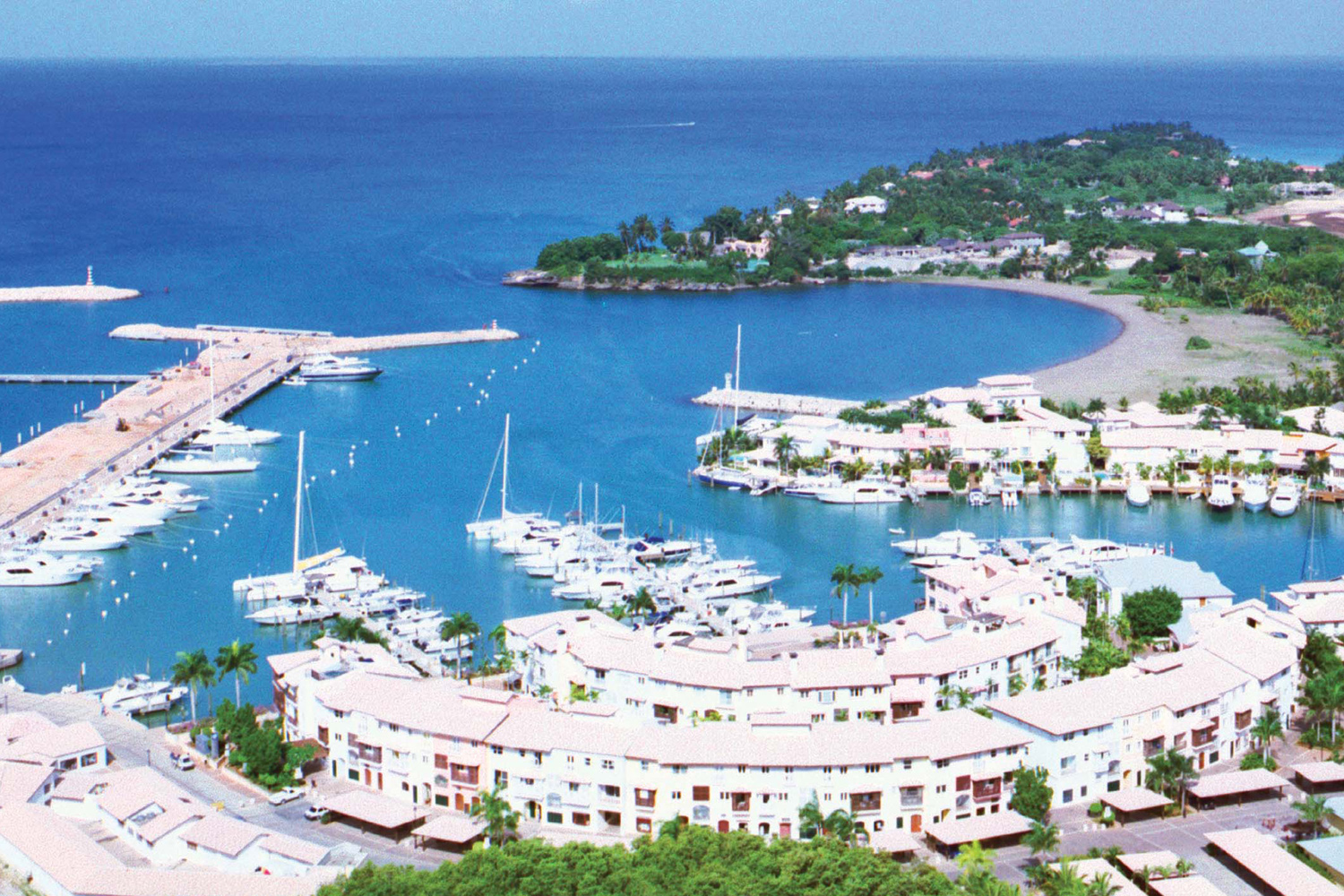
FOR TRAVEL— CASA DE CAMPO, LA ROMANA, DOMINICAN REPUBLIC, AERIAL
Sweet deal why are these men smiling? The reason is in your sugar bowl
By Donald L. Barlett and James B. Steele
Occupying a breathtaking spot on the southeast coast of the Dominican Republic, Casa de Campo is one of the Caribbean’s most storied resorts. It bills itself as “a hedonist’s and sportsman’s dream,” and that’s truth in advertising. The place has 14 swimming pools, a world-class shooting ground, PGA-quality golf courses and $1,000-a-night villas.
A thousand miles to the northwest, in the Florida Everglades, the vista is much different. Chemical runoff from the corporate cultivation of sugar cane imperils vegetation and wildlife. Polluted water spills out of the glades into Florida Bay, forming a slimy, greenish brown stain where fishing once thrived.
Both sites are the by-product of corporate welfare.
In this case the beneficiaries are the Fanjul family of Palm Beach, Fla. The name means nothing to most Americans, but the Fanjuls might be considered the First Family of Corporate Welfare. They own Flo-Sun Inc., one of the nation’s largest producers of raw sugar. As such, they benefit from federal policies that compel American consumers to pay artificially high prices for sugar.
Since the Fanjuls control about one-third of Florida’s sugar-cane production, that means they collect at least $60 million a year in subsidies, according to an analysis of General Accounting Office calculations. It’s the sweetest of deals, and it’s made the family, the proprietors of Casa de Campo, one of America’s richest.
The subsidy has had one other consequence: it has helped create an environmental catastrophe in the Everglades. Depending on whom you talk to, it will cost anywhere from $3 billion to $8 billion to repair the Everglades by building new dikes, rerouting canals and digging new lakes.
Growers are committed to pay up to $240 million over 20 years for the cleanup. Which means the industry that created much of the problem will have to pay only a fraction of the cost to correct it. Government will pay the rest. As for the Fanjuls, a spokesman says they are committed to pay about $4.5 million a year.
How did this disaster happen? With your tax dollars. How will it be fixed? With your tax dollars.
It is not news that sugar is richly subsidized, or that the Fanjuls have profited so handsomely. Even as recently as 1995, when Congress passed legislation to phase out price supports for a cornucopia of agricultural products, raw sugar was spared. Through a combination of loan guarantees and tariffs on imported sugar, domestic farmers like the Fanjuls are shielded from real-world prices. So in the U.S., raw sugar sells for about $22 a pound, more than double the price most of the world pays. The cost to Americans: at least $1.4 billion in the form of higher prices for candy, soda and other sweet things of life. A GAO study, moreover, has estimated that nearly half the subsidy goes to large sugar producers like the Fanjuls.
A spokesman for Flo-Sun, Jorge Dominicis, said the company disagrees with the GAO’s estimate on the profits the Fanjuls and other growers derive from the program.
“That is supposed to imply somehow that our companies receive $60 million in guaranteed profits,” he said, “and that is flat-out not true. Our companies don’t make anywhere near that kind of profit.”
Dominicis, like other proponents of the sugar program, contends that it doesn’t cost taxpayers a penny and is not unlike government protection of other American industries. “If our [sugar policy] is corporate welfare, which I don’t believe it is, then all trade policy is corporate welfare,” he says.
Flo-Sun is run by four Fanjul brothers, Alfonso (“Alfie”), Jose (“Pepe”), Andres and Alexander. Their family dominated Cuba’s sugar industry for decades, and they came to this country with their parents in 1959, after Fidel Castro seized power. The Fanjuls arrived just as a U.S. Army Corps of Engineers project to control the flow of water in the Florida Everglades made large-scale development possible. The total acreage planted in sugar cane there soared–from 50,000 acres in 1960 to more than 420,000 today.
Within that swampy paradise lies yet another subsidy. Each year, according to a 1997 estimate, the Army Corps of Engineers spends $63 million to control water flow in central and south Florida. This enables growers to obtain water when they need it or restrain the flow during heavy rains. Of the $63 million, the Corps estimates $52 million is spent on agriculture, mainly sugar-cane farmers, in the Everglades.
Even with the additional production from the Glades, propped up by price supports, the U.S. can’t produce all the sugar it needs. The Federal Government rations access to the lucrative U.S. market by assigning quotas to 40 sugar-producing nations, most of them developing countries. And, remarkably, the Fanjuls have found riches here too. Every year, the country that receives the largest sugar quota is the Dominican Republic. With a per-capita income of $1,600 a year and an unemployment rate hovering around 20%, that Caribbean nation needs all the economic help it can get. And who is the largest private exporter of Dominican sugar? The Fanjuls, thanks in part to their long-standing relationship with the Dominican Republic’s politicians. Through a subsidiary, Central Romana Ltd., the brothers grow sugar cane and operate the world’s largest sugar mill there. The profit margin is substantial, partly because cane cutters on the island earn about $100 a month, making production costs much lower than in Florida. From their Dominican plantation the Fanjuls export roughly 100,000 tons of raw, duty-free sugar each year to the U.S.
Whether they sell sugar from their holdings in the Everglades or from their mill in the Caribbean, the Fanjuls are guaranteed a U.S. price that is more than double anywhere else in the world. As might be expected, having it both ways has propelled the Fanjuls into the ranks of the richest Americans. Their wealth is counted in the hundreds of millions of dollars.
And although they appear frequently in the society pages, the Fanjuls won’t be caught dead in the financial section. As Emilia Fanjul, the wife of Pepe, once confided to a society reporter, “We like to be private about the business.”
Depending on the season, the Fanjuls can be found shooting game in Scotland, skiing in Switzerland or relaxing at their spectacular Casa de Campo. These 7,000 acres overlooking the sea have long been a favorite playground of the wealthy. But Palm Beach is still their real home, and Florida is still the heart of their financial empire. They now farm an estimated 180,000 acres of cane-producing land in the Everglades–43% of the total–making them one of the two-largest sugar growers in the state.
For decades, this region has been home to one of the worst jobs in America–hacking cane with a machete. Until the work was mechanized in the 1990s, the growers had to bring in thousands of cane cutters from the Caribbean every season. Yet in preserving the subsidy that has made millionaires of the Fanjuls, Congress has cited the fact that it saves American jobs.
Migrant-labor organizations and legal-aid groups in Florida have long waged an ongoing battle with the Fanjuls and other growers over the abysmal conditions. Greg Schell, an attorney with the Migrant Farmworkers Justice Project in Belle Glade, Fla., contends that of all the growers, the Fanjuls have treated their workers the worst. “They are in a class by themselves,” he said. A lawsuit seeking back wages and benefits is expected to go to trial next spring.
Every few years, critics of the sugar program attempt to roll back the subsidy that has enriched the Fanjuls and kept sugar prices high. And every time they fail, largely because of the power of the sugar lobby, which includes not just large growers like the Fanjuls but thousands of small sugar-beet farmers in other parts of the nation.
Though by no means the largest special interest in Washington, the sugar lobby is one of the most well-heeled. And among growers, the Fanjuls are big givers. Family members and corporate executives have contributed nearly $1 million so far in this decade, dividing the money fairly evenly between political parties.
This knack for covering all political bases carries all the way to the top of the Fanjul empire. Alfonso Fanjul served as co-chairman of Bill Clinton’s Florida campaign in 1992. His brother Pepe was national vice chairman of finance for Bob Dole’s presidential campaign in 1996 and was host to a $1,000-a-head fund raiser for Dole at his Palm Beach mansion. After Clinton’s 1992 victory, Alfie was a member of the select group invited by the Clinton camp to attend the President-elect’s “economic summit” in Little Rock, Ark.
The film officially premiered at the Montreal International Haitian Film Festival, but preview screenings in Paris and Miami led to heated controversy.[1][2]
The Miami screening of the film, which included many members of the hispanic media of South Florida and from the Dominican Republic, was the subject of a cease and desist order one hour before the time of screening, as well as a bribery scandal when several radio producers came forward to state that Dominican diplomats had offered them bribes to disrupt the screening and give the film a bad review.[3][4] The Paris screening of the film was also the subject of a sabotage attempt.[5]
The Sugar Babies won the Jury Prize for Best Documentary at the Delray Beach Film Festival, continues to be screened in film festivals and educational venues, and is on tour with Amnesty International in France.
“The Sugar Babies won the Jury Prize for Best Documentary at the Delray Beach Film Festival: Love you Michael Posner!
(Michael Posner is President founder and programme director.) (PS My film got it’s first award at the Delray Beach Film Festival)
The creator accuses Florida’s powerful sugar industry of blackballing Sugar Babies.
Associated Press
Published March 9, 2008
MIAMI – From their perch atop Florida’s sugar industry, the Fanjul family wields political and cultural power from the sunny sands of Palm Beach to the corridors of Washington.
Now filmmaker Amy Serrano believes the family has used that power to block the showing of her documentary critical of the family’s umbrella company, Flo-Sun Inc., at the Miami International Film Festival. And she says her project about the Fanjuls is not the only one to run into trouble in recent months. She points to the fight the CBS-TV series Cane faced before it was aired.
“I feel like my film has been blackballed,” said Serrano of her documentary, The Sugar Babies. It’s about the mistreatment of Haitian sugar workers in the Dominican Republic, where the Fanjul family and other companies harvest cane.
Gaston Cantens, a spokesman for the Fanjuls’ West Palm Beach Florida Crystals Corp., called any accusation that the Fanjuls exerted undue pressure ridiculous.
Serrano’s film was rejected from the festival, which ends today, days before the final lineup was announced. The rejection came despite initial support from the festival’s organizers and acclaim at more than a dozen other festivals worldwide.
Serrano said she has no proof the Fanjuls were behind the decision but maintains explanations for her film’s rejection and the subsequent response from another Miami festival were suspicious.
Films about other sugar families are running into direct opposition from their subjects.
The Dominican Republic’s Vicini sugar family recently hired a Washington, D.C., law firm to sue the makers of another documentary, The Price of Sugar, for defamation.
Cantens said the sugar industry is tired of one-sided portrayals of “big sugar.”
“For years we kind of took it on the chin,” he said of stories alleging worker mistreatment and environmental pollution. “We’re tired of taking it on the chin, and we’re fighting back.”
The Fanjuls’ political influence is no small thing. It was the Cuban-American patriarch Alfie Fanjul’s telephone call that interrupted President Bill Clinton during an indiscreet moment with Monica Lewinsky in the Oval Office. The family and its network have already given more than $300,000 so far in the 2008 election cycle to political committees and candidates from both major parties.
Serrano, a Cuban-American and Miami native, said festival officials initially gushed over her film in November. Back then, she told organizers she had already exhibited it elsewhere, including for students at Florida International University in Miami. It was a private showing but made local headlines when media showed up with the Dominican consul, who denounced the portrayal of his country.
Film festival officials originally said the FIU showing was fine, according to e-mail exchanges with Serrano. But, on Jan. 25, Serrano got another letter telling her the showing was a problem because of the media coverage, which disqualified it.
Festival director Patrick de Bokay denied the Fanjuls pressured him, saying “you have to make hard decisions, and you cannot take all the films.”
Bokay said he offered to hold a special screening for The Sugar Babies at a later date.
That would mean much less publicity – and less controversy, Serrano said.
Days after the film festival’s rejection, the Women’s International Film Festival in Miami, which opens March 26, also began to backpedal on its invitation to show the film, Serrano said. Eventually the organizers offered a small theater with a forum to bring in different views.
Serrano, who has lined up a number of other festivals, plans to decline.
The Fanjuls dropped their lawsuit against Cane, a Cuban-flavored mix of Dynasty and Dallas set among South Florida’s sugar fields, only after producers changed details.
Do we need another documentary that will not get shown because of political pressure from the Fanjuls?
I think we need something that will amass a bigger audience. Like a reality show. I don’t actually watch reality shows but I bet you guys that do would have some great ideas.
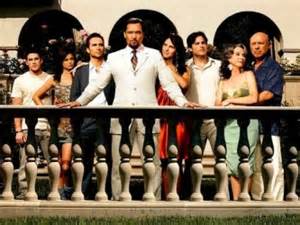
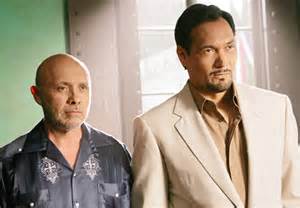
Starring Jimmy Smits, this epic drama chronicles the external rivalries and internal power struggles of a large Cuban-American family running an immensely successful rum and sugar business in South Florida. When the family patriarch, Pancho Duque, is offered a lucrative but questionable deal by his bitter adversaries, the Samuels, he’s faced with a difficult choice: Should he cash out of the sugar business and focus solely on rum, which would please his biological son, Frank Duque? Or should he protect the family legacy that he built from the ground up by refusing to sell? This would involve siding with his son-in-law, Alex Vega, who despises the Samuels and foresees multi-billion dollar profits from future ethanol contracts.
Due to the 2007–2008 Writers Guild of America strike, Cane completed its first season on December 18, 2007. On February 8, 2008 The Los Angeles Times reported that the effects of the writers strike “could spell sudden death for such programs as NBC’s Bionic Woman and CBS’ Cane, industry executives predicted.”[10] It was also reported by USA Today that Cane would be “gone for good. On February 14, 2008, CBS released a statement declaring that Cane is still on “hiatus to accommodate the mid-season launches of Big Brother, Jericho and Dexter.” In an April 2008 interview, CBS Entertainment President Nina Tassler called the drama’s chances for renewal “a real long shot.”On May 14, 2008, CBS officially cancelled the series.
so then we read this
Broadcasting history
The series premiered on CBS on September 25, 2007 as announced on July 18, 2007 by the network The pilot episode was leaked to BitTorrent websites in the same month to the chagrin of studio executives. Cane was unaffected by the 2007 Writers Guild of America strike as all the episodes had been written before the strike started.
If you’ve lived around here for a while and those details remind you of the Fanjul family of Palm Beach, you’re not alone. The Fanjuls think Cane might remind viewers of them, and they’re not really happy about it.
Joseph Klock Jr., Miami-based general counsel for the Fanjul’s West Palm Beach holding company, Flo-Sun Inc., said Friday lawyers for the Fanjuls are in communication with CBS and the scripts are being reviewed.
“We want to make sure it is absolutely clear it has nothing to do with the Fanjuls or their companies,” said Klock, of Epstein Becker & Green. “None of this conduct is the kind of conduct the Fanjuls engage in.”
Cane, which some industry observers describe as a “Cuban Sopranos,” is filled with the usual TV mayhem you’d expect from a glitzy prime-time soap: sex, violence and murder. There’s also an internal power struggle between two brothers in the powerful, fictional Duque family. The chief protagonist in the series is Alex Vega, an adopted son of the Duques played by Jimmy Smits, a well-regarded actor of Puerto Rican descent most recently featured on The West Wing.
Barbara Miedema, spokeswoman for the Sugar Cane Growers Cooperative of Florida in Belle Glade, which includes the Fanjuls in its membership, said she doesn’t see much realistic about Cane. “From what I have seen, it looks like pure fiction.”
Cantens, the Fanjul spokesman, said when the family first learned about Cane a few months ago, they thought it was going to be a documentary. They learned differently a few weeks ago, he said.
“Someone sent me an e-mail. Then it went to the legal end of the building,” Cantens said.
“People are going to say, ‘Oh, my God, it must be about the Fanjuls,’” he said. “That is their concern: if there are going to be similarities.”
So the show was already written so its cancellation had nothing to do with the writer’s strike. Having a show like this in South Florida brings in a lot of money for our local business and work for our actors and other film professionals.
ACOE and the Herbert Hoover Dike: We should be up in arms together!
Let’s take a moment to remember when the discharges came back in 2013 and we all went to Phipp’s Park. 7000 of us together in true Solidarity. The day most of us met each other.
That day we all heard this speech from the Indian RiverKeeper Marty Baum.
For many of us this was a call to action. For the people of Clewiston it was a call to flood them and make them float away. Of course, that’s not what Marty said. He didn’t say flood the houses. He said flood the fields and he was referring big sugars ability to keep their water at the exact height needed.
I posted that video of Marty on my old video blog on UVU which was part of WPBT2. I’m not sure what happened to UVU but I posted a lot of content there.
I posted Mark Perry, the video of the march to the locks, and others that got a decent amount of views. Marty’s video got 2400 views which is huge.
After the Sugarland Rally, when the people of Clewiston were accusing us of wanting to flood them I realized that probably every person in Clewiston probably saw that video. There was no explaining to them what the intention was. Their minds were set.
We heard that we HAD to have to discharges to protect the people that live south of the lake. Most of us understand that. That was 2 years ago and many millions of dollars.
Are the people south of lake any safer today than they were then?
. The levee is expected to fail. I know that sounds bad, and it is. FEMA is apparently planning to update flood assessments this summer and redraw flood maps for Palm Beach and Martin counties. These flood maps are expected to be drawn as if the levee around Lake Okeechobee didn’t exist. In other words, they are not counting on the levees to protect against flooding.
2. The Herbert Hoover Dike is in the highest failure category of the Army Corps risk scale. Current efforts are being directed at reducing the risk category, but as it stands (and even after millions of dollars worth of improvements) the levee protecting the area still carries the highest risk classification (DSAC 1) of any dam in the United States.
3. There is no emergency spillway, nor is one planned to be built. There is no good, controlled way to drain off excess water from the lake should a large amount of rain fall in a short amount of time. Lake Okeechobee fills six times faster than it can be drained, and a foot of rainfall would result in 3 to 4 feet of water rise in the lake. Current levees will start to fail when the lake rises above 18.5 feet above mean sea level (it’s at roughly 14 feet currently), and significant levee problems are almost certain to occur when the lake reaches 20 feet over MSL.
“In what appears to be a never-ending task, U.S. Army Corps of Engineers crews in Florida continue working on the outdated Herbert Hoover Dike surrounding Lake Okeechobee — the state’s largest freshwater lake. Since 2007, teams have performed various tasks to reduce the risk of dike failure due to flooding from high water levels.”
Because of the construction methods used in the 1930s, the dike is susceptible to erosion of the earthen embankment,” said John Campbell, public affairs specialist of the Jacksonville District, U.S. Army Corps of Engineers (USACE). “Over the past six years, we have installed a 21.4 mile concrete barrier known as a cutoff wall into the southeast quadrant of the dike. The cutoff wall is designed to reduce seepage and prevent erosion.”
The cutoff wall extends from roughly 6 ft. (1.8 m) from the top of the dike through the foundation to several feet beyond the limestone bedrock, averaging between 60 to 80 ft. (18.3 to 24.4 m) below the crest of the dike. It’s considered crucial to the rehabilitation effort, although is by no means a solution to a complex problem. Despite a multi-million dollar effort by USACE, the dike remains on a national shortlist of unsafe class 1 dams, with a category defined as either “almost certain to fail under normal operations” or at “extreme risk of failure with high fatalities and economic losses.” Campbell said progress has been made, but there is a long way to go.
“The $200 million invested so far made it possible to install the cutoff wall in the southeast quadrant of the dike between Port Mayaca and Belle Glade,” said Campbell.
TWO HUNDRED MILLION DOLLARS and the people are no safer than they were two years ago.
We should be up in arms because as long as this is the case our discharges will never stop.
We should be up in arms together.
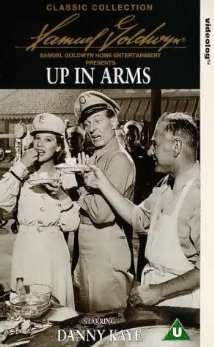
I feel like Danny Kaye in this clip.
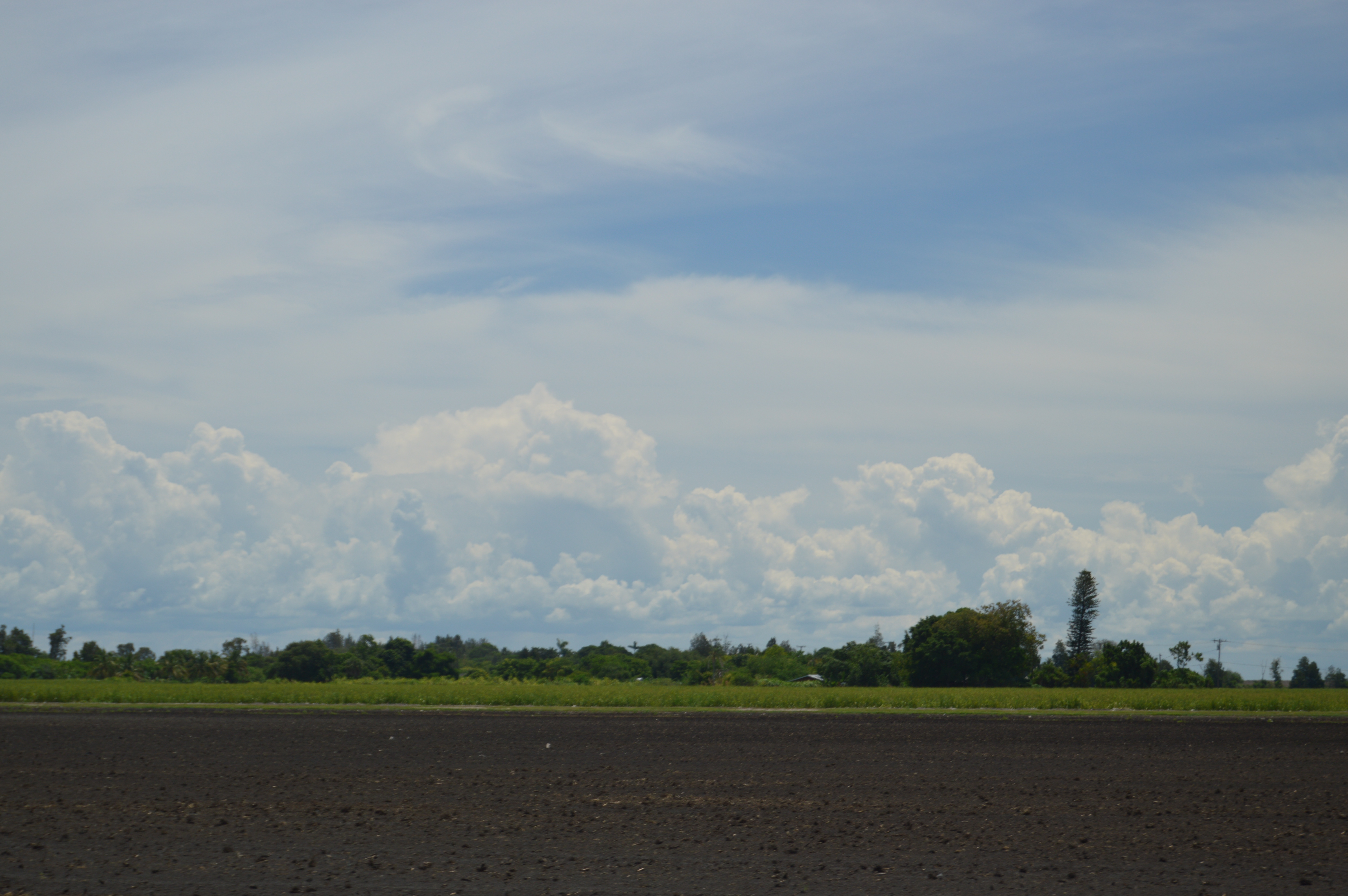
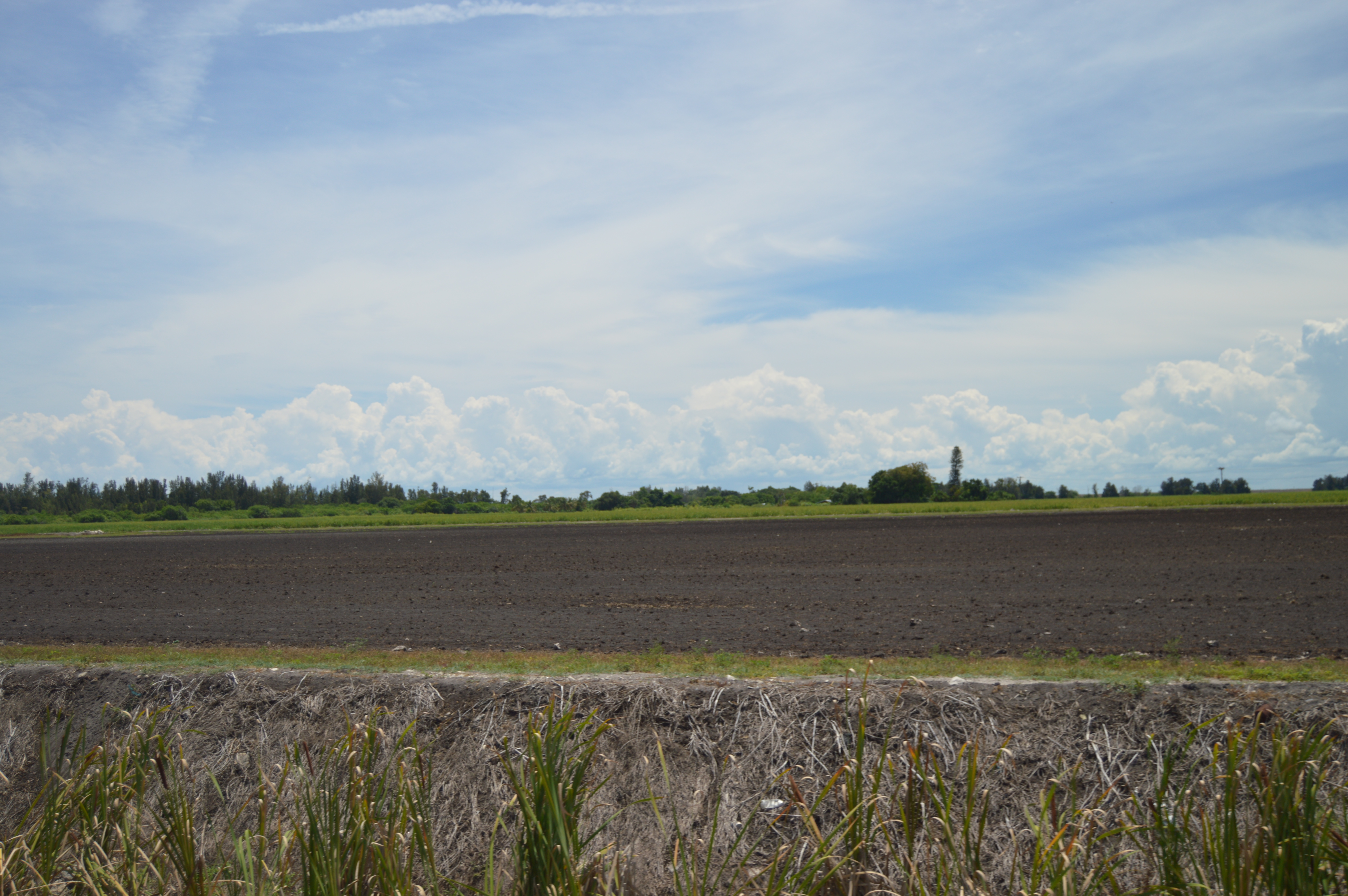
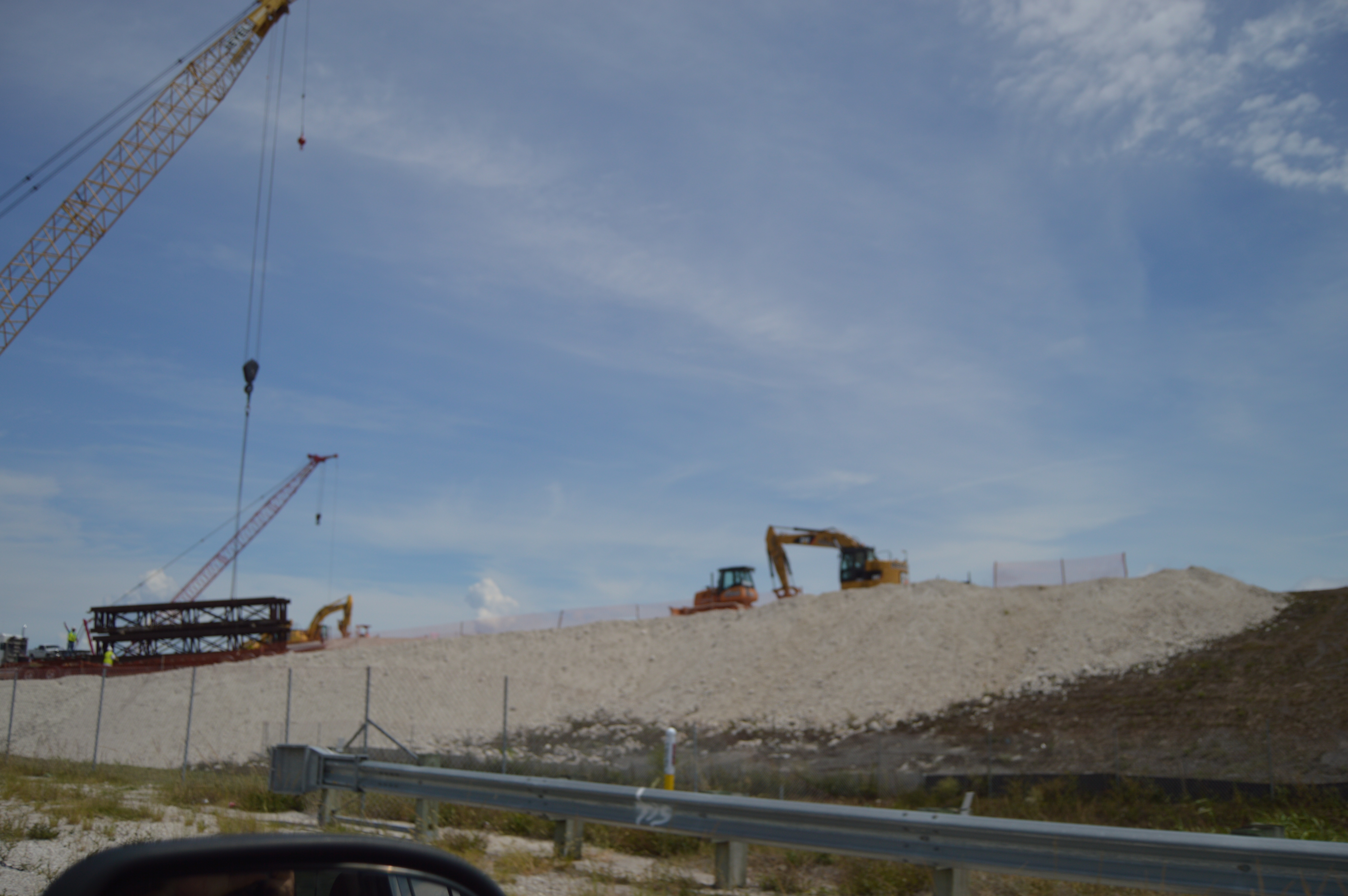
Here are some photo’s I took from the car as Julie and I whizzed by last weekend.
There was one spot that looked like a giant sand bag. Not a lot of confidence going into hurricane season.
The reason I bring this up is because our campaign to build a reservoir ended with discharges and toxic green algae sightings and it felt like what went around came around and we were back to square one with the ACOE. The people south of the lake are still in grave danger.
Don’t you think that having a reservoir south of the lake would take some pressure off those dikes and help to keep those people safer?
So just a note to the folks out in Clewiston. If you want to be upset with someone be upset with the ACOE and be upset with your bosses at big us sugar corp who are against anything that will keep you safe.
This past weekend my friend Jules and I went to visit STA 5/6. I wanted to see the STA’s. The Board of Governors were all over these places and how fabulous they were. I needed to see for myself. They could not have been talking about this place. Do you think they have even been here?
So this is what I thought I was going to be seeing
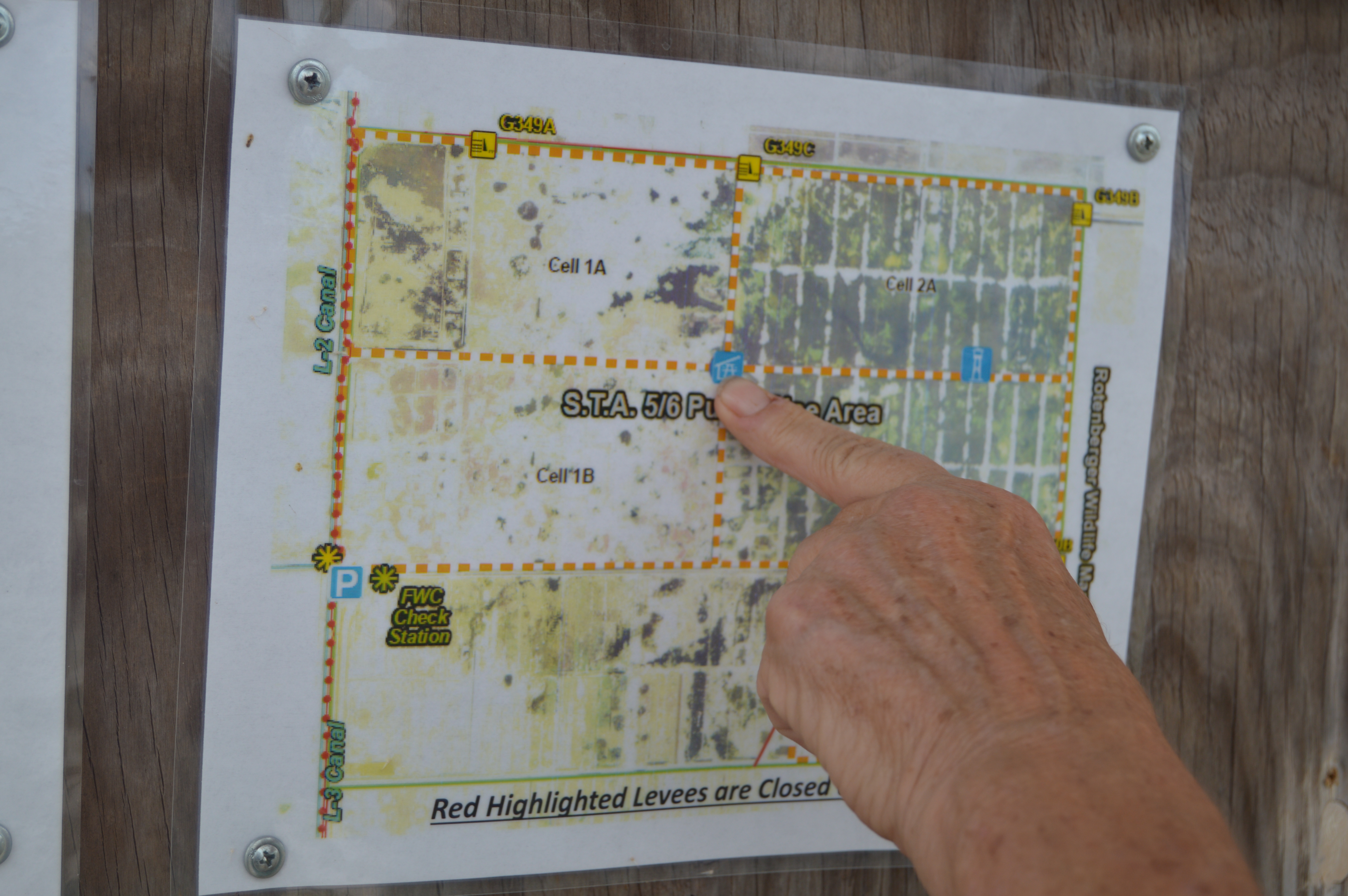
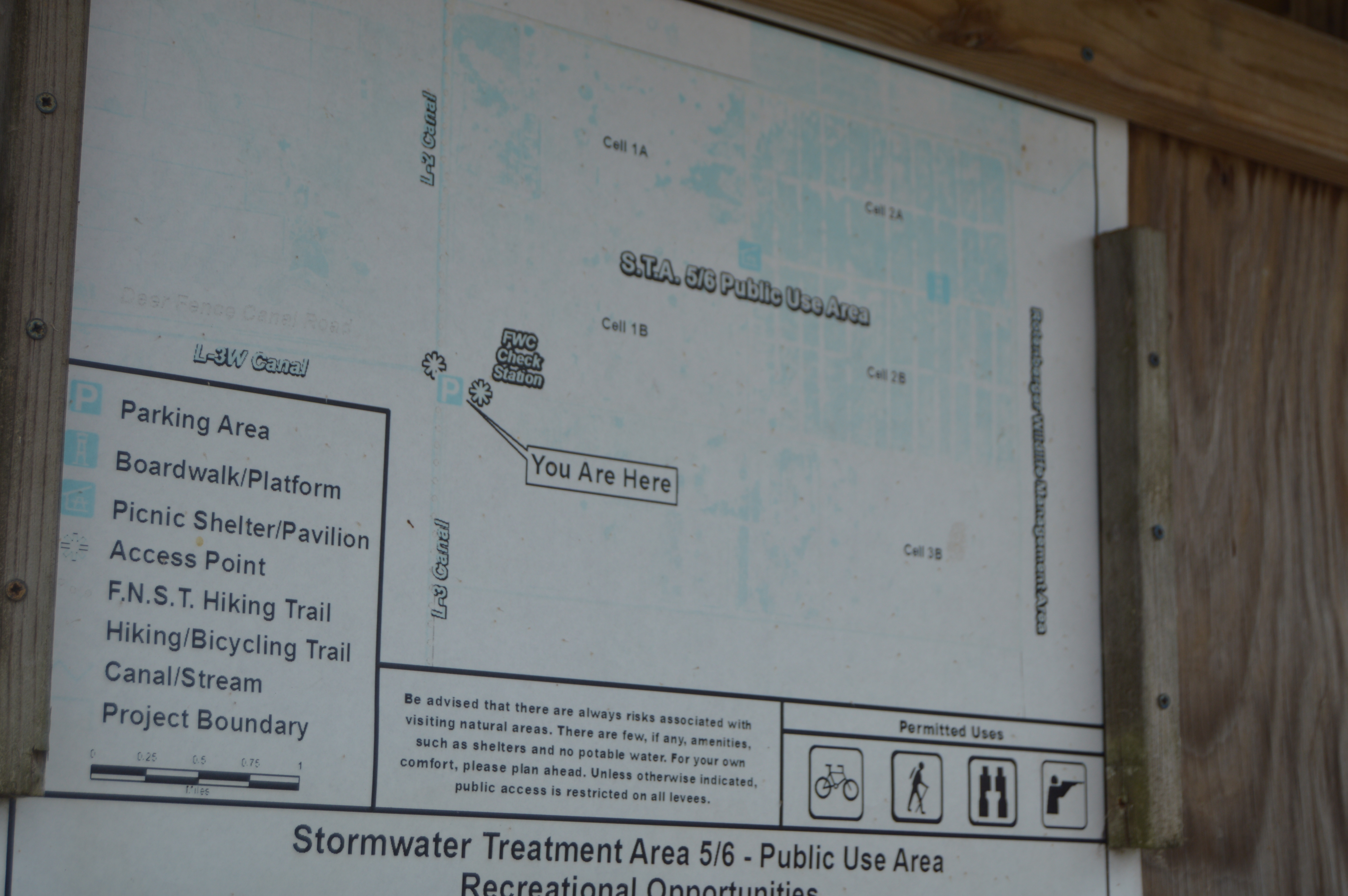
Stormwater Treatment Area 5/6 (STA-5/6)
Stormwater Treatment Areas (STAs) are constructed wetlands designed to aid in Everglades restoration. STAs remove phosphorus from runoff water by channeling it through shallow marshes filled with aquatic plants such as cattail, southern naiad and algae. These plants take up or absorb phosphorus from water traveling through, reducing to very low levels the amount of the nutrients reaching the Everglades or Lake Okeechobee.
STAs provide another bonus – prime home and visiting territory to wildlife including wading birds, ducks and American alligators. A variety of nature-based recreational activities are allowed at several of these wetland locations.
Located on approximately 17,000 acres in eastern Hendry County, Stormwater Treatment Area 5/6 (STA-5/6) has become one of the premier bird-watching areas in Florida through a long-standing partnership with the Hendry-Glades Audubon Society. More than 200 bird species have been spotted at STA-5/6 on the seasonal, guided bird-watching tours offered by the local Audubon chapter. The site is also popular as a waterfowl hunting area managed by the Florida Fish and Wildlife Conservation Commission (FWC).
Access to STA-5/6 was expanded in 2013 with a public use area with shell-rocked parking, an informational kiosk,
restrooms
Gross inside and filled with spiders.
and a trail that includes a covered shade shelter and a boardwalk. Hiking, bicycling and bird-watching are among the activities visitors can enjoy from the public use area. In addition, a portion of the Florida National Scenic Trail runs along the L-3 levee on the west side of the STA.
The Trip to STA 5/6
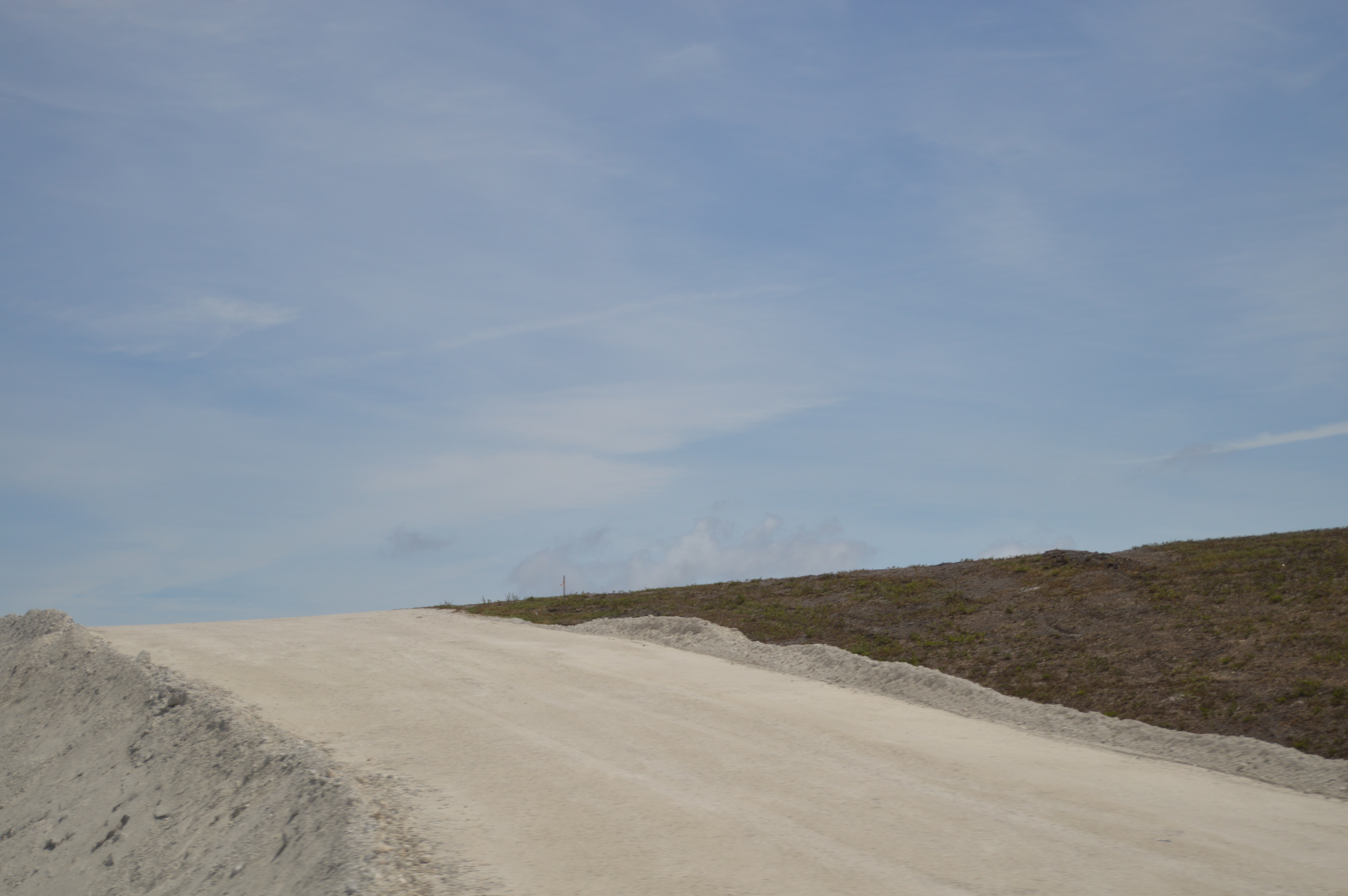
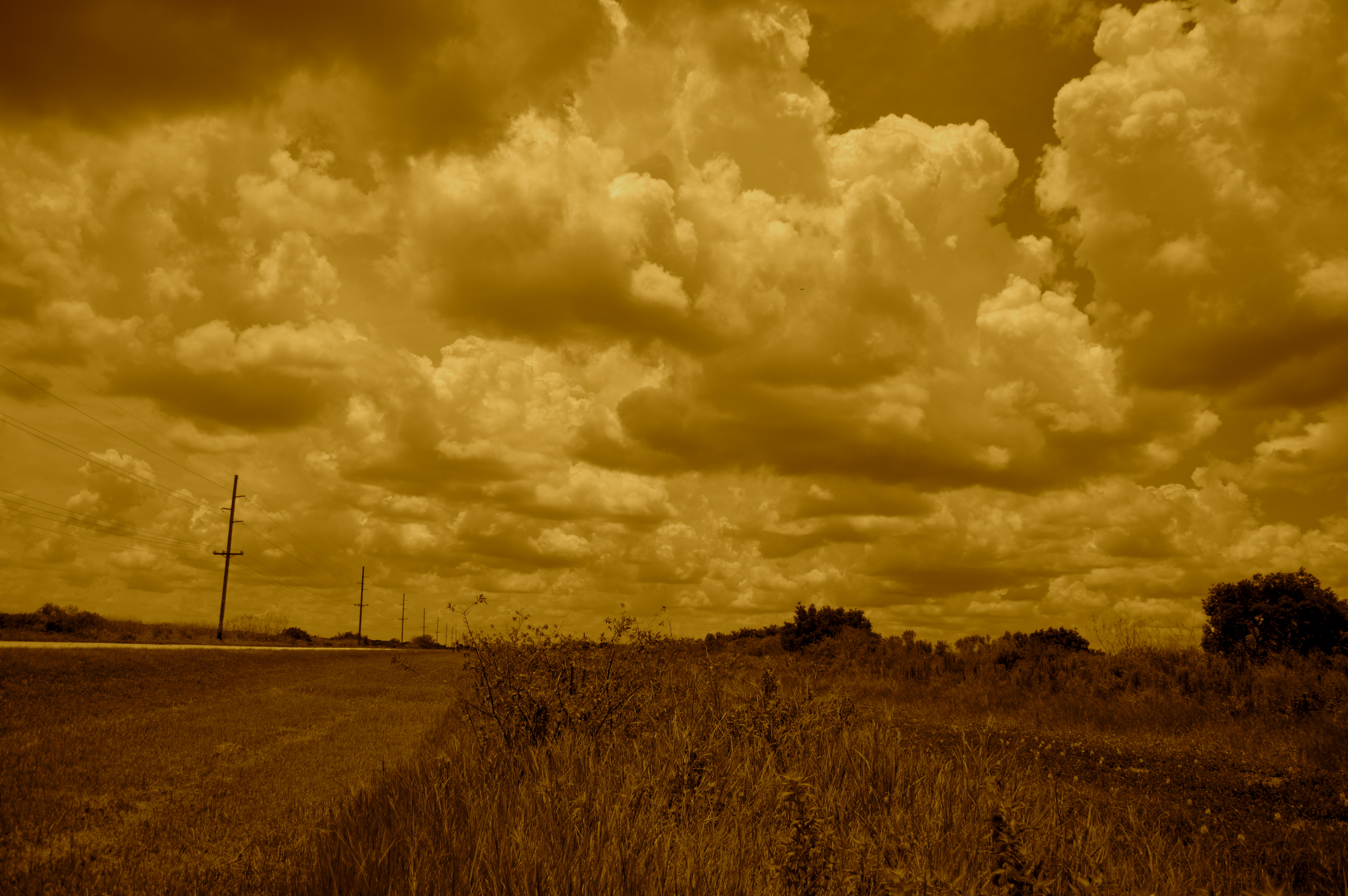
The road to STA 5/6
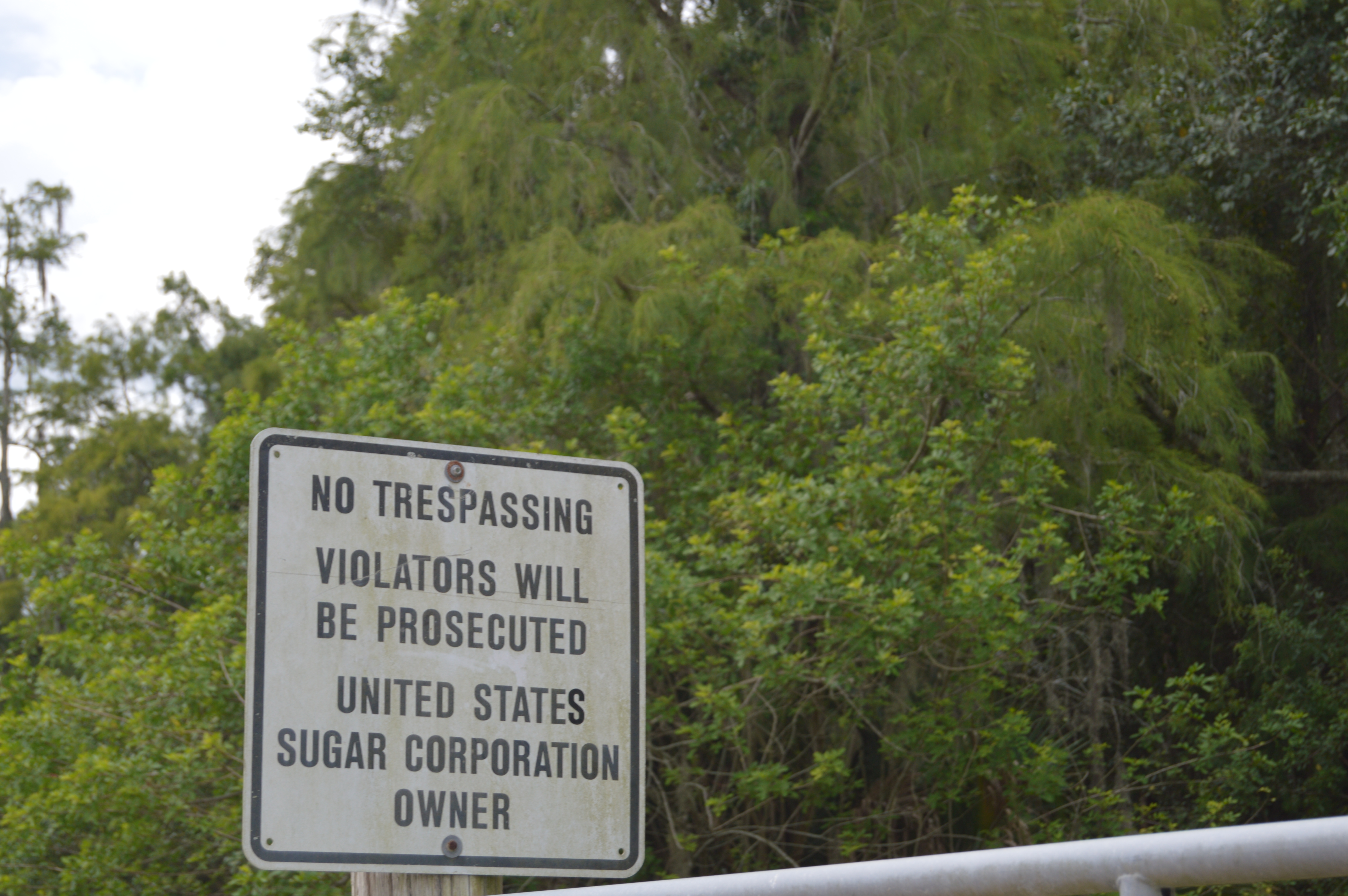
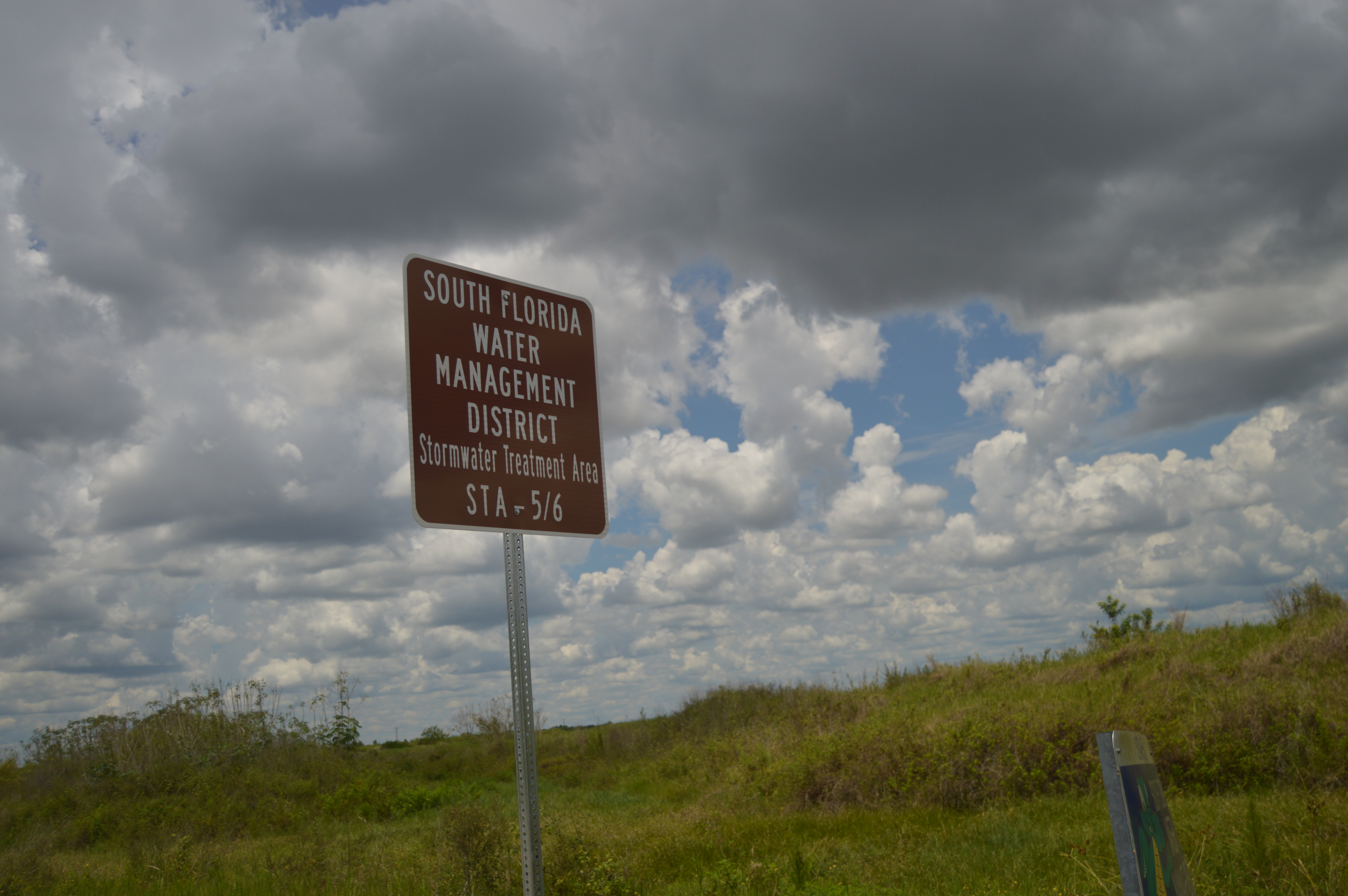
Signage for STA
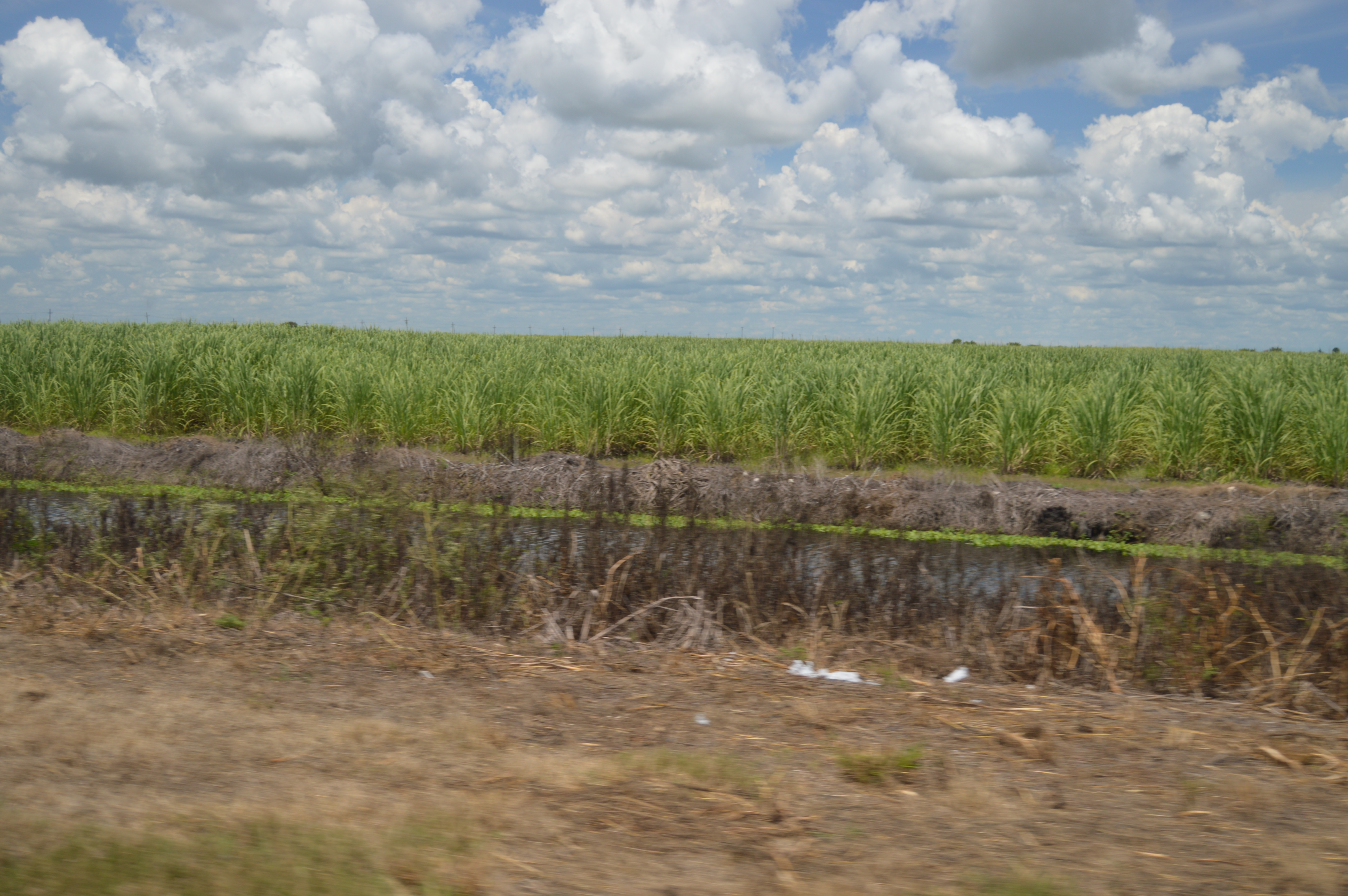
sugar fields in Clewiston. Notice the brown stuff near the water. herbacides?
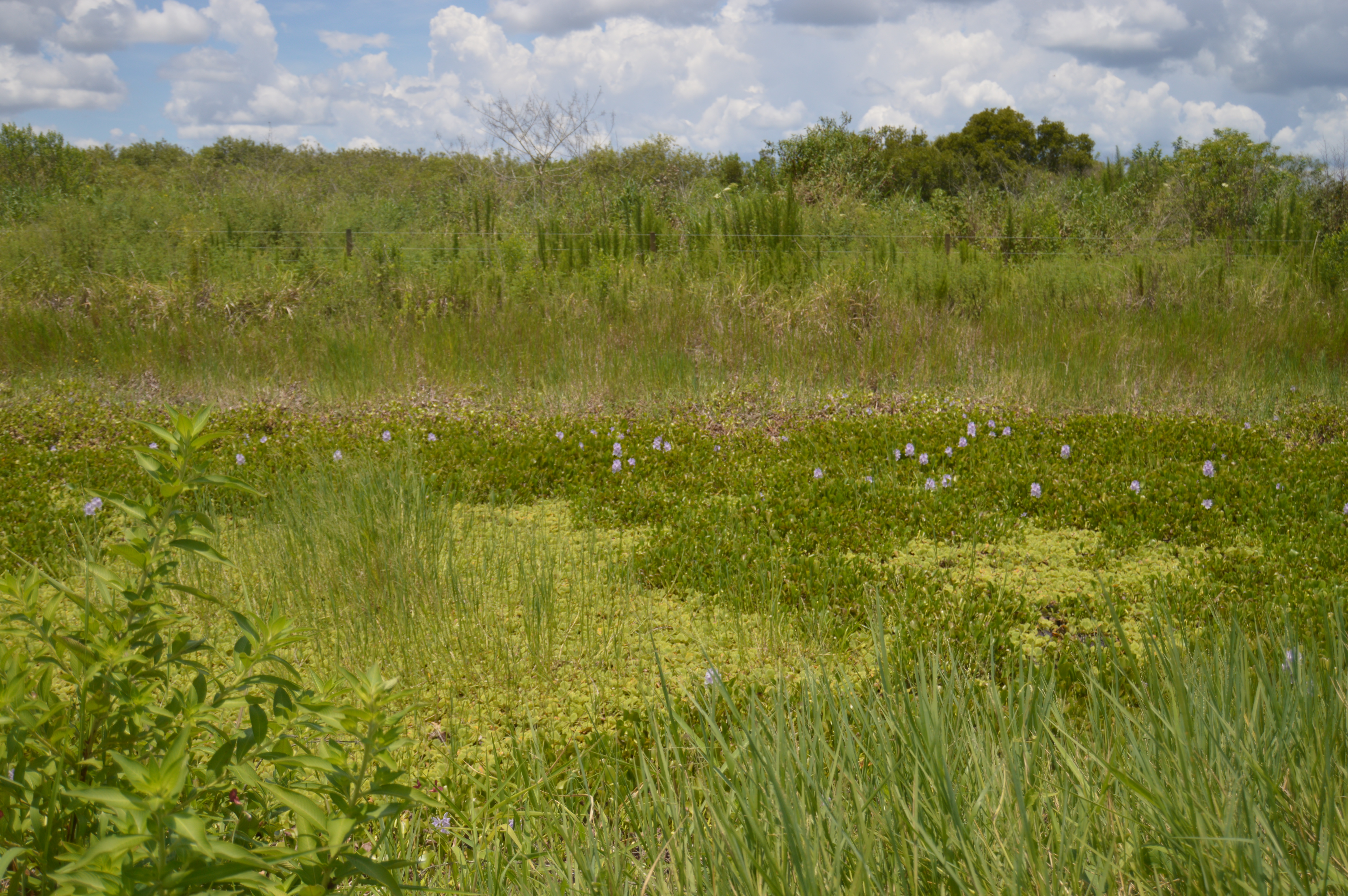
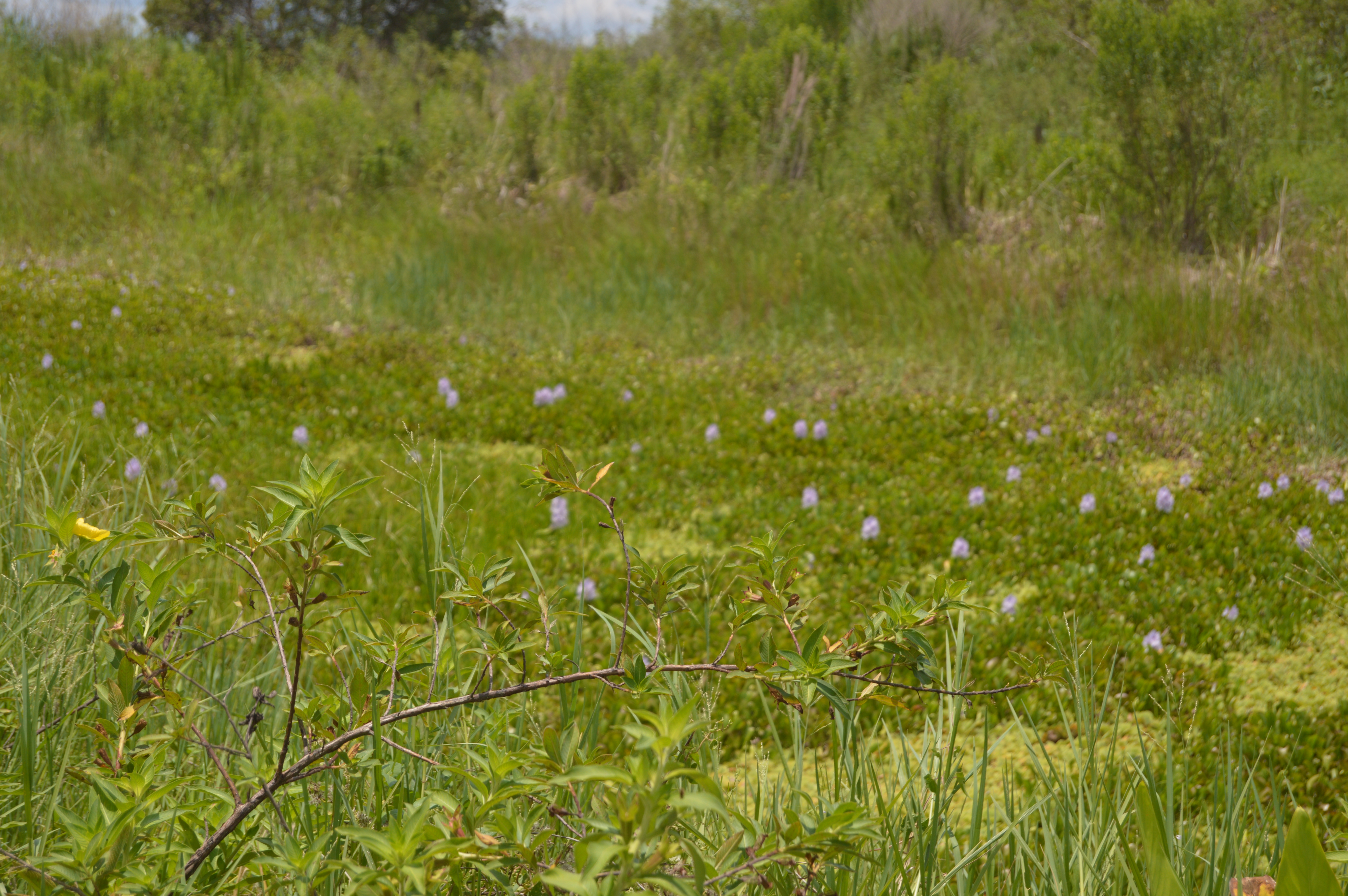
These are canal on the side of the road filled with vegetation.
and then we got lost
and then we were found.
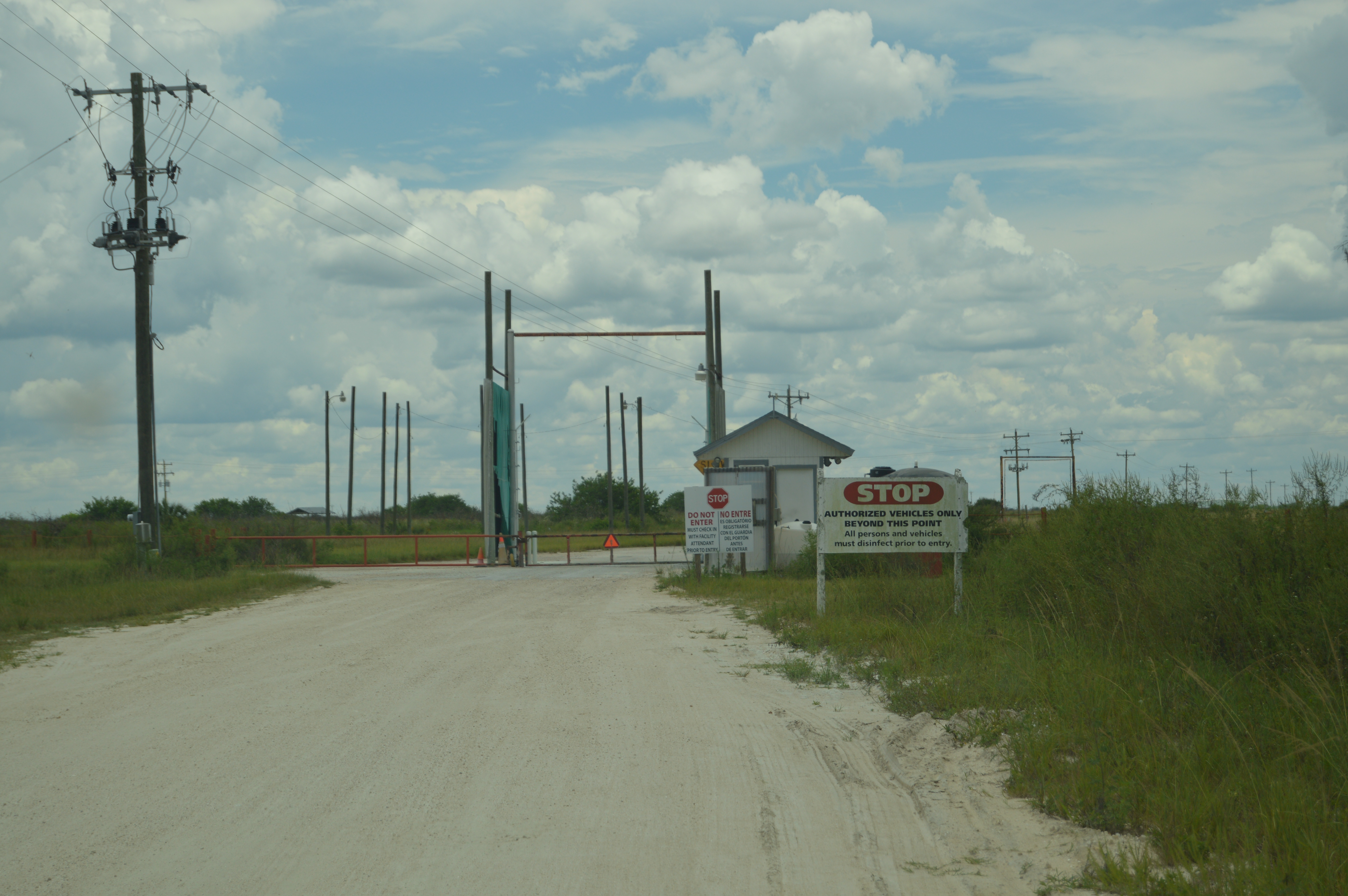
So when you pull onto Deerfence Canal Road the STA is straight ahead and to the right to US Sugar Corp.
Gate for US Sugar Corp
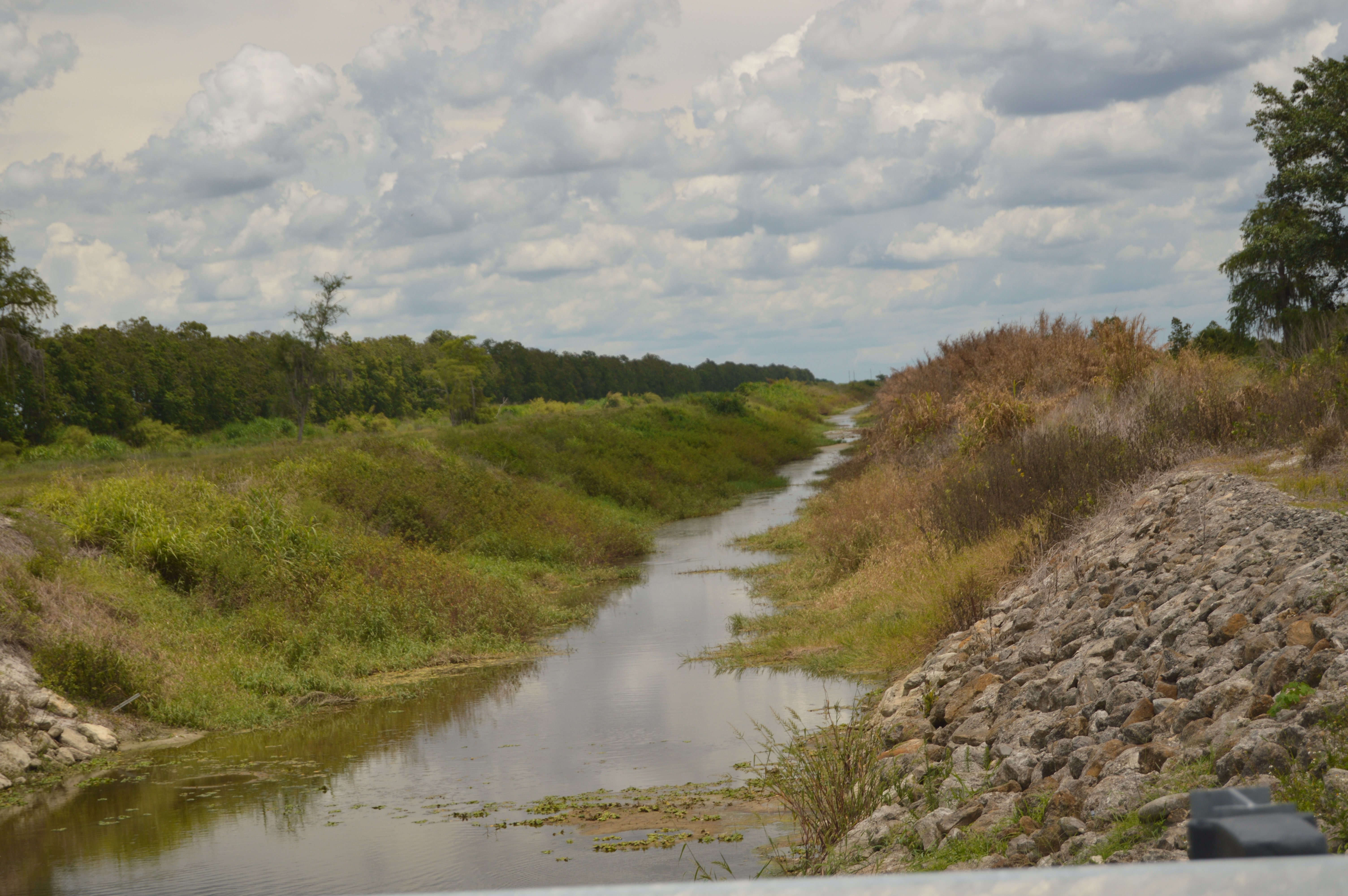
This is the water coming from the west running along side US Sugar Corp
This is the water going towards the STA. Note Brown decayed vegetation on right looks like its bee sprayed with herbacides.
This is the water on the other side of the street going toward the STA
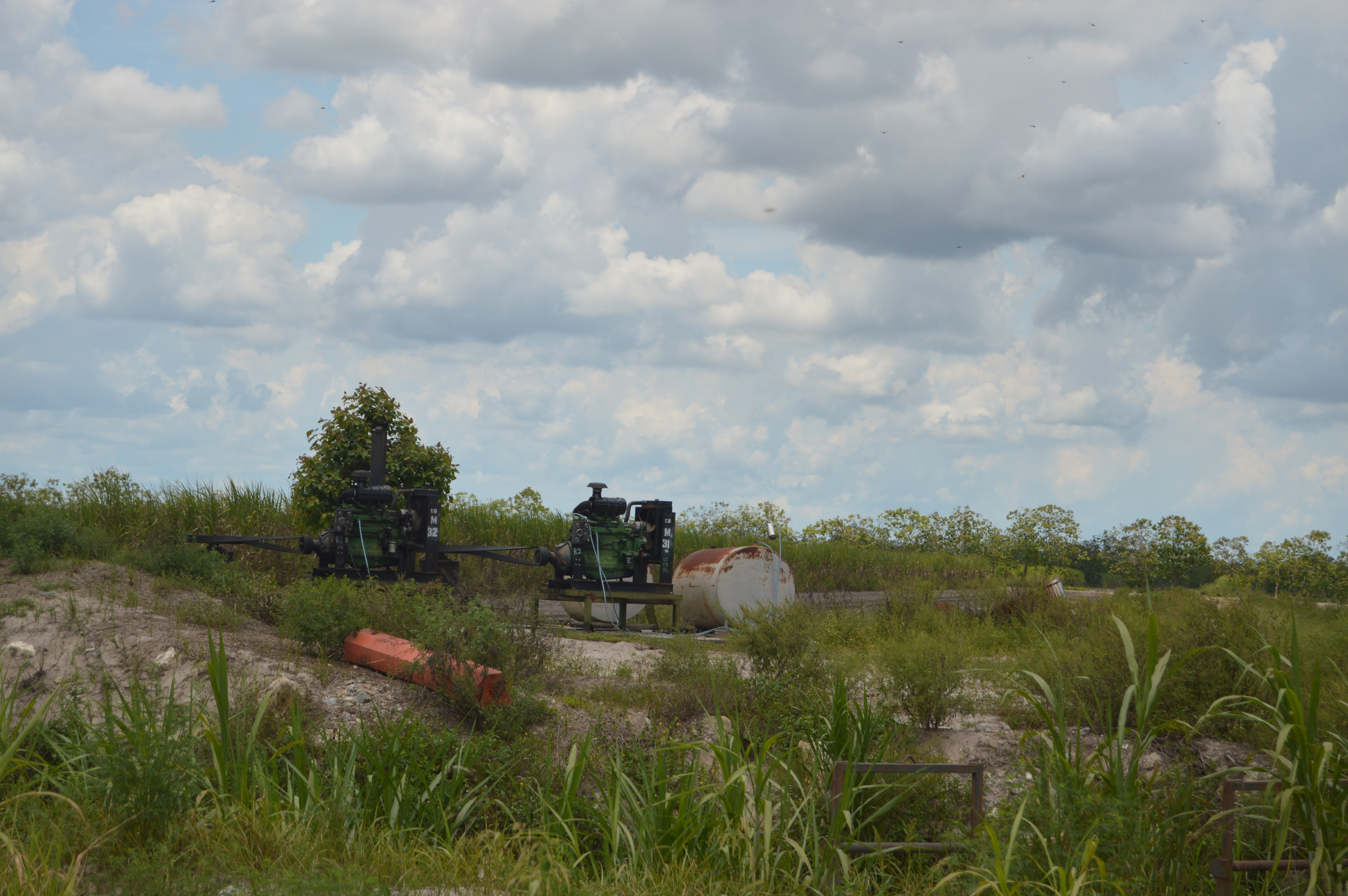
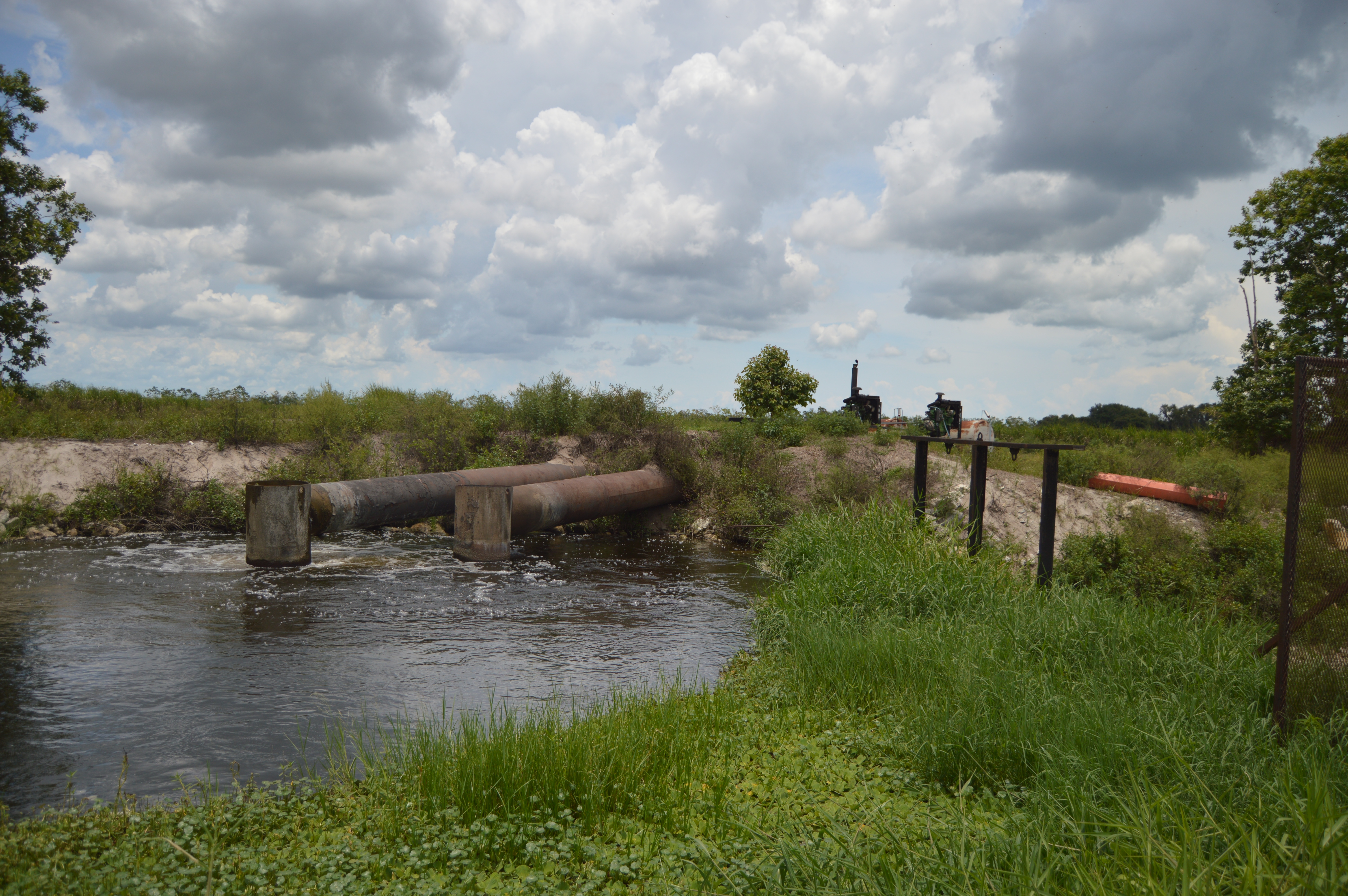
Then we got here. I have no idea what this is or what’s it for.
but then after the water looked like this.
Again no judgement I have no idea what I’m looking at
We drove up the the STA’s
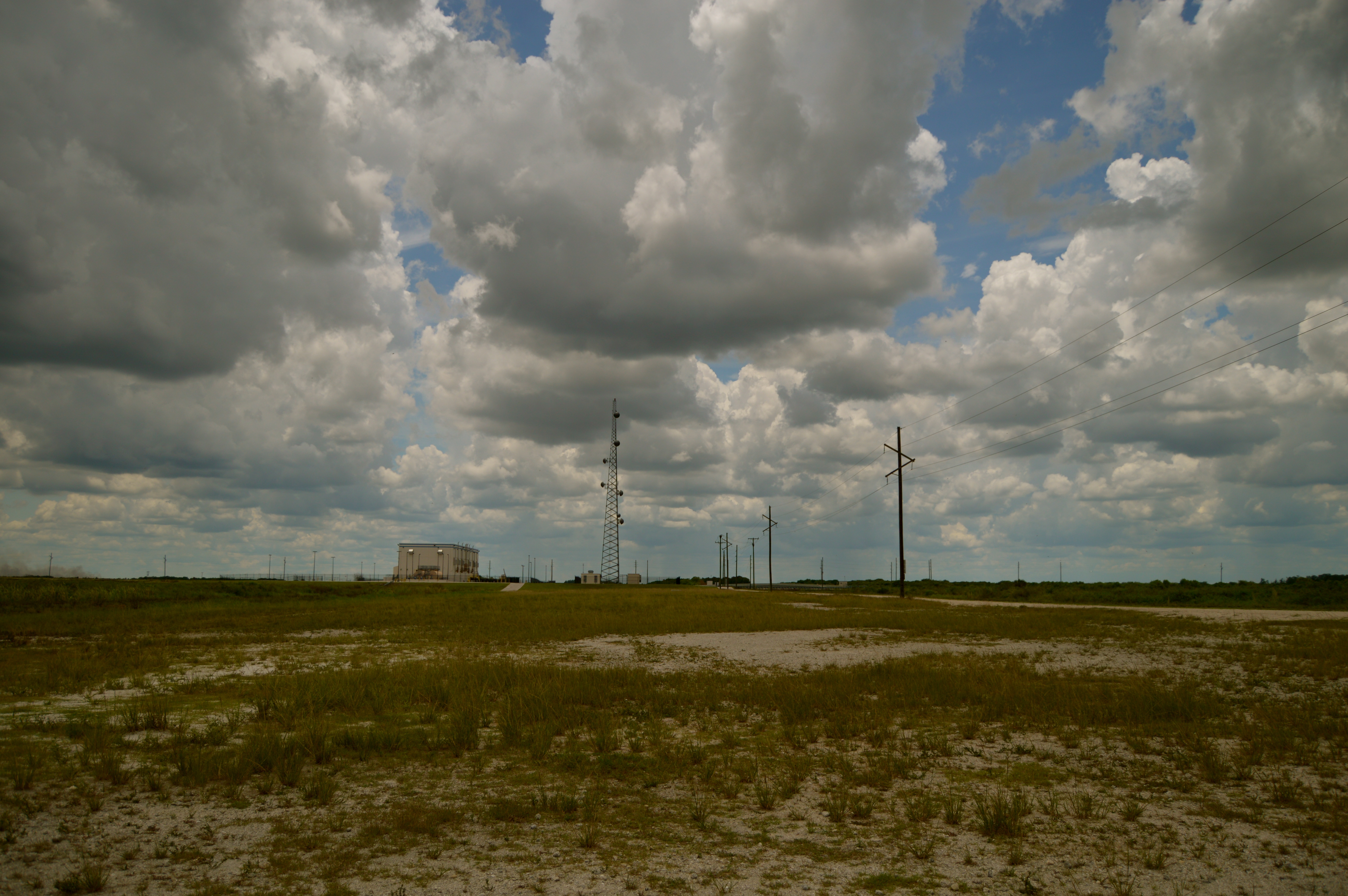
Building at STA 5/6
STA 5
sta 6
sta 5
STA-5 is accessible from the north or south.
From the north: Travel about one mile east of Clewiston on U.S. 27 to C.R. 835, (Evercane Road), or find this intersection about 13.5 miles west of South Bay.Once on C.R. 835 travel south and west about 26 miles to Deerfence Canal Road.
From the south: Use I-75, travel about 25 miles west of U.S. 27 on I-75 turn north at Snake Road exit. Follow this road northward 25 miles to C.R. 835 and turn east three miles to Deerfence Canal Road.Once at Deerfence Canal Road go east one mile to STA-5, cross the bridge and proceed to the east end of the public parking area.
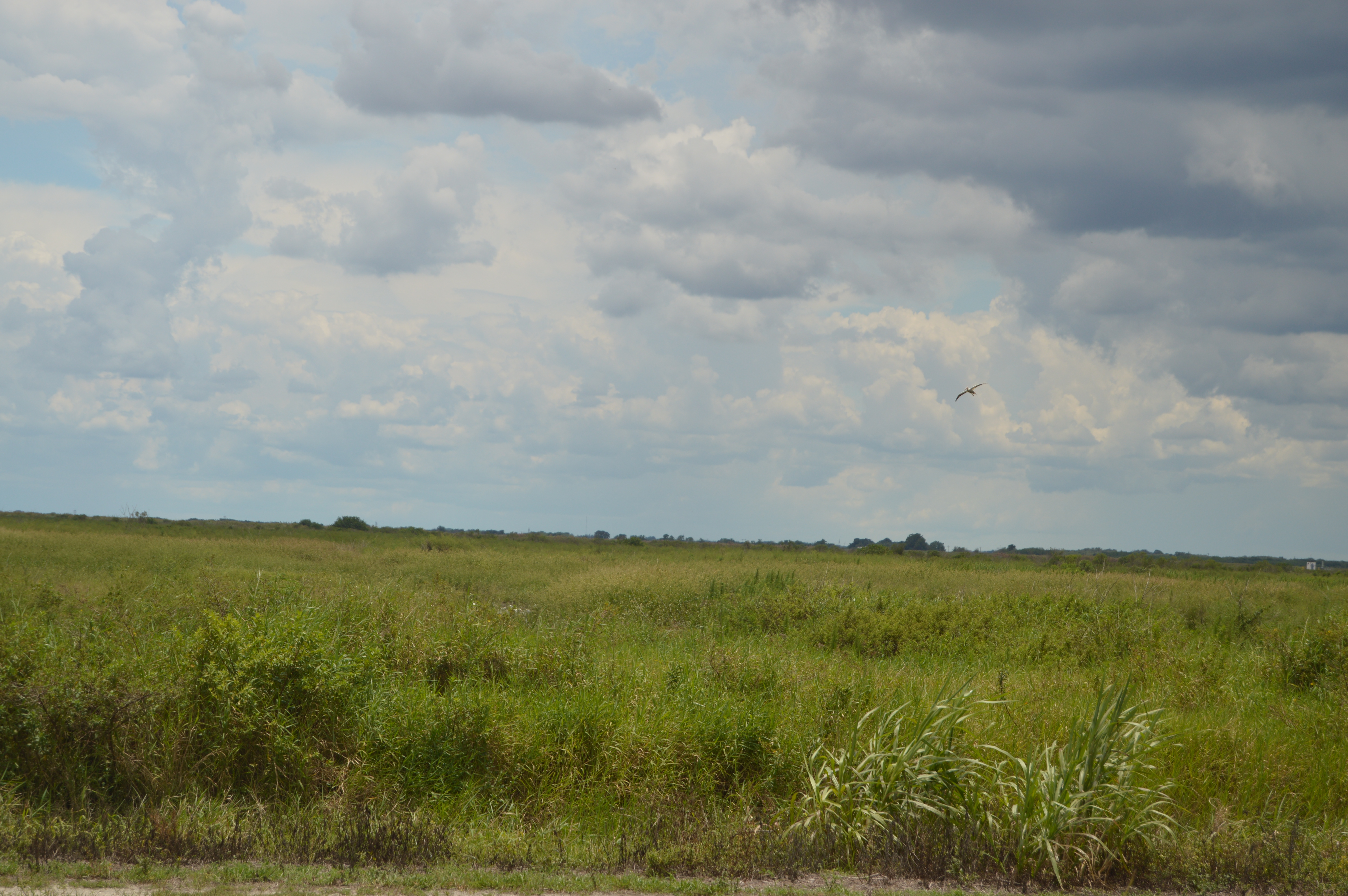
Again. I’m not a hydrologist or geologist but it seems very dry down there. The canals were low. What good fortune for US Sugar Corp to have all this water just next door! Isn’t it? Who needs a reservoir when you have all the water you need right next door. I could definitely see why no one wants to mess with this.
I’d definitely bring my own potty! and don’t forget to stop by the US Sugar Corp guardhouse that sits next to the STA and say hi.























 cyndi lenz