A little while back Jules and I traveled down to STA 5 and 6 where we were dismayed to find not a lot of water going anywhere but over to US Sugar lands.
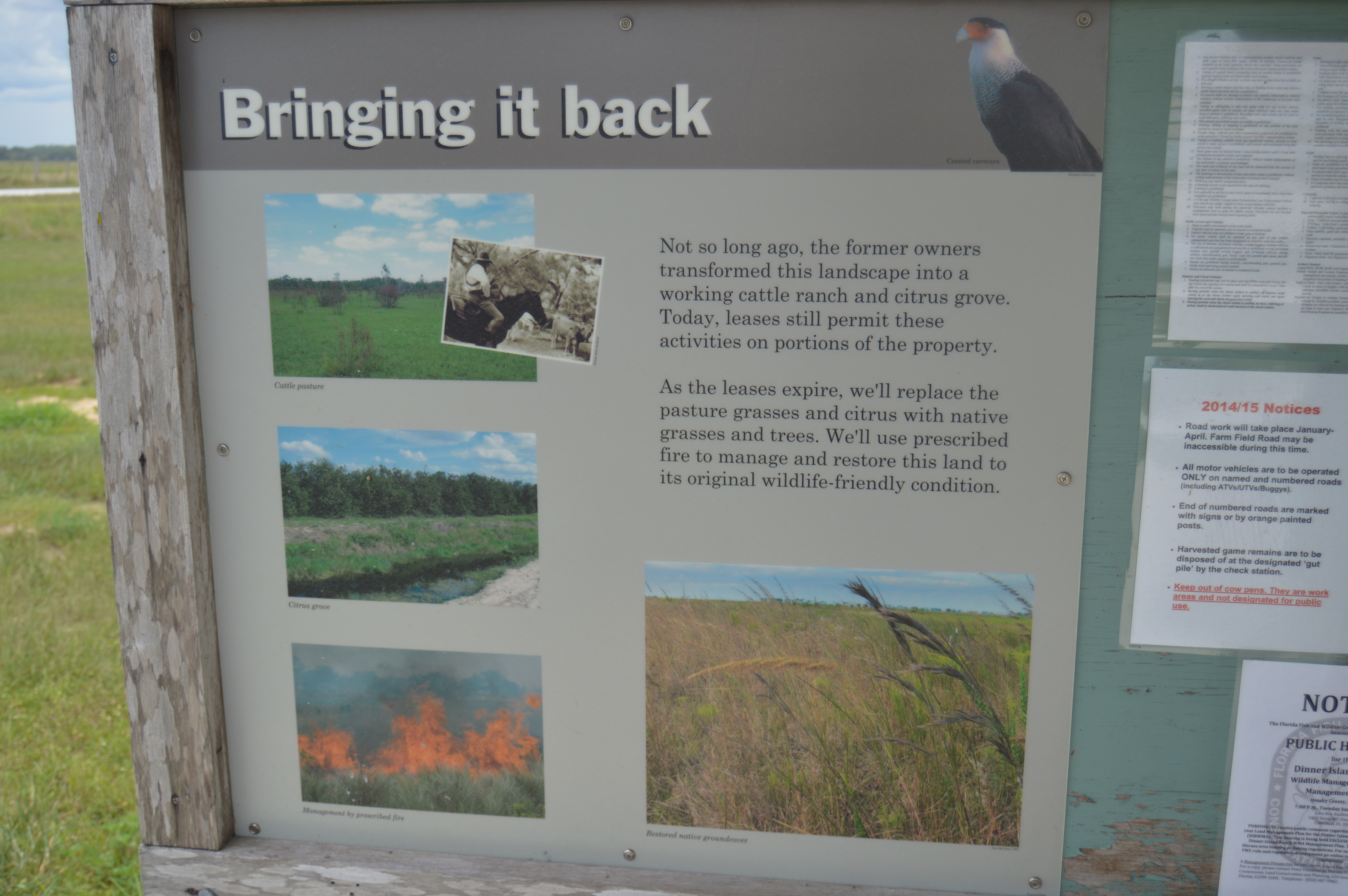
One the way back we stopped here and hung out with the cows. Out here you are seriously out in the middle of nowhere.
They have hunting, fishing, wildlife viewing, hiking, camping horseback riding, biking and scenic driving. There was a bad rain storm do we didn’t get all the way through but saw enough to say we would definitely get back there.
What is Florida’s Wildlife Management Area System?
Florida’s Wildlife Management Area (WMA) system is managed by the Florida Fish and Wildlife Conservation Commission (FWC) to sustain the widest possible range of native wildlife in their natural habitats. These lands are more rugged than parks, with fewer developed amenities.
This system includes more than 5.8 million acres of land established as WMAs or Wildlife and Environmental Areas (WEAs).
Cooperative Areas – On the majority of these lands (about 4.4 million acres), FWC is a cooperating manager working with other governmental or private landowners to conserve wildlife and provide public use opportunities.
Lead Areas – On the remaining lands (about 1.4 million acres), FWC is the landowner or “lead” managing agency responsible for land stewardship and providing quality wildlife conservation and recreation opportunities including hunting, fishing, wildlife viewing, hiking, biking, horseback riding, paddling, scenic driving, and camping.
There are loads of critters that live there including the Florida Panther.
So this is a great place for conservationists and hunters alike. A place for all of us.
There’s a place for us.
So I was very distressed to read this on our favorite Blog EYE on MIami.
Message from South Florida Wildlands Association: Threats to Everglades from FPL and oil drillers
“Matthew Schwartz, of South Florida Wildlands Association, provides a good summary of the ongoing threats to the Everglades by oil drillers and FPL. Please consider joining and contributing to their efforts.”
You can read the letter at link but here are the highlights:
“In the years since South Florida Wildlands has been working to protect wildlife and habitat in the Greater Everglades, we have never faced a combination of issues that have such capacity to destroy and degrade this unique landscape. Folks who live in South Florida and follow local media are aware that a company (Kanter Real Estate LLC) has just applied for a permit to drill for oil and dig limestone mines on 20,000 acres of Everglades it owns in Broward County.
But that’s not all. We recently learned that Florida and Power and Light (FPL) is still intent on developing 3,000 acres of primary Florida panther habitat they bought just north of the Big Cypress National Preserve and Seminole Reservation for the purpose of building the largest gas-fired electrical generating plant in the nation. Having lost a lawsuit with the Seminole Tribe of Florida over agricultural zoning on the property, FPL is now asking Hendry County to create a new land use type (Electrical Generating Facility) and move the property into that new classification.
The FPL property is surrounded by public lands that were acquired at tremendous cost and effort (e.g. the Big Cypress National Preserve, Dinner Island Wildlife Management Area, Okaloacoochee Slough State Forest) and contain some of the most important contiguous upland habitat for Florida panthers, black bears, and other wildlife in South Florida. For years, the entire property had been expected to be protected by a Florida Forever land protection project called “Panther Glades.” Unfortunately, funds were never available to complete that purchase prior to FPL buying the land for their own purposes. From the standpoint of our stressed out wildlife in South Florida, FPL could not have chosen a worse location for their new power plant if they had tried.
But wait – there’s more. In the Big Cypress National Preserve, another company (Burnett Oil Company of Ft. Worth, Texas) is applying for a permit to conduct seismic testing for oil across 110 square miles (70,000 acres) in the heart of the preserve. The intent is to locate oil deposits before opening up the Big Cypress to additional oil drilling. A federal comment period is open until the middle of August. For those wondering how this can take place inside a national preserve – most of the below ground oil rights are owned by a company named Collier Resources while the National Park Service controls only the surface. Collier Resources has leased some of these rights to Burnett Oil for the purpose of the seismic survey. Another news story from the Sun-Sentinel summarizes this project – which would take place on some of the most sensitive and biodiverse wetlands in Florida:
Feel free to call or email on any of the above with comments or questions.
Best regards,
Matthew Schwartz
Executive Director
South Florida Wildlands Association
1404 East Las Olas Blvd.
P.O. Box 30211
Ft. Lauderdale, FL 33303
954-634-7173 https://www.facebook.com/southfloridawild“
Please pay attention to this!
I had hoped to spend the summer visiting state parks and wild life management areas in Florida. We call this our adventure days and I amazed at all the wonderful things we have seen so far. if you other citizen journalists want to do this also please take some photos and videos and write us a guest blog. We need to show the world the beautiful Florida that we all know and love. We need to show our fellow Floridians what we are protecting. Let’s do this!
Look who is right here in our hood! Bring it on home! Let James help you cause we sure do got dem blues! A love affair with the Pacific Legal Foundation and the Economic Council of Martin County. Wow! Who would have thunk?
“PALM BEACH GARDENS, FL; March 12, 2014: Florida attorney Mark Miller, a veteran of business, property rights, and constitutional litigation, has joined Pacific Legal Foundation (PLF) as managing attorney with PLF’s Florida (Atlantic Center) office based in Palm Beach Gardens.
It’s a privilege to join Pacific Legal Foundation and be part of America’s most successful legal organization that works to defend and advance freedom,” said Miller. “PLF is dedicated to ‘rescuing liberty’ from coast to coast. I’ll be promoting that mission aggressively throughout Florida and along the Eastern Seaboard, by putting my legal skills to work on behalf of property rights and other constitutional liberties, and to help victims of overreaching government.
In 2012, he served as lead local counsel for former U.S. Representative Allen West in the 2012 election battle for the 18th District congressional seat in Florida.”
“Mark Miller, an attorney with PLF, said he wants a court to rule a state law prohibiting craft breweries, restaurants and taverns from selling or filling beer growlers unconstitutional.”
Personally, I don’t have an issue with the case. I have issue with the camaraderie between this group and Rick Scott who calls himself the Governor but really and obviously in cahoots with a very right winged agenda that is affected us, our water and our Florida Black Bears, Panthers and Manatees. I’m sure they are the one’s distributing all the “land grab propaganda” that we had to deal with.
It’s so sad is that what the Libertarian party set out to do has morphed into a group that is totally operated and owned by a bunch of old rich white guys. The very freedom they want has been taken away. I feel bad for you Libertarians! You want freedom but you don’t want us to have the freedom to swim in clean water.
Please don’t think I’m Libertarian Hater. I am not! There are parts of the platform I really appreciate like the leave me alone stuff and no government intrusion stuff. What a bunch of hypocrites you guys are! You working for the people are intruding on our very right to have clean drinking water. Let’s have a conversation about the first amendment and my right to free speech which has been taken away by a bunch of legislators that have no idea what they voted for.
In this particular case it is illegal for me to ask my patients if they have a gun even though its required of me through my computer program. In the end I get punished not the makers of the computer program or the people who require me to ask this question. Who does that?
You have way become hateful and single minded there is no talking to you. All you know is the talking points that have drummed into your heads. Were you all hypnotized? Did the legislators go to a meeting and have some strange hypnotic music? You must have because I cannot think of one rational reason that our entire GOP Florida Legislature would hate Floridians so much and really go against your own party standards of state rights and local control. Please explain the hypocrisy! Libertarians should be against the wasting of water and sending millions of gallons of water out tide. That’s how I know these are not Libertarians. But boy they got them fooled.
Now check this out. Guess who is a partner with the Economic Council of Martin County?
Yes! 200 points for you. The Pacific Legal Council.
This stuff in nothing new. We need to put an end to it.or we really will have zombie Apocalypse. Only in our case its the zombies of the extreme right.
Yesterday I had to laugh because if I just had clean water I probably wouldn’t even be sitting here on my day off computing. I would be in the water.
Yesterday after I posted my blog I was having a conversation with my friend Kenny Hinkle and between the both of us we came up with some interesting information. Team work yay. We were both interested in this web site.
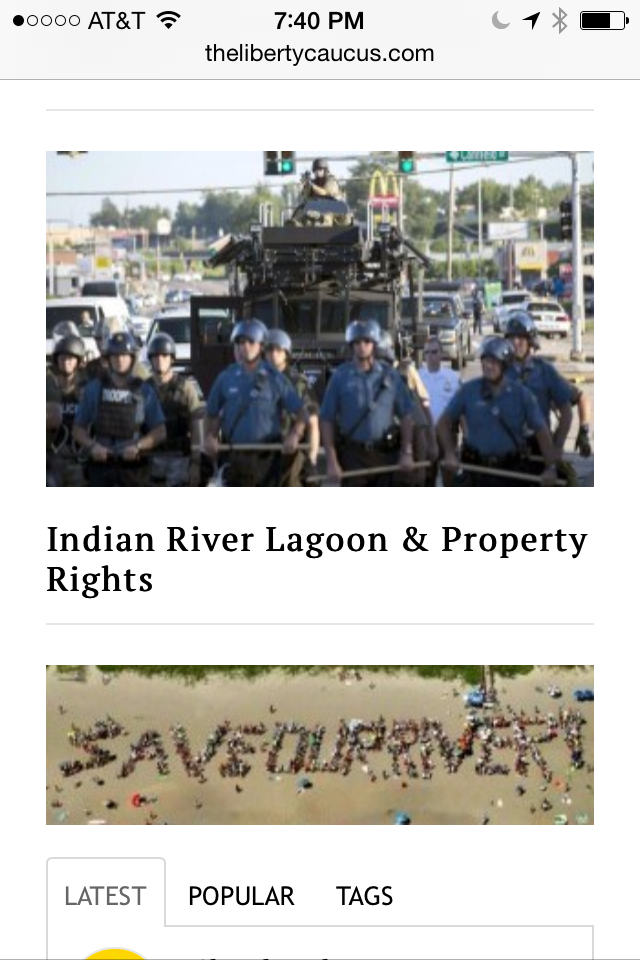
I got there because I got a little confused with all the liberty blogs that are out there and different liberty caucuses but then a few things caught my eye.
and this
What could these people possible want with FNAA and our Indian River Lagoon. So I dared to go a little further and they had a whole local section.
June was an abysmal month for freedom on the Treasure Coast as 290 area residents were violently abducted at gunpoint by men in costumes for non-violent vices.
Saint Lucie
June was a terrible month for freedom in Saint Lucie as costumed men with guns abducted and caged 177 people for non-violent vices.
Indian River
Indian River saw a much lower total with 57 people being kidnapped and caged by costumed men with guns for non-violent vices.
Martin
A total of 56 citizens were abducted at gunpoint by men in costumes for alleged non-violent vices.”
Who are these costumed men who are kidnapping and caging people? If my friend Gayle Ryan was in town she would say “Are they single?”
Did they look like this?
did they look like this?
If the police are costumed men with guns am I a costumed female with a stethoscope?
“The lagoonists and their goons have banned fertilizers (though no evidence of damaged caused by the fertilizers exists just their presence) and now facing the calamity of rain one has to wonder: Will the loony lagoonists soon ban rain?”
Funny but we are lagoonatics! Get your jargon correct puleeeze Brightlight.
and then I saw that they were all obsessed with Eve Samples.
I felt terrible because I was having such a good laugh and then this.
You can go over and search. It’s a good search engine and also has a store where you can buy all kinds of nifty things. Like stickers and books. You can buy the Libertarian Manifesto for 11 bucks!
I love manifestos. Here are some other people that wrote manifestos.
kazinski manafesto
At any rate you get the picture and honestly like I have said hundreds of times. Free speech! Keep on writing. Please!
So we were interested in who owned the website because these people are local and thought it would be a good thing to know. All these funny people hiding behind their nom de plumes! I don’t have issue’s with nom de plumes. Some of my friends have these. I could just never figure out what mine would be.
So anyway, the owner of the site is Registrant Email: gatorlandrhett@hotmail.com
This I find very confusing since he previously made me very sad with those not so nice posts about Eve Samples.
I’m so confused.
This is his job.
“Creating solutions for local and small businesses to connect with their target audience wherever they are, collecting useful information for how consumers interact with them and implementing steps to increase conversions and ROI for business partners.”
I’m wondering what he puts in to target us? Lagoonakooks?
What would you use to target me? #noseylagoonakook? or maybe #socialistlagoonakook?
“.. scarcity is a reason most people work since their financial resources are limited and finite and work provides them the income necessary to accumulate resources to exchange for the goods and services of another. Consumers demand scarce goods (housing, clothes, a night out, travel, school supplies) and people have to economize their decisions based on scarcity.
In the case of water scarcity, however, we find that the challenge of scarcity is met in some very peculiar ways.
For examples, we can look to the Indian River Lagoon, Lake Okeechobee, and the Everglades where water is plentiful, but clean water is scarce. Moreover, we might look to the western United States where an arid climate makes all types of water scarce.
Yet in all of these places there is one thing in abundance — clean and drinkable bottled water.
Why is it that we can we have too much dirty water in one place, not enough water in another, and be surrounded by an abundance of bottled water?
The first thing to be said about this is that on the free market, regardless of the stringency of supply, there is never any “shortage,” that is, there is never a condition where a purchaser cannot find supplies available at the market price. On the free market, there is always enough supply available to satisfy demand. The clearing mechanism is fluctuations in price. If, for example, there is an orange blight, and the supply of oranges declines, there is then an increasing scarcity of oranges, and the scarcity, is “rationed” voluntarily to the purchasers by the uncoerced rise in price, a rise sufficient to equalize supply and demand. If, on the other hand, there is an improvement in the orange crop, the supply increases, oranges are relatively less scarce, and the price of oranges falls consumers are induced to purchase the increased supply.
In the case of droughts government monopolies set prices arbitrarily and this sends consumers distorted prices. Just as bad crops increase the price of oranges so should droughts increase the price of water. Individuals then internalize their decisions to make best use of the scare resources — their own finances and the water commodity. Government distorting prices prevents individuals from acting most efficiently to conserve scarce resources.
The Indian River Lagoon and other areas in South Florida are impacted by the lack of clear pricing signals to individuals. Meanwhile, bottled water is so easy to obtain that this past weekend at the Indian River Lagoon Clean Water Rally, free clean bottled water was given away during an event to protest the lack of clean water in the environment.
Bottled water is the only water product that Americans have routinely priced and marketed. We now happily pay as much as four times the cost of gasoline for potable water that we could have for free from fountains and taps. Of course, economists will tell us factually that bottled water is not the same good. The square Fiji bottle is a sexy statement; and the ubiquitous bottle of water in hand is a fitness and convenience statement. Subjective valuation determines price. A real market in this water product does exist.
Markets for other water products are, meanwhile, mainly nonexistent. We routinely do not pay market prices for most other forms of water. Until recently, water has been viewed and treated as a free good by all Earth’s peoples. As with all free goods, water experiences unlimited demand. But water cannot meet unlimited demand. Water needs prices in order to signal scarcity and inform demand. Different categories of water need different prices to reflect the different preferences of users. Free can no longer be water’s price. The profligate glory days of limitless water everywhere seem to be over.
The lack of market pricing affects the Indian River Lagoon as it encourages pollution. By allowing farms and industries to pump byproduct into the water the waterways are essentially being used as a free garbage dumping ground. The permitting of pollution by government recklessly encourages more pollution by firms rather than firms benevolently opting to pay to have it properly disposed. The business who pays extra to have waste properly treated and disposed of may not be able to compete with the businesses who opt to take advantages of government allowing dumping of byproduct into waterways at virtually no cost.
The lack of market pricing occurs largely due to lack of ownership and governmental edict. With “public” ownership bureaucrats and politicians charged with maintaining resources lack capital value interest in the resources. They only preside over the current use as Hans Hoppe taught us, “it makes exploitation less calculating and carried out with little or no regard to the capital stock. Exploitation becomes shortsighted and capital consumption will be systematically promoted.” The long-term calculations of the bureaucrat is distorted by this.
Ownership being replaced with stewardship and the lack of the profit and loss mechanism prevents the water bureaucrats from making the most efficient decisions. It is not for the lack of caring but the inability to make economic calculation as Mises explained in Bureaucracy:
Bureaucratic management is management of affairs which cannot be checked by economic calculation.
… The bureaucrat is not free to aim at improvement. He is bound to obey rules and regulations established by a superior body. He has no right to embark upon innovations if his superiors do not approve of them. His duty and his virtue is to be obedient. … Nobody can be at the same time a correct bureaucrat and an innovator.
Yet if the same waterways were privately owned the property owners could charge for the all uses of waterways. Non-pollutive by products may be charged less than damaging pollutive byproducts which negatively affect water quality. The scarcity of the water quality would set prices to discourage pollution and incentivize firms to find cleaner and more efficient production methods.
Furthermore with ownership provides the long-term capital value incentive which encourages conservation. We see this in forestry where forests are replanted to ensure the forest owner has income in the future. We see this at Adams Ranch where the stock of cattle is not wiped out all at once. Adams Ranch does a particularly good job of conserving grass to feed and support their cattle because the land they have to raise cattle on is limited. If grass goes so does the cattle.
In the case of the Lagoon, waterway owners might decide not to allow pollution. Instead, deciding that the boaters, fisherman, divers, swimmers, etc., are a preferable source of revenue for decades into the future.
Prices would help owners calculate that using the water for leisure and conservation is more efficient and useful than making it unusable dumping grounds. Prices would help consumers appreciate the use of clean waterways. Up the Kissimmee River Disney is able to charge huge entrance fees to maintain a safe clean park and facilities. In other unmaintained areas people dump litter in the river, like they do on the roadways. Notice, other than on trash day, people do not litter their own driveway. That is because of the tragedy of the commons. Nobody has an incentive to keep it clean as nobody owns it.
When we fail to understand the basics of scarcity and prices, however, we are left with the current and dominant view of water in which everyone owns it, and action to maintain it can only be undertaken communally. We see this attitude reflected in recent social media posts (1, 2, 3,) on the Indian River Lagoon, including: Thousands of people came out to rally for the lagoon cleanup and to raise awareness and money. Obviously, a clean lagoon is valuable to many people, but we will never know just how valuable as long as government precludes pricing from working in the lagoon’s favor.
In other words, let’s allow the people who care to put money where their mouths are and allow the marketplace to incentivize the people who are most motivated to have a long-term stake and interest in conserving the capital value of the lagoon.
Only the market can provide this, for no matter how hard bureaucrats try they cannot imitate market forces. Lilley explains:
And, no, command economies cannot play at market. There is no third way. Only private property and the rule of law can create a viable market; bureaucratic mandates can deliver only shortages, higher costs, and poorer quality.”
Alrighty then. ok. Funny about the clean water at the rally. We were concerned that people would get dehydrated so we made sure that everyone had water. Don’t read into it. I’m a nurse and it get’s very hot out there in the summer and we didn’t want anyone passing out. We all know this past winter’s failure to buy the land is a part of the big picture to privatize out water. But is it to increase bottled water sales? That’s interesting.
As for the rest I think the whole thing is very thoughtful but misguided and I hope some of my experts will chime in here on my blog or you can go to there and read about men in costumes with guns. Maybe Robin of Loxley will show up. And don’t forget “You gotta be a man to wear tights.”
update: 7/11/15 I just got a correction from a friend of mine that this person was let go from scripts. More on that later.
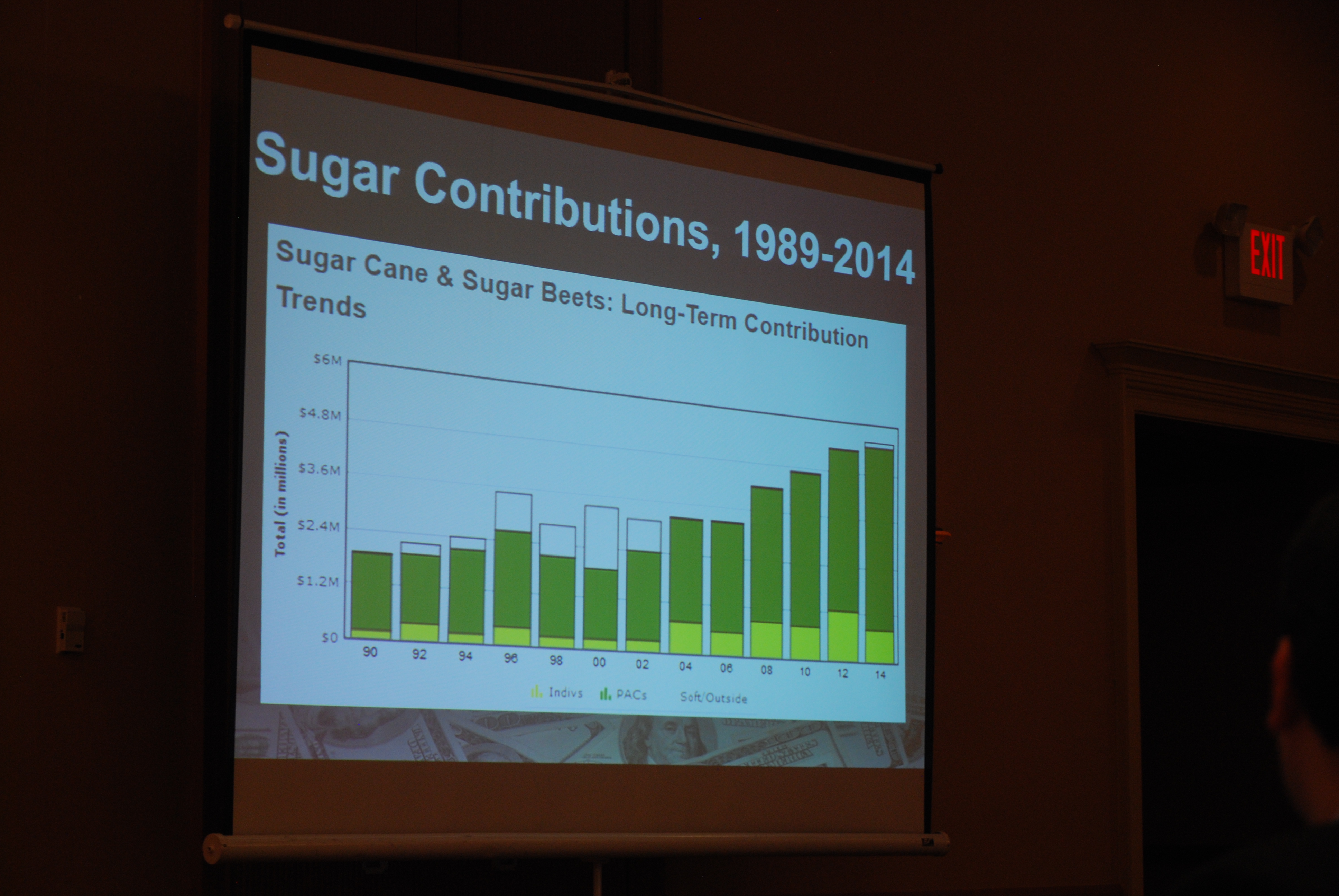
“The Center for Responsive Politics (CRP) is a non-profit, nonpartisan research group based in Washington, D.C. that tracks the effects of money and lobbying on elections and public policy. It maintains a public online database of its information.
Its website, OpenSecrets.org, allows users to track federal campaign contributions and lobbying by lobbying firms, individual lobbyists, industry, federal agency, and bills. Other resources include the personal financial disclosures of all members of the U.S. Congress, the president, and top members of the administration.”
“Just as water flows downhill, money in politics flows to where the power is. And the Center for Responsive Politics is there to help you follow the contours and learn about these connections. This section of the Action Center contains a wealth of information about the unhealthy influence money can have on our elections and government politics.
The Basics. From frequently asked questions to our money-in-politics glossary, from the 10 Things Every Voter Should Know about money in politics to our Follow the Money Handbook, and iPhone App, this section of the Action Center contains a wealth of information about the unhealthy influence money can have on our elections and government politics. Begin your learning here.
Sheila Krumholz has been the CRP’s executive director since December 2006, having previously served for eight years as the CRP’s research director. She first joined the organization in 1989 and served as the assistant editor of the first edition of the printed volume Open Secrets.”
On Scandal this past year even Olivia Pope made sure her candidate had “Big Sugar” money. I can’t find the clip but I think it was when she was prepping the very awesome Susan Ross character.
Shelia told us this: “Votes still trump money and that’s bad news for Donald Trump and good news for Democracy.”
“I would like to take this opportunity to bring attention to the plight of the Florida Everglades in the hopes of inciting awareness and support for our struggles to help, protect, and defend this unique ecosystem for the next generations.
The Everglades is our mother. Until recently, it has protected and nurtured us. In our time, the delicate balance of the Florida Everglades has been pushed beyond its breaking point, and the Everglades is dying a slow death. We once were able to drink the clean water of the Florida Everglades. We were able to swim in its waters and eat from the land. Mismanaged by governmental agencies over the past 50 years, the water in the Florida Everglades is now heavily polluted. For this reason, crucial elements of our way of life are no longer possible.
The dire situation in the Everglades is a direct reflection of the struggle of the individual tribal member. We were once people who were able to thrive independently within the sanctuary of the Everglades, and our position has always been to be left alone to live as we used to live before Columbus. Our original way of life has been made virtually impossible because the land that we used to depend on is not the same. In a sense, we have been forced to come out into the non-Indian world and learn how to be a part of it and live in it. One of our responsibilities as members of the non-Indian world is to emphasize the quandary of the Florida Everglades to create positive change. The Comprehensive Everglades Restoration Plan was started around the year 2000. Thirteen years and over a billion dollars later, it has been unsuccessful in doing what it was purported to do—to re-establish the original path of water from Lake Okeechobee into Florida Bay.For example, the one-mile bridge that was recently constructed on the Tamiami Trail for the purpose of restoring sheet flow to Florida Bay has not done so. Yet there is a two-mile flyover bridge planned for the same purpose.
Historically, the problem with the restoration of the Everglades has been fragmented efforts with no solid, unifying direction. Projects have been based on the perspectives of people versus what is actually required for the Everglades to survive.
For the Miccosukee people, true restoration is to allow water to flow uninterrupted from Lake Okeechobee and wash out into Florida Bay. And that water must be clean. Only when the polluted water is cleaned can the Florida Everglades and its wildlife begin to recover.”
Here, Chairman Colley Billie is speaking to the Department of the Interior. If you follow the link you can read the whole thing.
‘However, the Tribe strongly opposes the National Park Service’s (NPS) continued efforts to
construct a series of massive skyway bridges on the Tamiami Trail (Trail) including the currently proposed 2.6 mile bridge that will cost $193M because: (1) the bridges will not be permitted to operate as designed due to flooding and water quality concerns; and (2)there already exists a series of culverts that could effectively deliver water, during high water seasons such as if properly maintained at a fraction of the cost. At a minimum, NPS should be held to the requirements of the FY14 Omnibus with respect to securing all the should be held to the requirements of the FY14 Omnibus with respect to securing all the necessary funding for the project before being allowed to move forward with bridging.
My question is why is no one listening to Chairman Colley Billie and the Miccosukee Tribe? This goes beyond Florida to the Federal Government who apparently does not care at all and are willing to let our friends, the Miccosukee Tribe of Florida, be polluted. This is shameful.
We have a lot of priorities. This needs to be on the top of the list.
How can we get behind this and make sure that the Miccosukee Tribe has clean water? This must be done.
Please send a message to your US Congressman about this issue. Your more than welcome to use this blog post and the video. If you live in Florida send to your representatives so they clearly understand what they have done by completely ignoring all of us.
“In 1990, a small group of law professors and lawyers created the Environmental and Natural Resources Law Center, Inc. to establish a nonprofit law firm dedicated to meeting the needs of the public interest in environmental issues facing Florida. In 1995 the organization hired Richard Grosso, the former Legal Director of 1000 Friends of Florida, as its Executive Director, to establish a legal representation program at Nova Southeastern University in Ft. Lauderdale, Florida. The name of the organization was officially changed in October of 1996 to the Environmental and Land Use Law Center, Inc.
The firm began to expand, adding three additional attorneys to the team, including Senior Staff Attorney Lisa Interlandi in 2001 and now Executive Director and General Counsel Jason Totoiu in 2006. In 2006, the firm changed its name to the Everglades Law Center to reflect its unique role in providing legal, strategic and policy advice to the dozens of organizations and individuals working to restore the Everglades.
Today, the Everglades Law Center celebrates over 20 years of providing legal counsel to nearly forty national, state, and local environmental and conservation organizations. We tackle issues from the Kissimmee River Basin to Florida Bay. We also assist clients on issues affecting other imperiled landscapes and watersheds throughout Florida. Our lawyers are strategically located across the greater Everglades ecosystem.”
“The Foundation employs a team of scientists to serve as technical expert sources for the environmental community. These resources include providing sworn expert testimony in legal proceedings, testimony at public hearings, and general education and training for environmental partners. The Foundation also provides fellowships and internships to graduate students from regional and national universities working on Everglades projects, all to ensure that the next generation of Everglades experts will be well-trained to face the mission in front of them well into the first half of the century. Areas of fundamental interest in the science program are: hydrology, natural resource planning, water quality and ecology”
Check this out! It’s so cool!
Leading Science Initiatives
Hydrology
Water is the key to understanding the Everglades and the built environment. One in every three Floridians relies on the Everglades for their water supply and the native flora and fauna are finely tuned to the seasonal water cycles. Part of what we do at the Everglades Foundation is discover how the Everglades works, convert that to mathematics, and then program it on a computer. Once you do that, you can run “what-if…” scenarios that help decide what can and should be done to restore the Everglades. Hydrology and engineering allow us to look for solutions to restore the “River of Grass.” Thomas Van Lent, Ph.D., Senior Scientist
Ecology
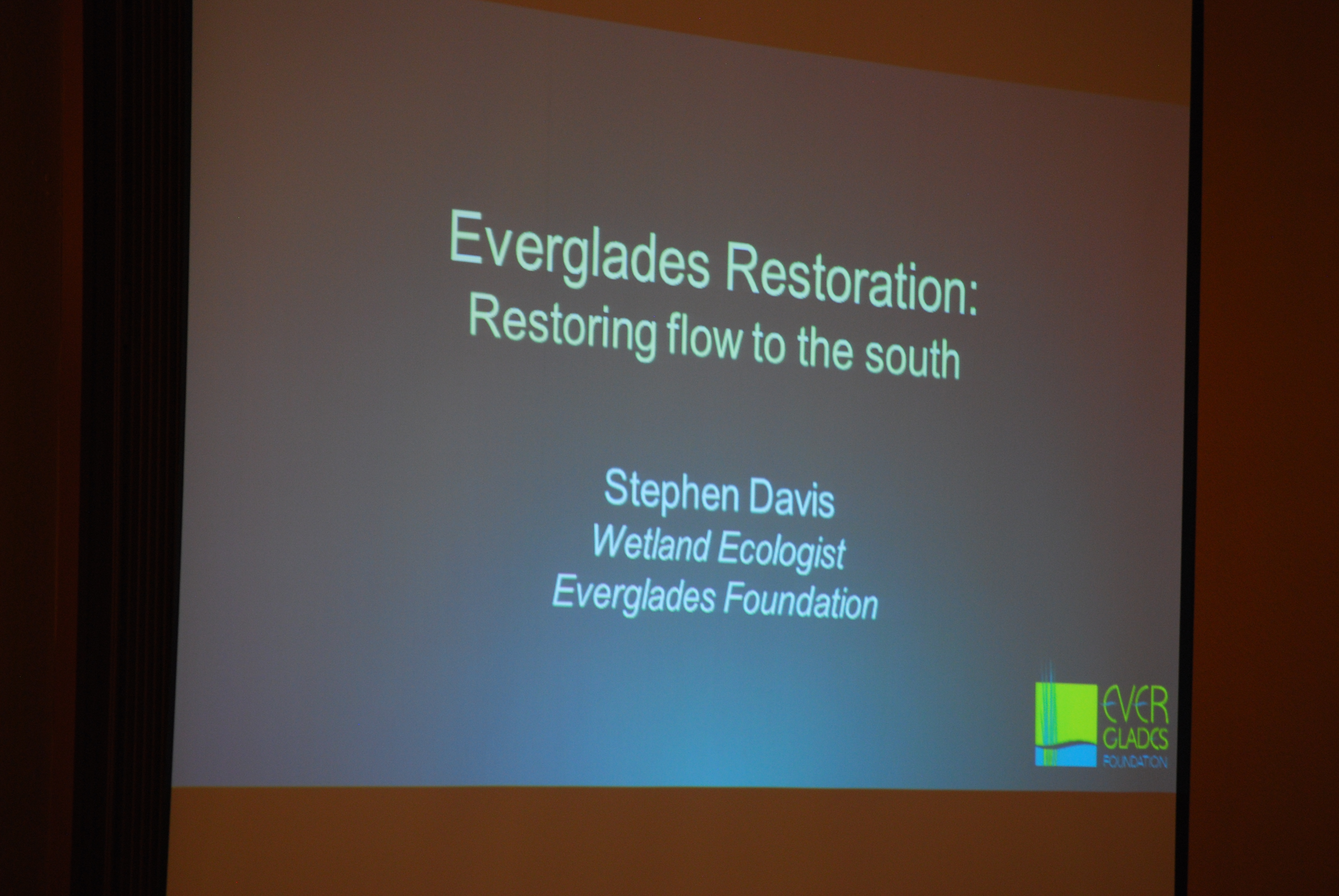
Ecological research at the Everglades Foundation is centered on understanding how human impacts such as the introduction and spread of exotic invasive species, urban development, off-road vehicle (ORV) use, oil and gas activity, water management and nutrient inputs have affected plant and animal life across the Everglades. To do this, we partner with agencies, academic institutions and environmental organizations across the region to tap into the extensive body of scientific information and peer-reviewed research. We analyze data and provide input regarding various social and political issues that may offset the current ecological balance of the Everglades or thwart progress of Everglades restoration. Stephen E. Davis, III, Ph.D., Wetland Ecologist
Water Quality
Restoring the Everglades will take more than just putting the right amounts of water back. It will also require that the water be clean. We conduct research on what causes imbalances in native flora and fauna, and then determine what actions are needed to correct those problems. The survival of the Everglades depends on the quality of its water. Melodie Naja, Ph.D., Water Quality Scientist
Planning and Project Implementation
Research and ideas alone will not restore the Everglades. These ideas must be converted into specific actions and projects. The science team at the Everglades Foundation works with government agencies and stakeholders to implement science-based solutions. We contribute modeling information, review scientific research and analyses, provide scientific and engineering input to restoration and water quality projects, and work to educate decision makers and the public on the issues. This helps to build consensus and get things done. Hong Xu, Environmental Engineer and Aida Arik, Ecological Engineer
Synthesizing Everglades Research
“No single entity is tackling or can tackle all of these issues,” Van Lent says. “It’s actually a concerted effort on the part of government agencies, non-profit organizations such as ours, and research entities to get this accomplished.” The single most important project being accomplished by Foundation scientists is not in-the-lab, test-tube science. It’s the synthesis of all scientific work conducted on the entire Everglades ecosystem from the Kissimmee River through Lake Okeechobee and into the southern Everglades and Florida Bay.
“The project combines all the available information and seeing which is most likely to get us to the goal,” says Van Lent. “This will guide us to recommend public policy that will lead to decisions to fix the ecosystem.” The initiative, financed by the U.S. Department of the Interior, involves explaining the work of 15 top scientists in Everglades-related fields for the past decade and making their work understandable to decision-makers and the public. “We’re taking the reports off the shelf and making them useful,” says Van Lent. “We’re the bridge between the laboratory and the real application of the science. We make the science useful.”
Science!
Stephan has a bunch of studies. I tried to get an account to read but I’m not with an institution.
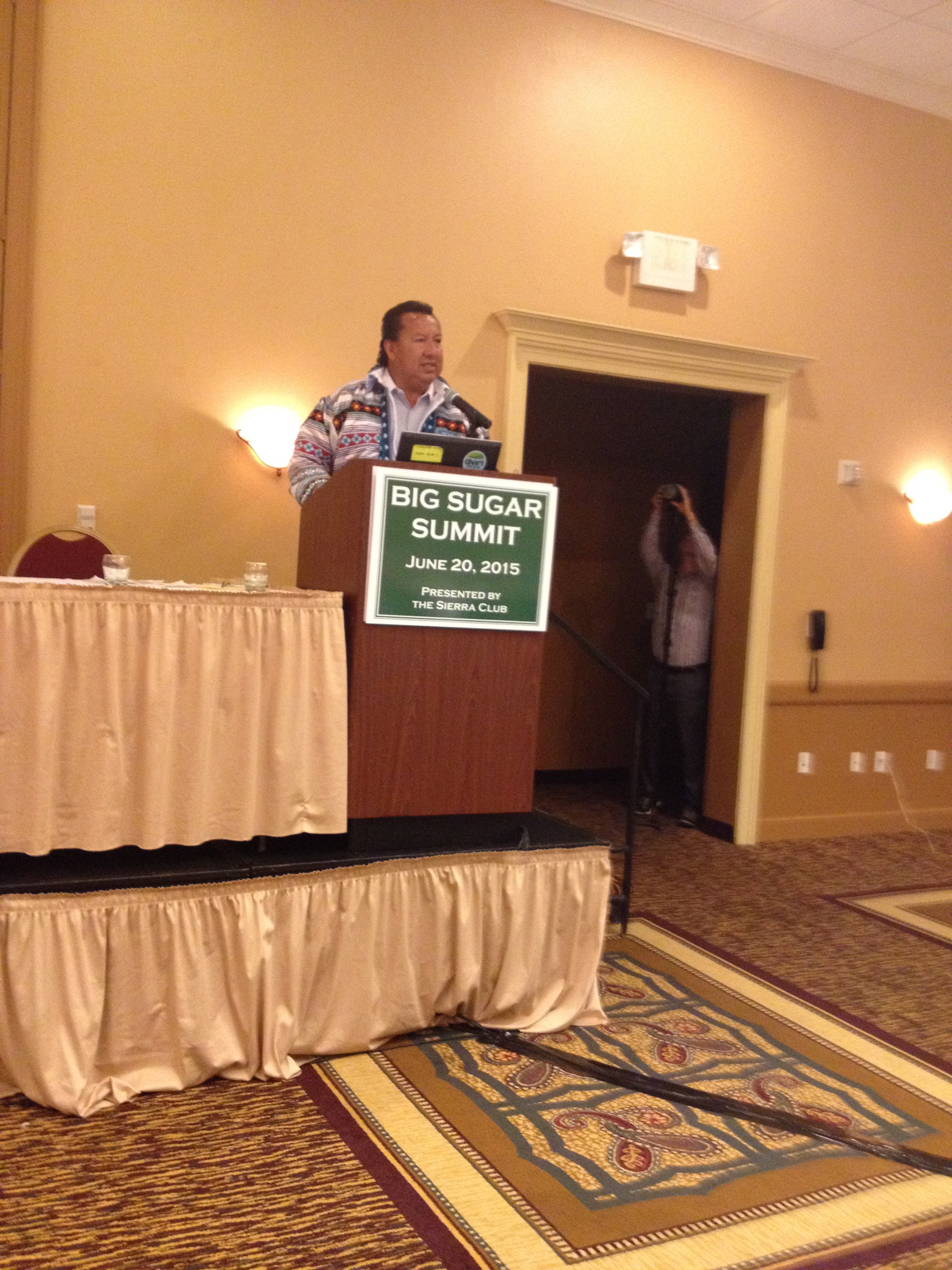
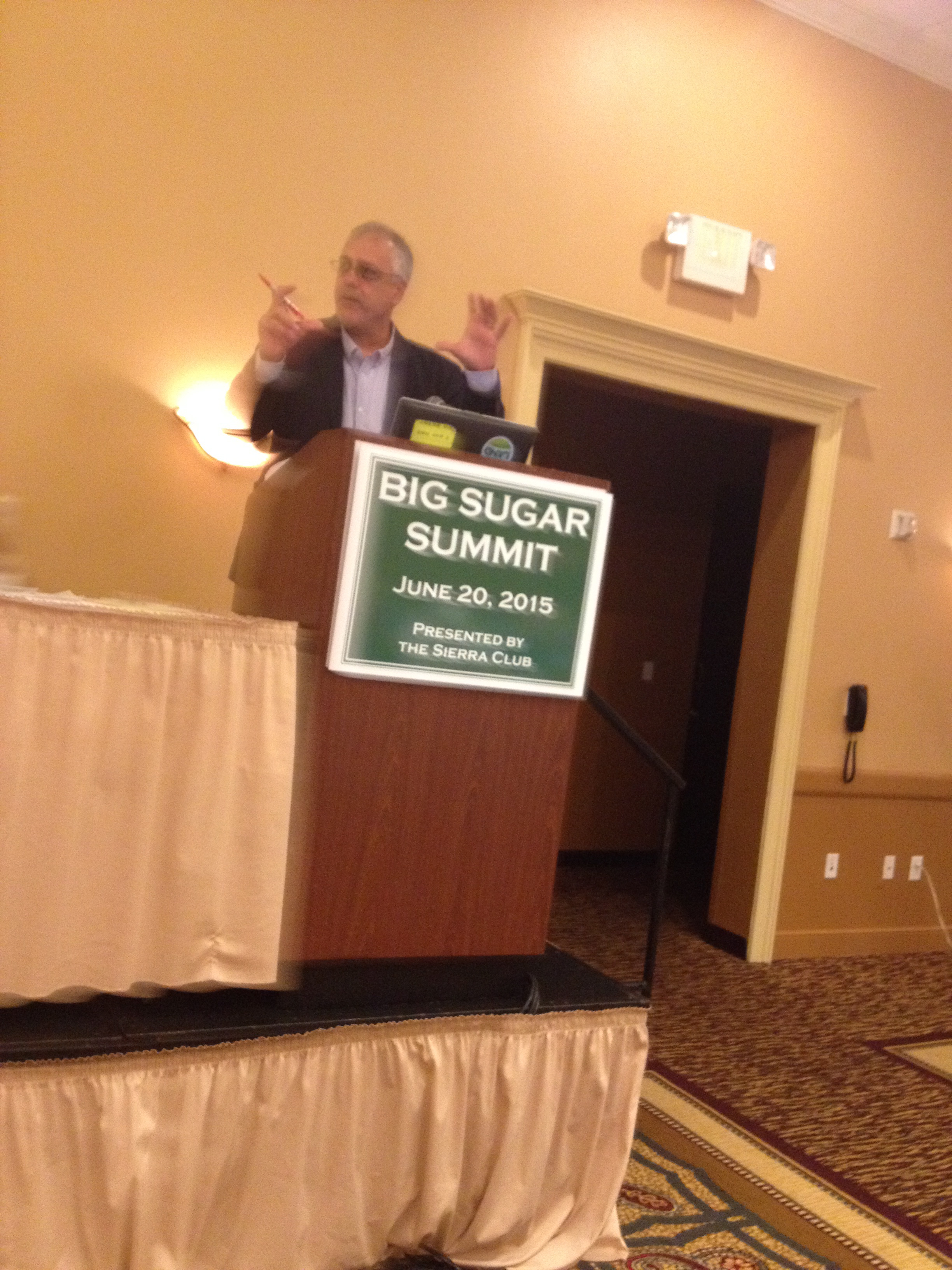
Big Sugar Summit: Dr Gail Hollander, “Raising Cane in the Glades.”
So excited hear this lecture. As I said before there will a final video with all the bells and whistles and slides professional done by some else. This is only part of the lecture so I hope when the video is done you’ll watch.
The title of the lecture was
“The History of Big Sugar in the Everglades Agricultural Area”
Dr Gail Hollander is an Associate Professor of Geography, Department of Global and Sociocultural Studies, Florida International University. She is the author of “Raising Cane in the Glades: The Global Sugar Trade and the Transformation of Florida.
Over the last century, the Everglades underwent a metaphorical and ecological transition from impenetrable swamp to endangered wetland. At the heart of this transformation lies the Florida sugar industry, which by the 1990s was at the center of the political storm over the multi-billion dollar ecological “restoration” of the Everglades. Raising Cane in the ’Glades is the first study to situate the environmental transformation of the Everglades within the economic and historical geography of global sugar production and trade.
Using, among other sources, interviews, government and corporate documents, and recently declassified U.S. State Department memoranda, Gail M. Hollander demonstrates that the development of Florida’s sugar region was the outcome of pitched battles reaching the highest political offices in the U.S. and in countries around the world, especially Cuba—which emerges in her narrative as a model, a competitor, and the regional “other” to Florida’s “self.” Spanning the period from the age of empire to the era of globalization, the book shows how the “sugar question”—a label nineteenth-century economists coined for intense international debates on sugar production and trade—emerges repeatedly in new guises. Hollander uses the sugar question as a thread to stitch together past and present, local and global, in explaining Everglades transformation.
“US sugar is owned 30% by the Mott Foundation. 30% is owned by the Mott Children’s Health Center. “They don’t put their money in Florida” Mary Barley told us at the Big Sugar Summit. “The other 40% is owned by their pension fund and the employees.”
We even know some of these people!
“Funny because one of the top four things that the Mott Foundation does is the “environment and clean water.”
“US Sugar are convicted Felons” said Barley. “They plead guilty to knowingly putting hazardous waste in the water. In our water. Then backpumping it back into Lake Okeechobee. ”
“Why should we allow convicted criminals to buy our politicians?”
“Big Sugar add .01 percent to Florida’s economy. If that.”
This year’s summit also will mark the 10-year anniversary of a landmark agreement between the United States and Canada to protect and manage the Great Lakes region’s shared freshwater resources. Those efforts were further advanced in 2008 with federal passage in the United States of the Great Lakes Compact, a first-of-its-kind legal framework that is helping to preserve the lakes as environmental and economic assets.
or the Mott Children’s Health Center, a corporate takeover offer to buy U.S. Sugar for $293 a share could have meant a payday of $125 million — enough to care for 12,000 children a year for more than 14 years.
Last year, the offer was taken off the table. Then this spring, U.S. Sugar suspended its dividend. That has left the charity with a big block of paper that, for the purpose of financing its operations, is essentially worthless. There is no market for the stock in U.S. Sugar, a private company, and the medical center cannot make the company buy back the shares.
Angry former employees of U.S. Sugar say that the needy children of Flint are the victims of the same financial maneuvers that have undercut the workers’ retirement plan. The Children’s Health Center was carrying the U.S. Sugar stock on its books at $153 a share in 2005, they say, when the offer emerged for $293 a share.
The “offer thus presented the opportunity to receive 91 percent more,” the former employees say in a lawsuit against the company and some other shareholders. A no-brainer, they say: The children of Flint would have been much better off, had the health center sold its shares.
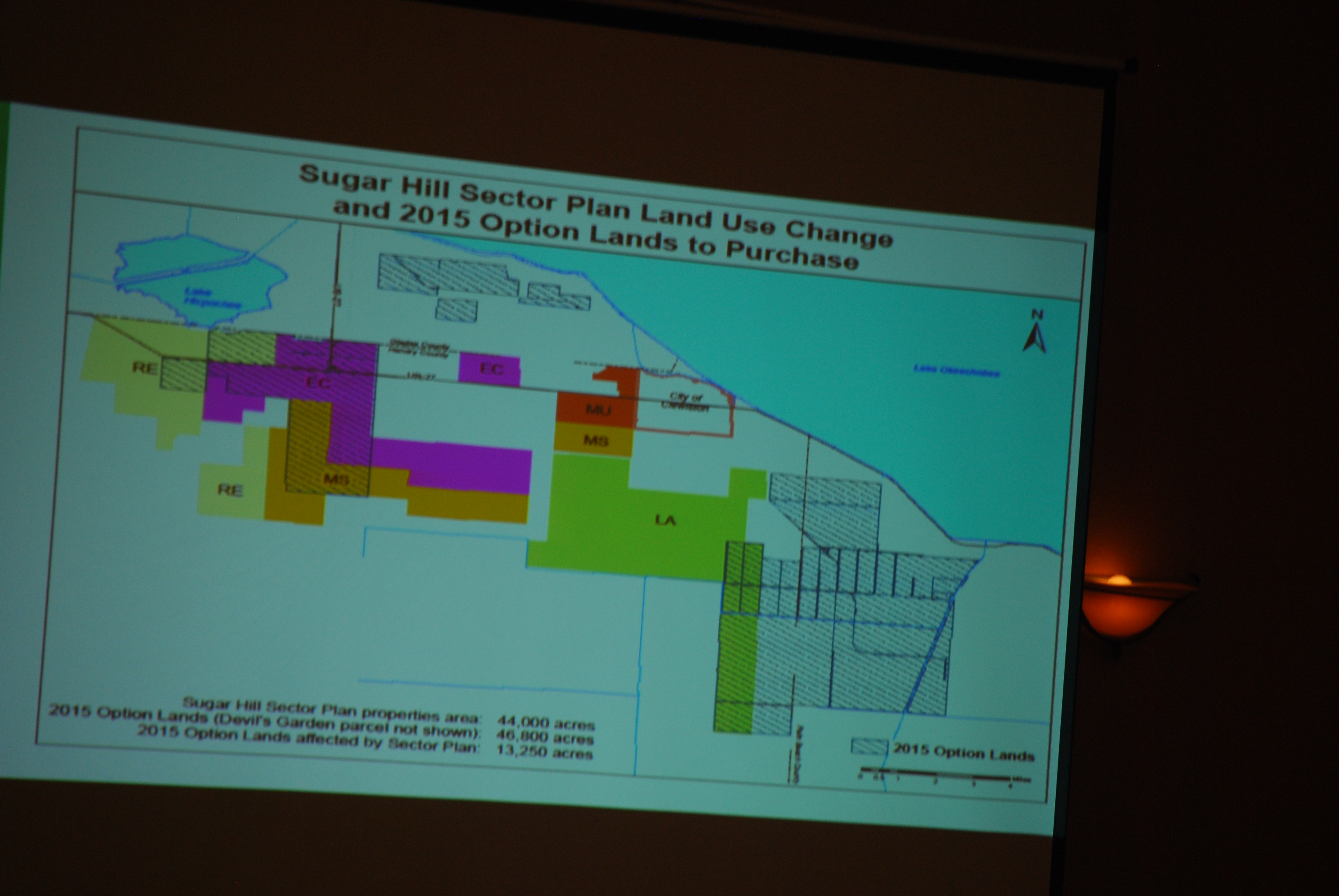
Gov. Charlie Crist is proposing that Florida buy all of U.S. Sugar’s land — roughly 181,000 acres — for $1.3 billion, then lease it back to the company for seven years so that farming can continue while the state starts building systems to restore the flow of water to the Everglades.
After seven years, the company would sell off its extensive sugar milling and refining assets, and production would cease. Control of the company would remain with the current shareholders.
U.S. Sugar’s Chief Executive Officer Robert H. Buker Jr. has estimated that shareholders could receive $365 a share during the course of seven years under these arrangements.
The board of U.S. Sugar on Monday recommended the state’s buyout proposal over the rival proposal, an offer of $300 a share in cash for all of the company’s stock, made by the Lawrence Group, a large and reclusive father-son agriculture concern.
Robert E. Coker, a senior vice president at U.S. Sugar, has said that a letter from the Lawrences summing up their offer was insufficient and did not amount to a firm proposal. He also called it a hostile offer that could not be compared with the Florida bid.
The Lawrences dispute that, insisting that their offer is complete and hostile only to the company’s management, which does not want to be replaced.
The board is expected to send its recommendations to U.S. Sugar’s shareholders for a vote. But no matter what the board recommends, the major shareholders of U.S. Sugar may have no choice. Some of the biggest ones are philanthropic institutions in Flint that long ago signed confidential agreements that they would not sell their shares to anyone trying to take over the company.
That would appear to preclude them from accepting the Lawrence Group’s offer, even if it proves superior — which could set the stage for a legal showdown. The boards of public charities are required by law to maximize the value of the assets under their control, on behalf of their beneficiaries. In this case, the beneficiaries include thousands of impoverished children in Flint.
U.S. Sugar’s shares are a big part of the portfolio of the Mott Children’s Health Center, a charity that provides low-cost care to needy children in Flint. Another major shareholder is the Mott Foundation, named for the Flint industrialist who was once the biggest shareholder of General Motors. The Community Foundation of Greater Flint also owns a block of U.S. Sugar shares.
There have been estimates that Mott Children’s Health Center and the Mott Foundation would get $100 million each from a deal while the Community Foundation of Greater Flint would get $33 million.
These institutions have not had a chance to sell their shares until now, because there has been no market for the stock since U.S. Sugar went private in 1983. That was not an issue for years, because U.S. Sugar was profitable and paid the charities dividends they could use to finance their operations.
Leader of Mott Foundation Charged in Lawsuit by Sugar-Company Employees
By Ben Gose
Descendants of Charles Stewart Mott, the industrialist who created the foundation that bears his name, have been accused of cheating employees at a sugar company out of an opportunity to sell shares in their retirement plan at an attractive price…
and this from SFWMD when they used to be mensches.
The Charles Stewart Mott Foundation gave away more than $100 million
in 2006. Among the 545 grants were $100,000 to the Civil Society
Institute in Druzhby Narodiv, Ukraine, and $300,000 to the Genesee
County Land Bank Authority in Flint, Mich. Is it too much to ask that next
year’s grants include employment assistance to Belle Glade and
Clewiston?
The Mott Foundation. Kings of Pollution and Poverty.
So that’s the Mott Foundation and there seems to be an issue with the pension fund. It’s look like from the articles that everyone was on board with deal Charlie made for the land. What happen?
No. really maybe those three on the top can fill us – Robert Coker, Judy Sanchez or Bubba Wade. What happened? Why the hold out?
Are you just holding out to make more money on that land for the pension fund? Is this what is destroying our chances of clean water and no more discharges?
“Restoration of the Everglades, however, briefly became a bipartisan cause in national politics. A controversial penny-a-pound (2 cent/kg) tax on sugar was proposed to fund some of the necessary changes to be made to help decrease phosphorus and make other improvements to water. State voters were asked to support the tax, and environmentalists paid $15 million to encourage the issue. Sugar lobbyists responded with $24 million in advertising to discourage it and succeeded; it became the most expensive ballot issue in state history.[62] How restoration might be funded became a political battleground and seemed to stall without resolution. However, in the 1996 election year, Republican senator Bob Dole proposed that Congress give the State of Florida $200 million to acquire land for the Everglades. Democratic Vice President Al Gore promised the federal government would purchase 100,000 acres (400 km2) of land in the EAA to turn it over for restoration. Politicking reduced the number to 50,000 acres (200 km2), but both Dole’s and Gore’s gestures were approved by Congress.
The purpose of this case study was to examine the impact that environmental activism can have on agriculture by focusing on the Florida sugar industry’s reaction during the 1996 “sugar tax” amendment campaign. During the campaign, proponents and opponents of the three proposed Everglades-related amendments to Florida’s constitution spent more than $40 million to sway the public. As a result of the public relations and political campaigns, communicators from Florida agricultural industries realized that they must increase their efforts to project a positive public image.
In 1996, the issue finally was contested when a small, but well-funded environmental activist group named Save Our Everglades Committee authored three proposed amendments to the Florida Constitution, collected enough signatures to get the proposals on the November 1996 ballot, and began a campaign aimed at voters in support of the amendments (U.S. Sugar Corporation, 1997). The Florida sugar industry spent $24 million and the Save Our Everglades Committee (SOE) spent over $14 million on the most expensive public relations campaign in the state’s history (Marcus, 1997). The three proposed amendments were as follows:
• Amendment Four: if passed, this amendment would put a penny-a-pound tax on all sugar grown in Florida. If passed, it has been estimated that sugar farmers would have had to pay $1 billion (U.S. Sugar Corporation, 1997). • Amendment Five: this proposed amendment, commonly known as the “polluters pay” amendment stated that those in the Everglades Agricultural Area “who cause water pollution within the Everglades Protection area or the Everglades Agricultural area shall be primarily responsible” for paying the costs of clean-up (Kleindienst, 1997). • Amendment Six: this amendment was designed to establish a state trust fund reserved for Everglades clean-up.
The fight
For several months before Election Day in November, Florida voters were the targets of television and radio advertisements, direct mail pieces, persuasive phone calls, and door-to-door campaigning — all related to the proposed amendments. The sugar industry, which is comprised of two large corporations, a farming cooperative, and numerous small, independent farmers, was unprepared to face a serious challenge from a well-organized activist group. In addition, the industry was surprised by early polls that indicated widespread public support for the measures.
The sugar industry considered the proposed amendments a threat to its very existence. Seldom if ever before had a single agricultural commodity been singled out as “primarily responsible” for nonpoint-source pollution (pollution that is not the result of a direct, detectable environmental accident or contamination). One sugar industry statement said that “there are few times in the life of a business when one event can have a literal life or death impact; for U. S. Sugar and the Florida sugar industry, the threat of the $1 billion tax was such an event” (U.S. Sugar Corporation, 1997).
For two months, the public relations battle continued, with each side of the argument accusing the other of distorting facts and deceiving the public. On November 6, Amendment Four was defeated, while Amendments Five and Six passed. Although the second two amendments passed, the sugar industry claimed the victory since the penny-per-pound tax was voted down.
Over the course of the campaign, the sugar industry responded to being referred to as “Big Sugar” (a derogatory term) by attacking the founders of SOE. The industry referred to chairperson Mary Barley as “a millionaire land development heiress” and to financial supporter Paul Tudor Jones as a “mega-wealthy Connecticut commodities broker” (U.S. Sugar Corporation, 1997). In addition to attempting to promote a negative image of SOE, the sugar industry also aired television and radio advertising portraying employees of the South Florida Water Management District (the regulatory agency with primary jurisdiction over the Everglades) as bureaucrats with a reputation for squandering public money on luxuries such as limousines and jet planes. This particular advertisement provoked then-Governor Lawton Chiles (who had remained quiet about the amendments issues thus far) to write a letter to the sugar industry chastising it for intentionally damaging the reputation of the water management district’s employees (Marcus, 1997).
The sugar industry also distributed a number of press releases geared toward informing the public about the progress the sugar industry had already made toward cleaning up farm run-off. The message conveyed in several of the releases (that phosphorous levels in farm water had been reduced by 68% in just three years of voluntary management practices) was well-received by the mass media. In addition, just two weeks before the election, the start of the sugar harvest was delayed so that almost 2,000 employees could go door-to-door and personally ask communities to vote “no” (U.S. Sugar Corporation, 1997).”
(Miami Herald LTE, Jan 31, 2012) For 15 years Florida taxpayers have been carrying dirty water for the sugar billionaires. When Florida’s voters passed the Polluters Pay Amendment to Florida Constitution, the sugar industry was supposed to pay 100 percent of their pollution cleanup costs. In one of the most cynical abdications of governance in history, the Legislature has refused to implement Polluters Pay. In doing so, they have dumped billions in extra property taxes on the homeowners of South Florida and enabled Big Sugar to dump millions of tons of excess pollution on the Everglades.
So not only do the sugar billionaires get unearned taxpayer dollars through unnecessary federal import quotas and subsidies, but they get their pollution cleanup costs paid by the taxpayers of South Florida. Our legislators need to swear off their addiction to sugar campaign money and make them pay all their cleanup costs.
Albert Slap, Key Biscayne
Fast forward to our present legislators and Rick Scott and you’ll hear in the video they changed the law.
The measure, HB 7065, would rewrite the state’s plan to clean pollution flowing from farms in the Everglades’ agricultural zones to the protection areas in the south. Supporters say the legislation is needed to codify the agreement between Scott and the federal government that calls on Florida to spend $880 million over 12 years to build storm water treatment and water storage to intercept runoff from the farms, preventing further pollution of an ecosystem that is vital to the state’s economy, environment and drinking water needs.
The legislation, though, does far more than that. It would roll back the enforcement of water discharge permits, clearing the way for farming operations to pollute regardless of how much the state erred in issuing them a permit or policing it. That opens a door for polluters and increases the pressure on regulators at the South Florida Water Management District to follow the Legislature’s lead in going soft on the industry. Even the district opposes that measure. It would rather keep the permitting process intact than create a public impression that the system is corrupt.
The measure also caps the industry’s financial obligation for funding the cleanup. While the legislation would extend the $25 per acre agriculture tax until 2024 — eight years longer than under current law — it holds that those payments and improved management practices would “fulfill” the industry’s obligation for the cleanup under Florida’s “Polluter Pay” requirement in the state Constitution.
That is an outright sellout. Extending the agriculture tax generates less than $7 million per year — pennies compared to the $880 million that taxpayers will spend to treat the polluted water. The very governor who forced the water management districts to cut their budgets now intends to ask Florida taxpayers to commit $32 million a year for 12 years for this program — all in addition to the money that will come from property owners in South Florida. Meanwhile the industry responsible for two-thirds of the pollution entering the Everglades walks away from any long-term obligations even before the new water projects are in place.
Just two weeks into the legislative session, HB 7065 has sailed through two committees and is headed for the House floor. This bill has leadership’s blessing, which is why Scott and the Senate are likely the last defense. Sen. Wilton Simpson, R-New Port Richey, who is shepherding the Senate bill, which is much better, needs to do what the House and several of his bay area counterparts failed to do and insist that the polluters pay their share. Shifting these costs onto the public is unfair, and every dollar the state spends on behalf of polluters is a dollar it won’t have for police, schools and other legitimate priorities.
Audubon and other organizations have objected to these changes to the Everglades Forever Act. We are hoping for some serious discussions about increasing the amount of money sugar growers pay to clean up the pollution coming off their land. We have also objected to the part of the bill that nullifies enforcement of discharge permits. This section of the bill seems deliberately written to eliminate the basis of a recent legal challenge to three discharge permits for the dirtiest Everglades farms.
The Senate companion bill – SB 768 – has none of the offending provisions.
Why Your Voice is Important
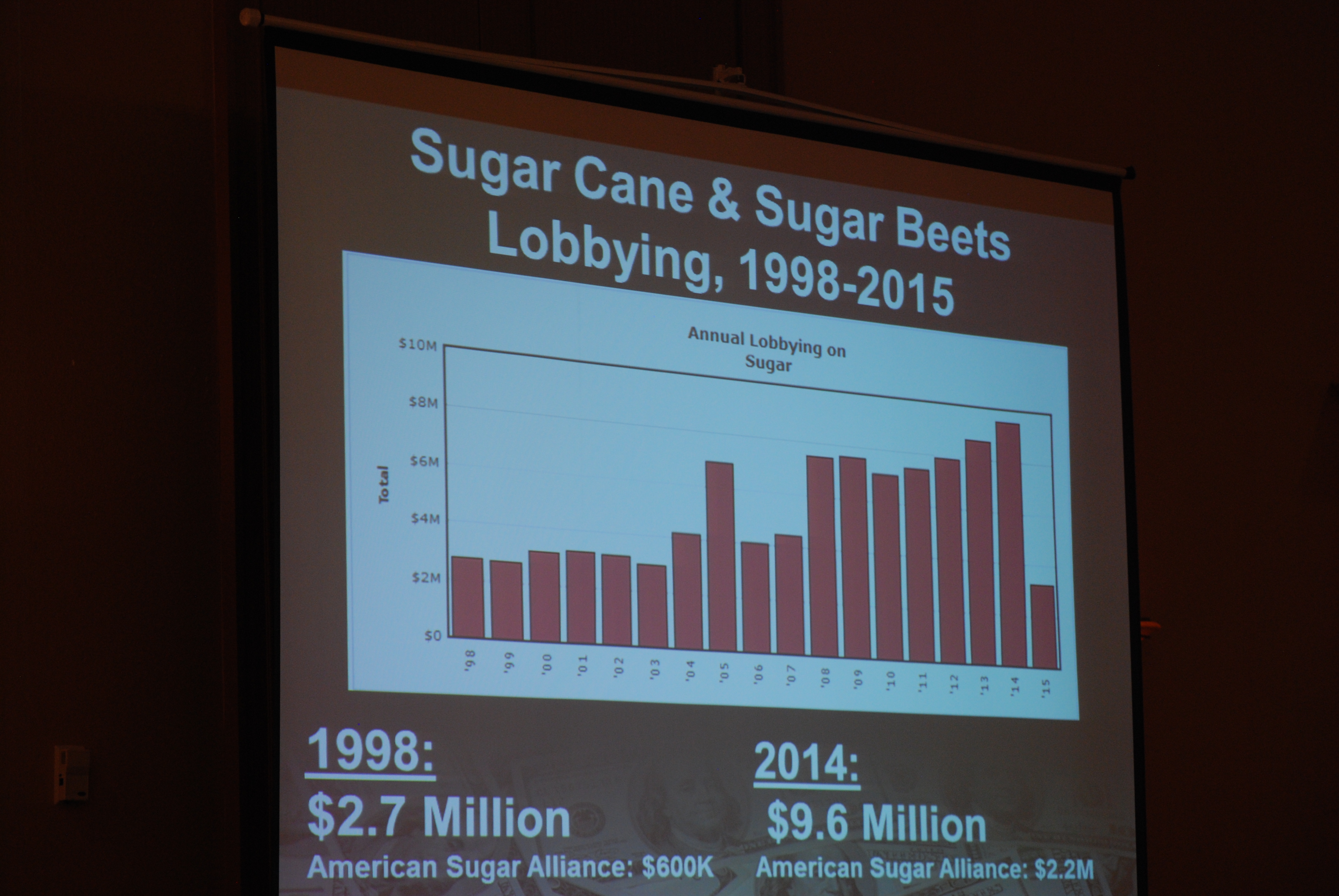
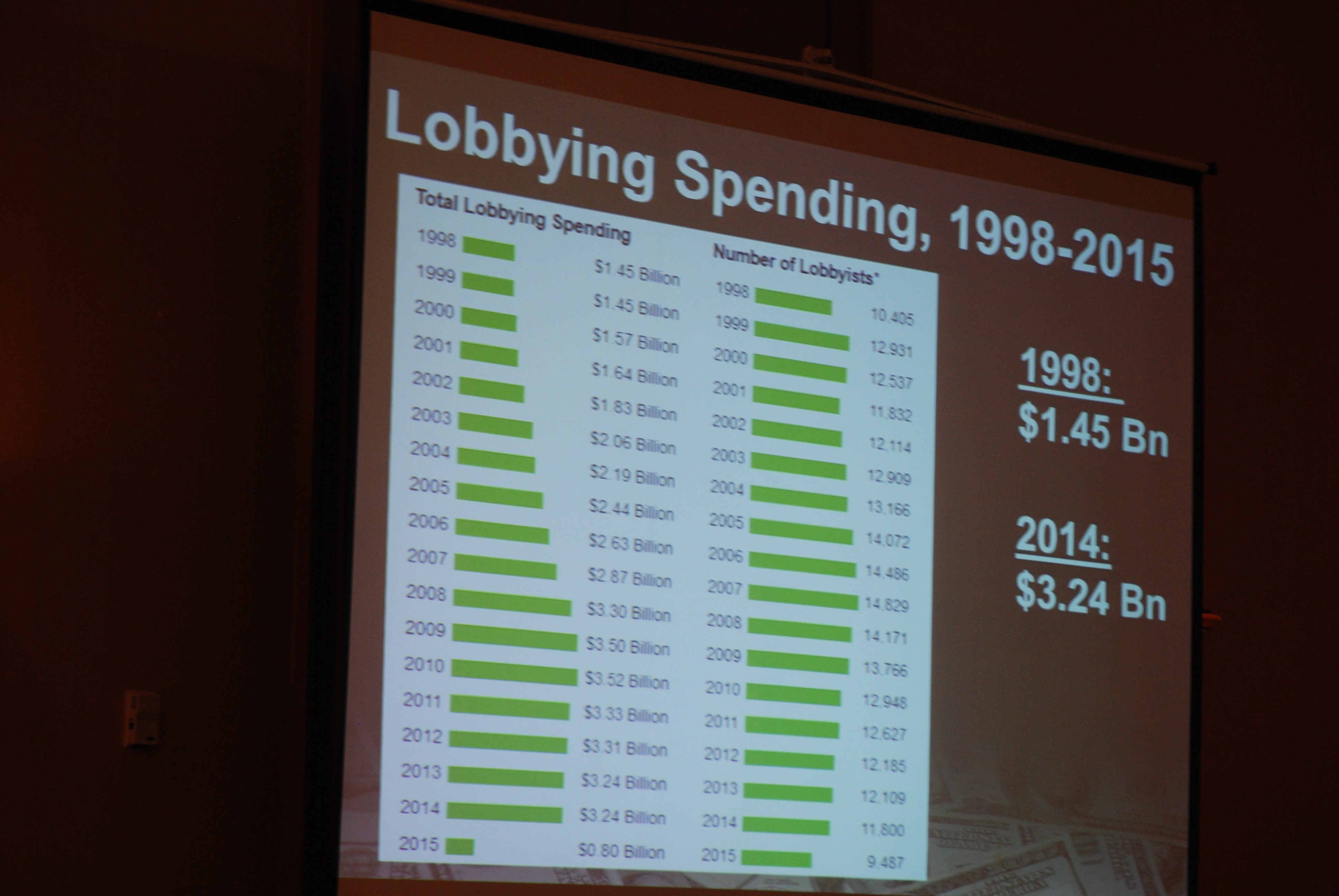
The sugar industry has dozens of lobbyists.Money has been given to legislators and political committees. Many members of the Florida House have already made up their mind on this bill. Some have been, by their own admission, heavily lobbied by the sugar industry.
“Back when he first ran for governor of Florida as a self-styled outsider, Rick Scott lambasted his opponent in the Republican primary for taking campaign money from U.S. Sugar, one of the worst corporate polluters of the Everglades.
Scott indignantly squeaked that Bill McCollum had been “bought and paid for” by U.S. Sugar. He said the company’s support of McCollum was “disgusting.”
“I can’t be bought,” Scott declared. Seriously, that’s what the man said. Stop gagging and read on.
Four years later, the governor’s re-election campaign is hungrily raking in money from U.S. Sugar, more than $534,000 so far.”
So to review, and please if I got this wrong help me out!
In 1996 the Save the Everglades Committeeauthored three proposed amendments to the Florida Constitution, collected enough signatures to get the proposals on the November 1996 ballot.
• Amendment Four: if passed, this amendment would put a penny-a-pound tax on all sugar grown in Florida. If passed, it has been estimated that sugar farmers would have had to pay $1 billion (U.S. Sugar Corporation, 1997). • Amendment Five: this proposed amendment, commonly known as the “polluters pay” amendment stated that those in the Everglades Agricultural Area “who cause water pollution within the Everglades Protection area or the Everglades Agricultural area shall be primarily responsible” for paying the costs of clean-up (Kleindienst, 1997). • Amendment Six: this amendment was designed to establish a state trust fund reserved for Everglades clean-up.
We lost the penny-a -pound tax but we got polluters pay and the Everglades trust. Then under Rick Scott, The measure, HB 7065, would rewrite the state’s plan to clean pollution flowing from farms in the Everglades’ agricultural zones to the protection areas in the south. Supporters say the legislation is needed to codify the agreement between Scott and the federal government that calls on Florida to spend $880 million over 12 years to build storm water treatment and water storage to intercept runoff from the farms, preventing further pollution of an ecosystem that is vital to the state’s economy, environment and drinking water needs.
What it ended up doing was rolling back the enforcement of water discharge permits, clearing the way for farming operations to pollute regardless of how much the state erred in issuing them a permit or policing it. This opens a door for polluters and increases the pressure on regulators at the South Florida Water Management District to follow the Legislature’s lead in going soft on the industry.
Then, the very governor who forced the water management districts to cut their budgets now intends to ask Florida taxpayers to commit $32 million a year for 12 years for this program — all in addition to the money that will come from property owners in South Florida. Meanwhile the industry responsible for two-thirds of the pollution entering the Everglades walks away from any long-term obligations even before the new water projects are in place.
So we went from polluters paying to us paying, the voters.
Remember us.
Slick.
Sick.
Slicky RIcky
omg
But don’t forget folks your getting ten bucks back on your inflated cell phone bill and no taxes on your textbooks.
Where was the news when this happened?
So it all comes down to one thing really. We have to make sure that we have legislators that cannot be bought off by an industry that pollutes, that really does nothing for our economy and fills the pockets of corrupt politicians. We have to pay attention and we must vote.












 cyndi lenz