Look who is right here in our hood! Bring it on home! Let James help you cause we sure do got dem blues! A love affair with the Pacific Legal Foundation and the Economic Council of Martin County. Wow! Who would have thunk?
“PALM BEACH GARDENS, FL; March 12, 2014: Florida attorney Mark Miller, a veteran of business, property rights, and constitutional litigation, has joined Pacific Legal Foundation (PLF) as managing attorney with PLF’s Florida (Atlantic Center) office based in Palm Beach Gardens.
It’s a privilege to join Pacific Legal Foundation and be part of America’s most successful legal organization that works to defend and advance freedom,” said Miller. “PLF is dedicated to ‘rescuing liberty’ from coast to coast. I’ll be promoting that mission aggressively throughout Florida and along the Eastern Seaboard, by putting my legal skills to work on behalf of property rights and other constitutional liberties, and to help victims of overreaching government.
In 2012, he served as lead local counsel for former U.S. Representative Allen West in the 2012 election battle for the 18th District congressional seat in Florida.”
“Mark Miller, an attorney with PLF, said he wants a court to rule a state law prohibiting craft breweries, restaurants and taverns from selling or filling beer growlers unconstitutional.”
Personally, I don’t have an issue with the case. I have issue with the camaraderie between this group and Rick Scott who calls himself the Governor but really and obviously in cahoots with a very right winged agenda that is affected us, our water and our Florida Black Bears, Panthers and Manatees. I’m sure they are the one’s distributing all the “land grab propaganda” that we had to deal with.
It’s so sad is that what the Libertarian party set out to do has morphed into a group that is totally operated and owned by a bunch of old rich white guys. The very freedom they want has been taken away. I feel bad for you Libertarians! You want freedom but you don’t want us to have the freedom to swim in clean water.
Please don’t think I’m Libertarian Hater. I am not! There are parts of the platform I really appreciate like the leave me alone stuff and no government intrusion stuff. What a bunch of hypocrites you guys are! You working for the people are intruding on our very right to have clean drinking water. Let’s have a conversation about the first amendment and my right to free speech which has been taken away by a bunch of legislators that have no idea what they voted for.
In this particular case it is illegal for me to ask my patients if they have a gun even though its required of me through my computer program. In the end I get punished not the makers of the computer program or the people who require me to ask this question. Who does that?
You have way become hateful and single minded there is no talking to you. All you know is the talking points that have drummed into your heads. Were you all hypnotized? Did the legislators go to a meeting and have some strange hypnotic music? You must have because I cannot think of one rational reason that our entire GOP Florida Legislature would hate Floridians so much and really go against your own party standards of state rights and local control. Please explain the hypocrisy! Libertarians should be against the wasting of water and sending millions of gallons of water out tide. That’s how I know these are not Libertarians. But boy they got them fooled.
Now check this out. Guess who is a partner with the Economic Council of Martin County?
Yes! 200 points for you. The Pacific Legal Council.
This stuff in nothing new. We need to put an end to it.or we really will have zombie Apocalypse. Only in our case its the zombies of the extreme right.
Yesterday I had to laugh because if I just had clean water I probably wouldn’t even be sitting here on my day off computing. I would be in the water.
Yesterday after I posted my blog I was having a conversation with my friend Kenny Hinkle and between the both of us we came up with some interesting information. Team work yay. We were both interested in this web site.
I got there because I got a little confused with all the liberty blogs that are out there and different liberty caucuses but then a few things caught my eye.
and this
What could these people possible want with FNAA and our Indian River Lagoon. So I dared to go a little further and they had a whole local section.
June was an abysmal month for freedom on the Treasure Coast as 290 area residents were violently abducted at gunpoint by men in costumes for non-violent vices.
Saint Lucie
June was a terrible month for freedom in Saint Lucie as costumed men with guns abducted and caged 177 people for non-violent vices.
Indian River
Indian River saw a much lower total with 57 people being kidnapped and caged by costumed men with guns for non-violent vices.
Martin
A total of 56 citizens were abducted at gunpoint by men in costumes for alleged non-violent vices.”
Who are these costumed men who are kidnapping and caging people? If my friend Gayle Ryan was in town she would say “Are they single?”
Did they look like this?
did they look like this?
If the police are costumed men with guns am I a costumed female with a stethoscope?
“The lagoonists and their goons have banned fertilizers (though no evidence of damaged caused by the fertilizers exists just their presence) and now facing the calamity of rain one has to wonder: Will the loony lagoonists soon ban rain?”
Funny but we are lagoonatics! Get your jargon correct puleeeze Brightlight.
and then I saw that they were all obsessed with Eve Samples.
I felt terrible because I was having such a good laugh and then this.
You can go over and search. It’s a good search engine and also has a store where you can buy all kinds of nifty things. Like stickers and books. You can buy the Libertarian Manifesto for 11 bucks!
I love manifestos. Here are some other people that wrote manifestos.
kazinski manafesto
At any rate you get the picture and honestly like I have said hundreds of times. Free speech! Keep on writing. Please!
So we were interested in who owned the website because these people are local and thought it would be a good thing to know. All these funny people hiding behind their nom de plumes! I don’t have issue’s with nom de plumes. Some of my friends have these. I could just never figure out what mine would be.
So anyway, the owner of the site is Registrant Email: gatorlandrhett@hotmail.com
This I find very confusing since he previously made me very sad with those not so nice posts about Eve Samples.
I’m so confused.
This is his job.
“Creating solutions for local and small businesses to connect with their target audience wherever they are, collecting useful information for how consumers interact with them and implementing steps to increase conversions and ROI for business partners.”
I’m wondering what he puts in to target us? Lagoonakooks?
What would you use to target me? #noseylagoonakook? or maybe #socialistlagoonakook?
“.. scarcity is a reason most people work since their financial resources are limited and finite and work provides them the income necessary to accumulate resources to exchange for the goods and services of another. Consumers demand scarce goods (housing, clothes, a night out, travel, school supplies) and people have to economize their decisions based on scarcity.
In the case of water scarcity, however, we find that the challenge of scarcity is met in some very peculiar ways.
For examples, we can look to the Indian River Lagoon, Lake Okeechobee, and the Everglades where water is plentiful, but clean water is scarce. Moreover, we might look to the western United States where an arid climate makes all types of water scarce.
Yet in all of these places there is one thing in abundance — clean and drinkable bottled water.
Why is it that we can we have too much dirty water in one place, not enough water in another, and be surrounded by an abundance of bottled water?
The first thing to be said about this is that on the free market, regardless of the stringency of supply, there is never any “shortage,” that is, there is never a condition where a purchaser cannot find supplies available at the market price. On the free market, there is always enough supply available to satisfy demand. The clearing mechanism is fluctuations in price. If, for example, there is an orange blight, and the supply of oranges declines, there is then an increasing scarcity of oranges, and the scarcity, is “rationed” voluntarily to the purchasers by the uncoerced rise in price, a rise sufficient to equalize supply and demand. If, on the other hand, there is an improvement in the orange crop, the supply increases, oranges are relatively less scarce, and the price of oranges falls consumers are induced to purchase the increased supply.
In the case of droughts government monopolies set prices arbitrarily and this sends consumers distorted prices. Just as bad crops increase the price of oranges so should droughts increase the price of water. Individuals then internalize their decisions to make best use of the scare resources — their own finances and the water commodity. Government distorting prices prevents individuals from acting most efficiently to conserve scarce resources.
The Indian River Lagoon and other areas in South Florida are impacted by the lack of clear pricing signals to individuals. Meanwhile, bottled water is so easy to obtain that this past weekend at the Indian River Lagoon Clean Water Rally, free clean bottled water was given away during an event to protest the lack of clean water in the environment.
Bottled water is the only water product that Americans have routinely priced and marketed. We now happily pay as much as four times the cost of gasoline for potable water that we could have for free from fountains and taps. Of course, economists will tell us factually that bottled water is not the same good. The square Fiji bottle is a sexy statement; and the ubiquitous bottle of water in hand is a fitness and convenience statement. Subjective valuation determines price. A real market in this water product does exist.
Markets for other water products are, meanwhile, mainly nonexistent. We routinely do not pay market prices for most other forms of water. Until recently, water has been viewed and treated as a free good by all Earth’s peoples. As with all free goods, water experiences unlimited demand. But water cannot meet unlimited demand. Water needs prices in order to signal scarcity and inform demand. Different categories of water need different prices to reflect the different preferences of users. Free can no longer be water’s price. The profligate glory days of limitless water everywhere seem to be over.
The lack of market pricing affects the Indian River Lagoon as it encourages pollution. By allowing farms and industries to pump byproduct into the water the waterways are essentially being used as a free garbage dumping ground. The permitting of pollution by government recklessly encourages more pollution by firms rather than firms benevolently opting to pay to have it properly disposed. The business who pays extra to have waste properly treated and disposed of may not be able to compete with the businesses who opt to take advantages of government allowing dumping of byproduct into waterways at virtually no cost.
The lack of market pricing occurs largely due to lack of ownership and governmental edict. With “public” ownership bureaucrats and politicians charged with maintaining resources lack capital value interest in the resources. They only preside over the current use as Hans Hoppe taught us, “it makes exploitation less calculating and carried out with little or no regard to the capital stock. Exploitation becomes shortsighted and capital consumption will be systematically promoted.” The long-term calculations of the bureaucrat is distorted by this.
Ownership being replaced with stewardship and the lack of the profit and loss mechanism prevents the water bureaucrats from making the most efficient decisions. It is not for the lack of caring but the inability to make economic calculation as Mises explained in Bureaucracy:
Bureaucratic management is management of affairs which cannot be checked by economic calculation.
… The bureaucrat is not free to aim at improvement. He is bound to obey rules and regulations established by a superior body. He has no right to embark upon innovations if his superiors do not approve of them. His duty and his virtue is to be obedient. … Nobody can be at the same time a correct bureaucrat and an innovator.
Yet if the same waterways were privately owned the property owners could charge for the all uses of waterways. Non-pollutive by products may be charged less than damaging pollutive byproducts which negatively affect water quality. The scarcity of the water quality would set prices to discourage pollution and incentivize firms to find cleaner and more efficient production methods.
Furthermore with ownership provides the long-term capital value incentive which encourages conservation. We see this in forestry where forests are replanted to ensure the forest owner has income in the future. We see this at Adams Ranch where the stock of cattle is not wiped out all at once. Adams Ranch does a particularly good job of conserving grass to feed and support their cattle because the land they have to raise cattle on is limited. If grass goes so does the cattle.
In the case of the Lagoon, waterway owners might decide not to allow pollution. Instead, deciding that the boaters, fisherman, divers, swimmers, etc., are a preferable source of revenue for decades into the future.
Prices would help owners calculate that using the water for leisure and conservation is more efficient and useful than making it unusable dumping grounds. Prices would help consumers appreciate the use of clean waterways. Up the Kissimmee River Disney is able to charge huge entrance fees to maintain a safe clean park and facilities. In other unmaintained areas people dump litter in the river, like they do on the roadways. Notice, other than on trash day, people do not litter their own driveway. That is because of the tragedy of the commons. Nobody has an incentive to keep it clean as nobody owns it.
When we fail to understand the basics of scarcity and prices, however, we are left with the current and dominant view of water in which everyone owns it, and action to maintain it can only be undertaken communally. We see this attitude reflected in recent social media posts (1, 2, 3,) on the Indian River Lagoon, including: Thousands of people came out to rally for the lagoon cleanup and to raise awareness and money. Obviously, a clean lagoon is valuable to many people, but we will never know just how valuable as long as government precludes pricing from working in the lagoon’s favor.
In other words, let’s allow the people who care to put money where their mouths are and allow the marketplace to incentivize the people who are most motivated to have a long-term stake and interest in conserving the capital value of the lagoon.
Only the market can provide this, for no matter how hard bureaucrats try they cannot imitate market forces. Lilley explains:
And, no, command economies cannot play at market. There is no third way. Only private property and the rule of law can create a viable market; bureaucratic mandates can deliver only shortages, higher costs, and poorer quality.”
Alrighty then. ok. Funny about the clean water at the rally. We were concerned that people would get dehydrated so we made sure that everyone had water. Don’t read into it. I’m a nurse and it get’s very hot out there in the summer and we didn’t want anyone passing out. We all know this past winter’s failure to buy the land is a part of the big picture to privatize out water. But is it to increase bottled water sales? That’s interesting.
As for the rest I think the whole thing is very thoughtful but misguided and I hope some of my experts will chime in here on my blog or you can go to there and read about men in costumes with guns. Maybe Robin of Loxley will show up. And don’t forget “You gotta be a man to wear tights.”
update: 7/11/15 I just got a correction from a friend of mine that this person was let go from scripts. More on that later.
Remember when Michael Grunwald was here and he said “Big Sugar has a right to be in business” and everyone groaned. Well, that’s true. They do. What I don’t think they have the right to get subsidies to stay alive when the rest of the businesses have to put themselves out there and if they succeed they succeed and if they don’t they don’t.
The same thing goes for Pacific Legal Foundation. Conservatives you can’t have it both ways. You either believe in state and local rights or your being a hypocrite. I’m beginning to think more and more every day its the latter. These people tell you one thing and they do another. In other words your being duped. If you want to believe something believe it but don’t be duplicitous.
Yesterday, I wrote this blogpost about how Pacific Legal Foundation is the common denominator with issues with our Florida Panthers, Florida Black Bears and Manatees. They were also on Lawsuit for the Chesapeake Bay.
“We support a clean and healthy environment and sensible use of our natural resources. Private landowners and conservation groups have a vested interest in maintaining natural resources. Pollution and misuse of resources cause damage to our ecosystem. Governments, unlike private businesses, are unaccountable for such damage done to our environment and have a terrible track record when it comes to environmental protection. Protecting the environment requires a clear definition and enforcement of individual rights in resources like land, water, air, and wildlife. Free markets and property rights stimulate the technological innovations and behavioral changes required to protect our environment and ecosystems. We realize that our planet’s climate is constantly changing, but environmental advocates and social pressure are the most effective means of changing public behavior.”
Let me repeat “environmental advocates and social pressure are the most effective means of changing public behavior.”
(P.S. It looks like they believe in climate change)
So it’s hypercritical for the Pacific Legal Foundation to mess with the free will of our Florida Black Bears.
That’s my logical conclusion.
Duplicitous
So is the Pacific Legal Foundation a libertarian foundation. I don’t think so.
I think they are a Koch Brothers, Scaife Foundation lackeys hiding out in bosom of an unending cash cow and really sticking their nose where it doesn’t belong but where their masters want them to go.
Not free thinking at all. Not what I would expect from Libertarians.
It’s this behavoir, this intrusion into our Legislature this past year that I think made our head’s spin.
Who is the Pacific Legal Foundation and why are our Panthers, Manatees and Bears their Business?
Or anything else for that matter.
Just as a reminder we live in a democracy and we vote these people in to represent us.
About a month ago there was an issue up in Brevard, incited by some behind the scene bs getting all down on Thad Altman for being ok with the purchase of the land to send the water south and not dealing with his section of the Indian River Lagoon.
You can’t have it both ways. Pick a way and do that.
But what we ALL can’t have is people from other places making rules for us. If you want to be an elected official you talk to us your constituents not to the Pacific Legal Foundation or Citizens United. You work for us. If you work for them then give up your office and work for them. Can’t have it.
Other bloggers, writers in other states – we all need to compare notes. I guarantee the same thing is happening everywhere and one day we’re going to wake up and say “What happened?” (as we float down to Miami in our Kayaks.)
We all got upset when Pam Bondi signed on to a lawsuit for the polluters in the case of Chesapeake Bay. Most of us felt that Florida had no business being involved and using our tax money on a case not in our state when her job is to work for Florida. Pam Bondi! You work for us!
What we witnessed this past year was Rick Scott and the Florida Legislature making Florida their own personal slush fund at the expense of all of us. The Tea Party was given verbiage to incite them like “Land Grabs” and they went out like the sheeples they deplore and worked tirelessly for the 1%. Tea Party you have been duped. Brainwashed. You are not free. You are slaves for the Koch Brothers.
The Pacific Legal Foundation is a Sacramento, California-based legal organization that was established March 5, 1973 [1] to support pro-business causes. In recent years, it has taken a lead in pursuing anti-affirmative action policies.
It is the key right-wing public interest litigation firm in a network of similar organizations funded initially by Scaife Foundations money across the USA to support capitalism and oppose environmental and health activism and government regulation.
The organization has been partially funded by a range of corporations and conservative foundations, including by the Koch family Claude R. Lambe Foundation in 1998.
These people don’t believe in freedom they believe in pushing their own agenda that call conservative and they have their own Tea Party out their representing them.
Florida is not the Koch Brothers private playground.
And they may be treading into waters other people would not want you to go. After all, one of the reasons given not to buy the land was because of endangered birds that were there. You effectively would take that away from SFWMD and Big sugar and I don’t think they would be too happy about that.
“Tobacco Industry associations
PLF is listed as a “key third party ally” in a September 14, 1999 Philip Morris document.[6]
In 1989, Philip Morris began funding the organization through its Mission Viejo (gated-community land-development company) subsidiary, mainly because the organisation was active in the property rights area and had won cases limiting the States’ ability to expropriate or regulate private property. The Mission Viejo subsidiary was interested in fighting a no-growth initiative which had been blocking some of their development projects. At this stage Philip Morris only gave an annual grant of $5,000 each year, just to keep the organisation on side and available, but it may have also funded specific legal projects.
By 1991 the PLF had a major budget crisis. It was in deficit to the tune of about $1 million, which was about a quarter of its $4 million annual requirements. Not long after, Roy Marden, the Philip Morris executive in charge of maintaining relations with the right-wing think tanks and advocacy institutes, joined the PLF board. Overnight the funding increased substantially to $10,000, and then $22,000 by 1993. Philip Morris also began to utilize the PLF to undertake hidden media and political activities on its behalf.
The PLF also intervened successful in Keller v. California State Bar, where it established a legal precedent that California lawyers could challenge the use of their dues to the state bar for political purposes. This was an successful attempt to block collective actions by the more liberal Californian lawyers who were involving themselves in such policy areas as class-actions and product liability.
By the mid 1990s the PLF had offices in Sacramento, Anchorage and Seattle and ran several key issues and programs:
Judicial Responsibility Project
College of Public Interest Law
Limited Government Project
It also sloughed off the Center for Applied Jurisprudence which focused on commercial “free speech issues” (i.e., the right to advertise harmful products) and “regulatory reform.” Philip Morris was giving them a $25,000 retainer by this time (and presumably paying also for work done on their behalf).
In 1997-1998 the PLF joined forces with the $10 million funded (by Philip Morris) National Smokers Alliance, in a fierce and vindictive legal attack on Professor Stanton Arnold Glantz, a leader of California’s main anti-smoking organization, Americans for Nonsmokers Rights[9] and attempted to brand him in the public mind as having something to hide … a destroyer of legal document (a ruse the tobacco industry used itself on a massive scale). Glantz had received documents from the early tobacco industry whistleblowers, and he had established the first public-access Internet web site revealing how the industry operated.
Anti-Environment Policies
According to ExxonSecrets.org, the Pacific Legal Foundation has received $110,000 from ExxonMobil since 1998. The website goes on to state that:
Anti-environmental from the start, PLF’s early actions supported the use of DDT, the use of herbicides in national forests, and the use of public range land without requiring an environmental impact review. They also supported at least six pro-nuclear power cases before the early eighties while accepting funding from Pacific General Electric (PGE), a utility which has gained a great deal through the development of nuclear power in the Pacific Northwest. In the 1980s, PLF won several cases that are considered landmarks by those working on property rights issues today: Nollan v the California Coastal Commission and First Church, both Supreme Court victories which provide precedence for the takings litigation pursued today (Oliver Houck, “With Charity For All,” Yale Law Journal, 1993). In October 2003, PLF Vice President M. David Stirling had an Op-Ed published in which he defended President Bush’s environmental record and condemned former President Clinton for endorsing the Kyoto Protocol.”
Yikes!
Their the merchants of death! DDT for everyone. You get DDT and you get DDT!
SO Pacific Legal Foundation if you want to help people and their freedom please do so but please stop trampling on us. Florida is not up for grabs. We don’t care what Rick tells you. It’s just not true.
Rick Scott and his love affair with Pacific Legal Foundation!
For years, Florida law prohibited craft beer brewers and sellers from offering their beverage in the standard-size container used throughout the country.
Florida Gov. Rick Scott plans to sue the CMS, accusing the agency of unconstitutionally trying to force the state to expand Medicaid by ending funding that now helps Florida hospitals pay for uncompensated care for low-income and uninsured patients.
But Todd Gaziano, a senior fellow in constitutional law with the conservative Pacific Legal Foundation, said the Florida situation presents the same legal issue as the one in NFIB. Still, he said, the argument of unconstitutional coercion in the Florida case, is “far from a slam dunk.” The Pacific Legal Foundation filed a separate lawsuit challenging the ACA.
“It’s the kind of claim that should not be dismissed at the outset,” Gaziano said. “It’s a claim that presents a reasonable legal argument.” But he conceded that the claim is not as clear, even if the government’s object is the same: to apply pressure on the state to expand Medicaid eligibility.
I’ve been thinking about the hunts that have opened up on our Florida Bear, and all the craziness that going on with hunting in our state parks and people wanting to take the Florida Panther off the endangered species list.
“ORLANDO, Fla. (Reuters) – Florida’s wildlife agency may cut back on its efforts to save the endangered Florida panther two decades after helping return the big cats from the brink of extinction, according to an agency memo.
Carole Baskin, founder of Big Cat Rescue, told the commission the memo implies that the state is moving toward removing federal protections from the panthers and eventually allowing hunts.”
The downlisting came after the U.S. Fish and Wildlife Service was petitioned by Pacific Legal Foundation, a private property attorney lobbying firm in Sacramento, Calif. Oddly, both the Endangered Species List and Pacific Legal Foundation were created in 1973.
“The potential change in the manatee’s status is being considered under pressure from the Pacific Legal Foundation, a libertarian group that generally opposes all environmental regulations.”
“The Pacific Legal Foundation is a Sacramento, California-based legal organization that was established March 5, 1973 [1] to support pro-business causes. In recent years, it has taken a lead in pursuing anti-affirmative action policies.”
It is the key right-wing public interest litigation firm in a network of similar organizations funded initially by Scaife Foundations money across the USA to support capitalism and oppose environmental and health activism and government regulation.
The organization has been [2] partially funded by a range of corporations and conservative foundations, including by the Koch family Claude R. Lambe Foundation in 1998.[1]
So the people behind taking the Manatee off the endangered list is the Koch Brothers and the Scaife Foundations.
But still, with 6,000 or so manatees swimming around, there’s a chance that the feds will indeed pronounce them merely threatened. That’s the same status that was conferred on the Florida black bear — with only 3,000 left in the state.
That seemed plenty enough for the Florida Fish and Wildlife Conservation Commission, which last month (not long after legalizing silencers for hunting weapons) voted to reinstate bear hunting.
If the FWC figures that it’s okay to hunt a beloved species with a population of 3,000, imagine what kind of sportin’ activities those good ol’ boys in Tallahassee can rationalize now that we’ve got twice that many manatees terrorizing Florida’s waterways. Imagine the fun.
Three of our beloved on endangered species list. One libertarian organization from California making the rules.
Who owns the Florida Legislature so they are complicit with the whims of the very libertarian whims of the Pacific Legal Foundation?
“The Center for Responsive Politics (CRP) is a non-profit, nonpartisan research group based in Washington, D.C. that tracks the effects of money and lobbying on elections and public policy. It maintains a public online database of its information.
Its website, OpenSecrets.org, allows users to track federal campaign contributions and lobbying by lobbying firms, individual lobbyists, industry, federal agency, and bills. Other resources include the personal financial disclosures of all members of the U.S. Congress, the president, and top members of the administration.”
“Just as water flows downhill, money in politics flows to where the power is. And the Center for Responsive Politics is there to help you follow the contours and learn about these connections. This section of the Action Center contains a wealth of information about the unhealthy influence money can have on our elections and government politics.
The Basics. From frequently asked questions to our money-in-politics glossary, from the 10 Things Every Voter Should Know about money in politics to our Follow the Money Handbook, and iPhone App, this section of the Action Center contains a wealth of information about the unhealthy influence money can have on our elections and government politics. Begin your learning here.
Sheila Krumholz has been the CRP’s executive director since December 2006, having previously served for eight years as the CRP’s research director. She first joined the organization in 1989 and served as the assistant editor of the first edition of the printed volume Open Secrets.”
On Scandal this past year even Olivia Pope made sure her candidate had “Big Sugar” money. I can’t find the clip but I think it was when she was prepping the very awesome Susan Ross character.
Shelia told us this: “Votes still trump money and that’s bad news for Donald Trump and good news for Democracy.”
I’m sending this blog post to my state rep, rick scott and my state senator. None of these people actually care about anyone especially older people who are ill. They are under some kind of delusion that these people can have help. In the case of Ms Harrell she thinks people can go to a free clinic if they have no health insurance.
Right now if you call the Elder Hotline they are wonderful about getting assessments done but they have one problem. There are no funds to help. People are put on a list by need and usually people with dementia are on top of the list. I have no issues with these folks. They are doing the best they can. But no money is no money. It’s could be months before people get services.
And thats for people over 65.
What happens to the younger person who is not on Medicare that get’s diagnosed with
Alzheimer’s Disease or dementia?
Where do they go and how do they manage? What about the people who live by themselves?
Lisa Genova graduated valedictorian, summa cum laude from Bates College with a degree in Biopsychology and has a Ph.D. in Neuroscience from Harvard University. She is the author of the New York Times bestselling novels Still Alice, Left Neglected, Love Anthony, and Inside the O’Briens.
“Dr. Alice Howland (Julianne Moore), a linguistics professor at Columbia University, celebrates her fiftieth birthday with her physician husband John (Alec Baldwin) and three adult children. During a lecture, Alice forgets the word “lexicon”, and during a jog becomes lost on campus. Her doctor diagnoses her with early onset familial Alzheimer’s disease.”
Julianne Moore won a well deserved “Oscar” for her performance.
“Alzheimer’s is a pretty brutal disease — and as Moore pointed out in her acceptance speech for Best Actress at the 2015 Oscars:
I’m very happy — thrilled, actually — that we were able to hopefully shine a light on Alzheimer’s disease. So many people with this disease feel isolated and marginalized, and one of the wonderful things about movies is that it makes us feel seen and not alone. And people with Alzheimer’s deserve to be seen, so that we can find a cure. “
“An estimated 5.3 million Americans of all ages have Alzheimer’s disease in 2015.
Of the 5.3 million Americans with Alzheimer’s, an estimated 5.1 million people are age 65 and older, and approximately 200,000 individuals are under age 65 (younger-onset Alzheimer’s).
Almost two-thirds of Americans with Alzheimer’s are women. Of the 5.1 million people age 65 and older with Alzheimer’s in the United States, 3.2 million are women and 1.9 million are men.
Although there are more non-Hispanic whites living with Alzheimer’s and other dementias than people of any other racial or ethnic group in the United States, older African-Americans and Hispanics are more likely than older whites to have Alzheimer’s disease and other dementias.”
Why is there an issue disclosing the diagnosis?
“disclosing a diagnosis
Most people living with Alzheimer’s are not aware of their diagnosis.
Despite widespread recognition of the benefits of clear and accurate disclosure, less than half (45 percent) of seniors diagnosed with Alzheimer’s disease or their caregivers report being told the diagnosis by a health care provider, compared with 90 percent or more of those diagnosed with cancer and cardiovascular disease.”
I’d like to remind everyone that Alzheimer’s is a bipartisan disease. It doesn’t really care if your rich or poor, Democrat or Republican.
In Palm Beach County there are more than 55,000 people affected by Alzheimer’s disease. In Martin County there are more than 6,400 people and close to 9,000 people in St. Lucie County affected by Alzheimer’s disease.
Alzheimer’s Community Care operates nine Specialized Alzheimer’s Care and Service Centers with locations throughout Palm Beach, Martin and St. Lucie Counties. All are licensed in accordance with the higher standards of Florida’s Specialized Alzheimer’s Day Care Act of 2012. The cost for a full-day, up to 10 hours, is $65, while half-day care plans begin at $40. The organization provides dementia-specific care for the patient and his or her caregivers.
This is great if you have 40 Bucks a day.
I’m not in any way criticizing the wonderful people from any of the organizations that do this work. I applaud them. I am however criticizing our representatives for not even having this on their radar and telling people if they have no health insurance they can go to a free clinic which btw was line item vetoed by Rick Scott.
Please watch ” Still Alice.” It’s an amazing movie. You all know someone just like Alice. My heart breaks for these people and for the people who love them who bravely take care of them the best they can every day. You are the unsung heros.
“The Heritage Foundation is an American conservativethink tank based in Washington, D.C. The foundation took a leading role in the conservative movement during the presidency of Ronald Reagan, whose policies drew significantly from Heritage’s policy study Mandate for Leadership. Heritage has since continued to have a significant influence in U.S. public policy making, and is considered to be one of the most influential conservative research organizations in the United States.
When people get upset because our US Congressman Patrick Murphy voted for the “Farm Act” I get upset. The issue with this act is that there are sugar subsidies and food stamps in the same bill. I understand why people are upset but I could not take what little food people have out of their mouths. It’s a conundrum and for that reason they must be separated.
I want to save food stamps for another day because it is a complicated subject. There are people who need them and there are people who take advantage and we need to have a better system like input from health care workers that are actually in people’s homes. I can hardly tell someone to eat good whole foods, fruits and vegetables when they get 50 bucks a month, is 90 years old and all they can afford is stuff in a can that is full of sodium and stuff in a box that is processed and filled with sugar. I hope we can engage in that conversation one day. I do begrudge people that do not have compassion for people that out of no fault of their own cannot afford food. We have to retain our compassion. We just have to find a better way to do this. Nothing is black and white. Certainly not the lives of our elderly population.
“Critics say U.S. sugar policy artificially inflates sugar prices to benefit an exclusive group of processors — even though it leads to higher food prices. But this year, prices fell anyway. Now, the government could be poised to use taxpayer dollars to buy up the excess sugar.
Sugar costs are a complicated combination of import restrictions, production quotas and a kind of guaranteed price.
“The U.S. sugar system is essentially a Soviet-style control on production,” says Chris Edwards, an economist at the Cato Institute.
The effect of these policies, he says, is that U.S. sugar prices normally remain artificially high — sometimes twice the world price. (Last year, the price of sugar around the world averaged 26.5 cents per pound, compared with 43.4 cents in the U.S.) That hurts food companies and leads to higher prices at the grocery store.
“The core goal of policymakers has been to push up U.S. sugar prices to the benefit of U.S. sugar growers,” Edwards says.
A big part of this policy is a sweet loan program for the processors that refine sugar. To pay growers like Gravois right away, processors can take out government loans. The sugar itself is the collateral.
This leads to an interesting choice: If sugar prices go up, processors sell it on the open market and make a profit. If prices fall, they can just hand over their sugar to the government and keep the loan money.
Representing Big Candy is Bob Simpson from Jelly Belly, who also chairs the National Confectioners Association. “We’d just like them to compete on a fair, open market without the intrusion of the federal government,” he says.
He says Jelly Belly opened a plant in Thailand, partly to get cheaper sugar for markets overseas.
Defending Big Sugar is Jack Roney of the American Sugar Alliance.
“There’s really no reason for contention about U.S. sugar policy. It’s the most successful of any U.S. commodity policy,” says Roney, who adds that in most years this program costs taxpayers nothing — unlike other farm supports.
He blames falling prices on Mexican imports which, under the North American Free Trade Agreement, are not controlled by tariffs.”
“The Agriculture Department lost $280 million on the sugar program in fiscal year 2013, with more losses expected next year. A surge of imports from Mexico has driven down U.S. sugar prices — to the point where it’s profitable for processors to take advantage of a U.S. law that lets them forfeit the sugar they posted as collateral for government loans and keep the cash. Stuck with mountains of excess sweetener, the government has two choices: hoard it until prices go up or sell it at a huge loss to the few ethanol makers willing to take it.
280 million dollars is a lot of money and would buy my gramma’s a lot of fruits and vegetables. I don’t think even the Heritage Foundation would argue with that. After all, they have gramma’s too.
So let’s have this conversation and let’s tell Congress what they need to do. Obviously they can’t figure it out themselves.
Here is Daren’s video. Please watch and lets start talking about this!
“Independence Day of the United States, also referred to as Fourth of July or July Fourth in the U.S., is a federal holiday commemorating the adoption of the Declaration of Independence on July 4, 1776, by the Continental Congress declaring that the thirteen American colonies regarded themselves as a new nation, the United States of America, and no longer part of the British Empire.
Historians have long disputed whether Congress actually signed the Declaration of Independence on July 4, even though Thomas Jefferson, John Adams, and Benjamin Franklin all later wrote that they had signed it on that day. Most historians have concluded that the Declaration was signed nearly a month after its adoption, on August 2, 1776, and not on July 4 as is commonly believed
Coincidentally, both John Adams and Thomas Jefferson, the only signers of the Declaration of Independence later to serve as Presidents of the United States, died on the same day: July 4, 1826, which was the 50th anniversary of the Declaration. Although not a signer of the Declaration of Independence, but another Founding Father who became a President, James Monroe, died on July 4, 1831, thus becoming the third President in a row who died on the holiday. Calvin Coolidge, the 30th President, was born on July 4, 1872, and, so far, is the only U.S. President to have been born on Independence Day.”
A few years back I spent the 4th in Guatemala and I had a great time but it was really weird.
Today I thought I’d share some photos of some of my favorite July 4th spots.
Here we are at the beginning. Only kidding.
Boston
right near here the best concert ever! Pops goes the 4th.
Sebago Lake , Maine My Happy Place
Colorado
Boulder, Colorado
New Mexico
Sitting on a sailboat in Elliot Key
Key West
Key West
Stuart
Jensen Beach
Happy 4th of July!
AMERICA (1924) — D.W. Griffith, Neil Hamilton, Carol Dempster, Lionel Barrymore
AMERICA (1924)
Starring: Neil Hamilton, Carol Dempster, Lionel Barrymore, Louis Wolheim
Directed by D.W. Griffith
I’m looking forward to the final video with all the slides but this will get you really excited about seeing the entire finished product.
This piece is so important because not only can I share with you guys but I can share with my patients. Most medical people do not pay attention to this information and do not know anything about Metabolic Dysfunction. My own ARNP told me my fatty liver was genetic ( which I don’t doubt its part of it being that I’m Jewish and my ancestors ate things like chicken schmaltz, chopped liver, bagels and cream cheese. The list goes on.
One of things that I learned is that its impossible to loose weight when you have fatty liver disease. The whole thing makes me very sad when I’ve spent a life time taking good care of my liver and now its screwed up.
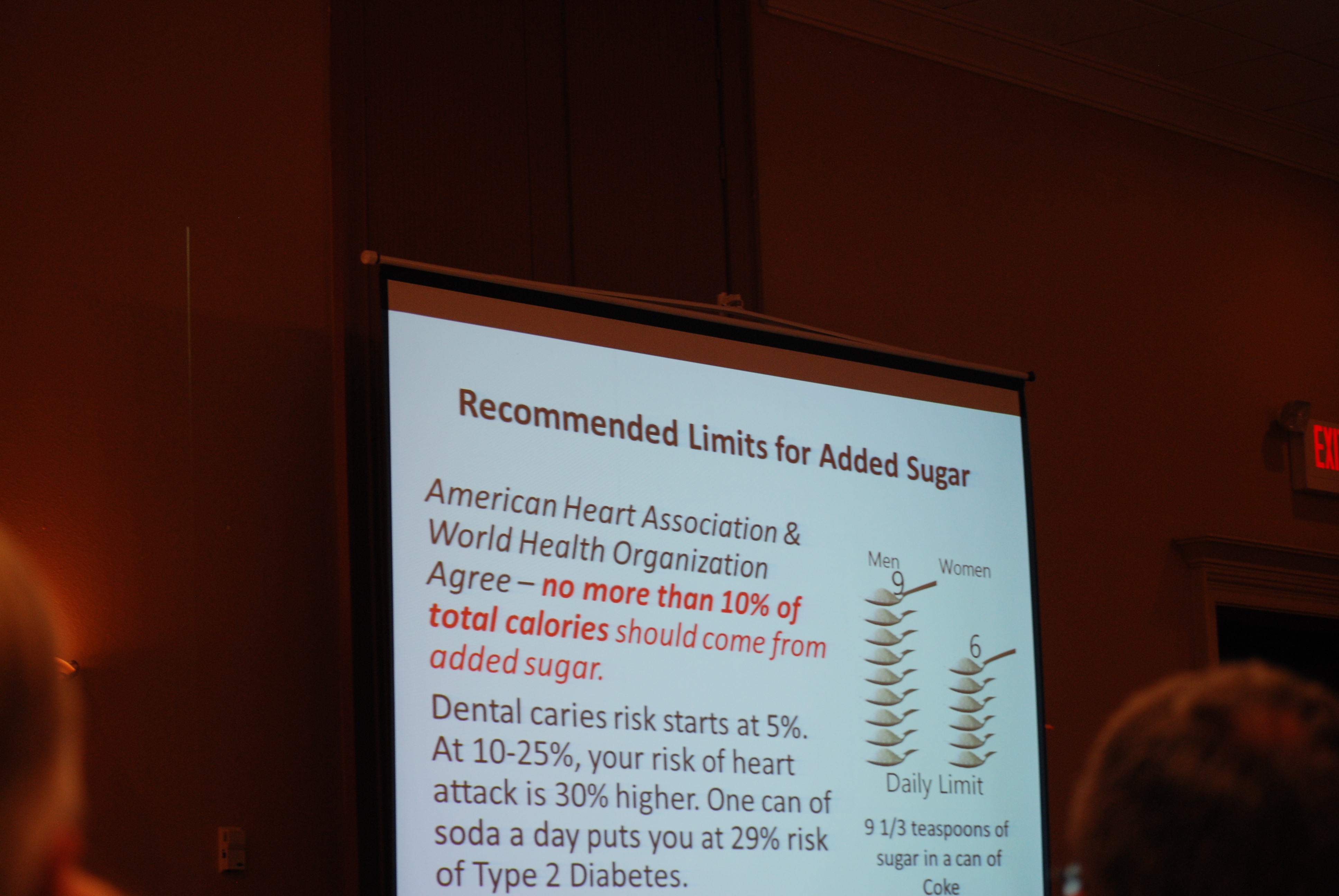
Sugar is a huge part of this and also a huge part of the inflammatory process.
I can tell people this stuff (Including my own cardiologist who looked at me like I have 14 heads) (and my cousins who blow me off.) I can tell them that a peanut and jelly and white is not a heart healthy diet. I can tell them they can give me a smoothie with whole milk if they don’t have almond milk because whole milk has less sugar in it that low fat milk. I can tell them anything that is low fat is high in sugar which is worse for us that the fat and in fact we need fat for our brains.
The Best Foods for Your Brain (And Why We Might Owe Fat an Apology)
(I’m talking good fat so don’t get too excited.)
“The Top 3 Dietary Fats for Better Brain Health
1. Polyunsaturated Fat
Polyunsaturated fats contain the essential fatty acids (EFAs) omega-3 and omega-6. Our brains need these fats to function properly (studies also show that eating high quantities of omega-3 fatty acids are linked to reduced rates of major depression, but our bodies are unable to produce them. This means it’s important that we include these fat sources in our diets.
2. DHA
An omega-3 fatty acid, DHA has been shown to help brain functions like memory, speaking ability, and motor skills. Increasing dietary levels of omega-3s has been shown to help improve conditions such as depression, bipolar disorder, and ADHD.
3. Saturated Fat
Saturated fat is actually one of the main components of brain cells, and is therefore necessary for healthy brain function. In one study, it was found that people who ate more saturated fat reduced their risk for developing dementia by 36 percent. Saturated fat also provides benefits for the liver and immune system and helps maintain proper hormone balance.”
Because if you have dementia does it really matter if your cholesterol is high?
And if you have fatty liver disease what are these statins doing to you? For a long time every doctor is ordering statins for people and what is the connection between this dementia. No offense to them but they don’t have to take care of our elderly parents with dementia.
As nurses, teaching nutrition is our greatest gift because we need a doctors order to tell patients to take Omegas but we certainly don’t need one to tell them to eat foods rich in omegas. We can tell people “Eat a healthy diet that’s low in saturated fat, trans fat, refined carbohydrates and salt, and rich in fruits, vegetables, fish, and whole grains.”
or
“Eat good whole foods. Don’t eat anything from a can or a box. Eat lots of fruits and vegetables.”
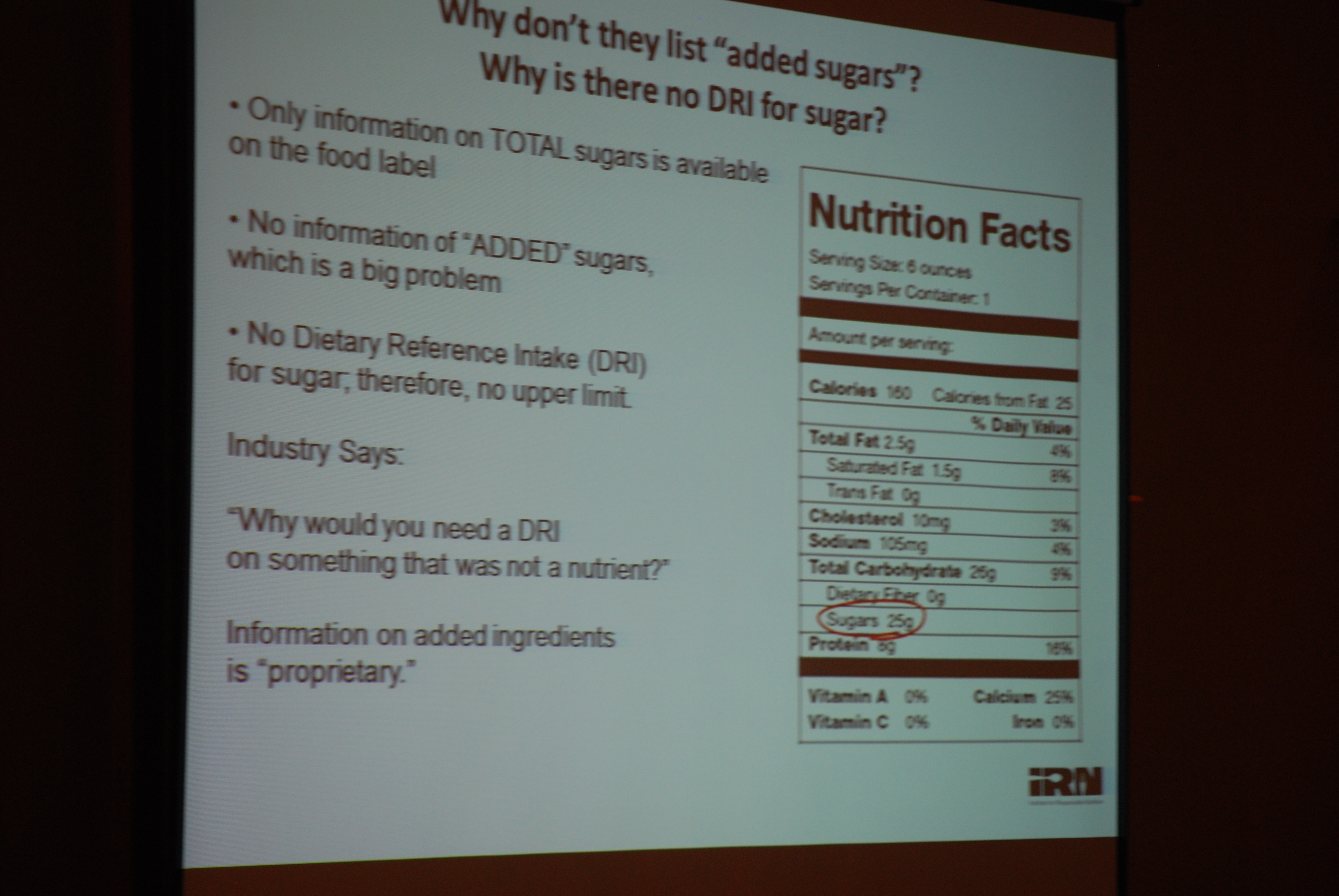
Why? Because there is sugar in everything. It’s added to make thing taste better.
Sorry for the rant. Back to Wolfram. Here are some noteworthy quotes.
“75% percent of our healthcare costs are related to preventable conditions.”
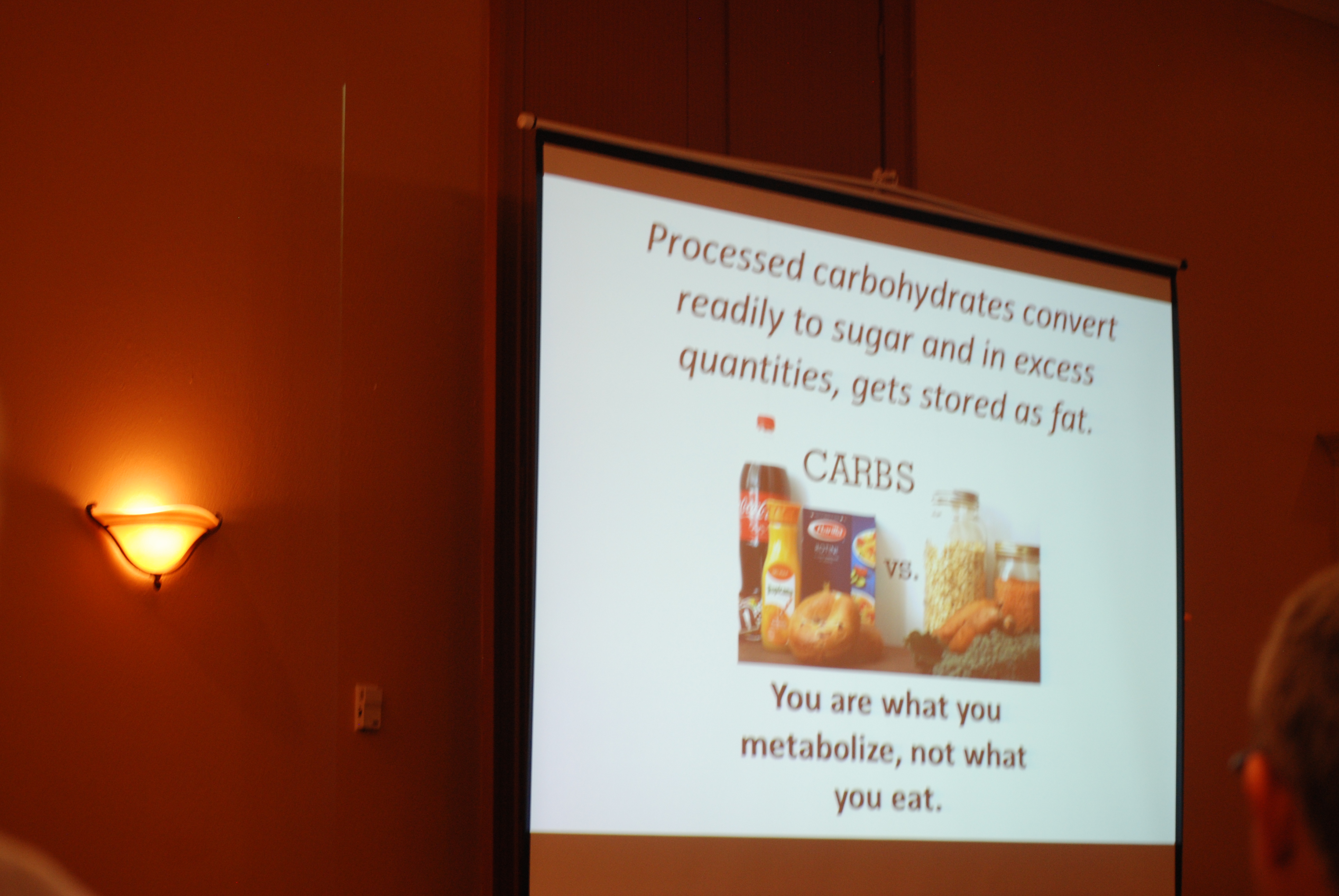
“You are what you metabolize not what you eat.”
“74% of food at the supermarket has added sugar in it.”
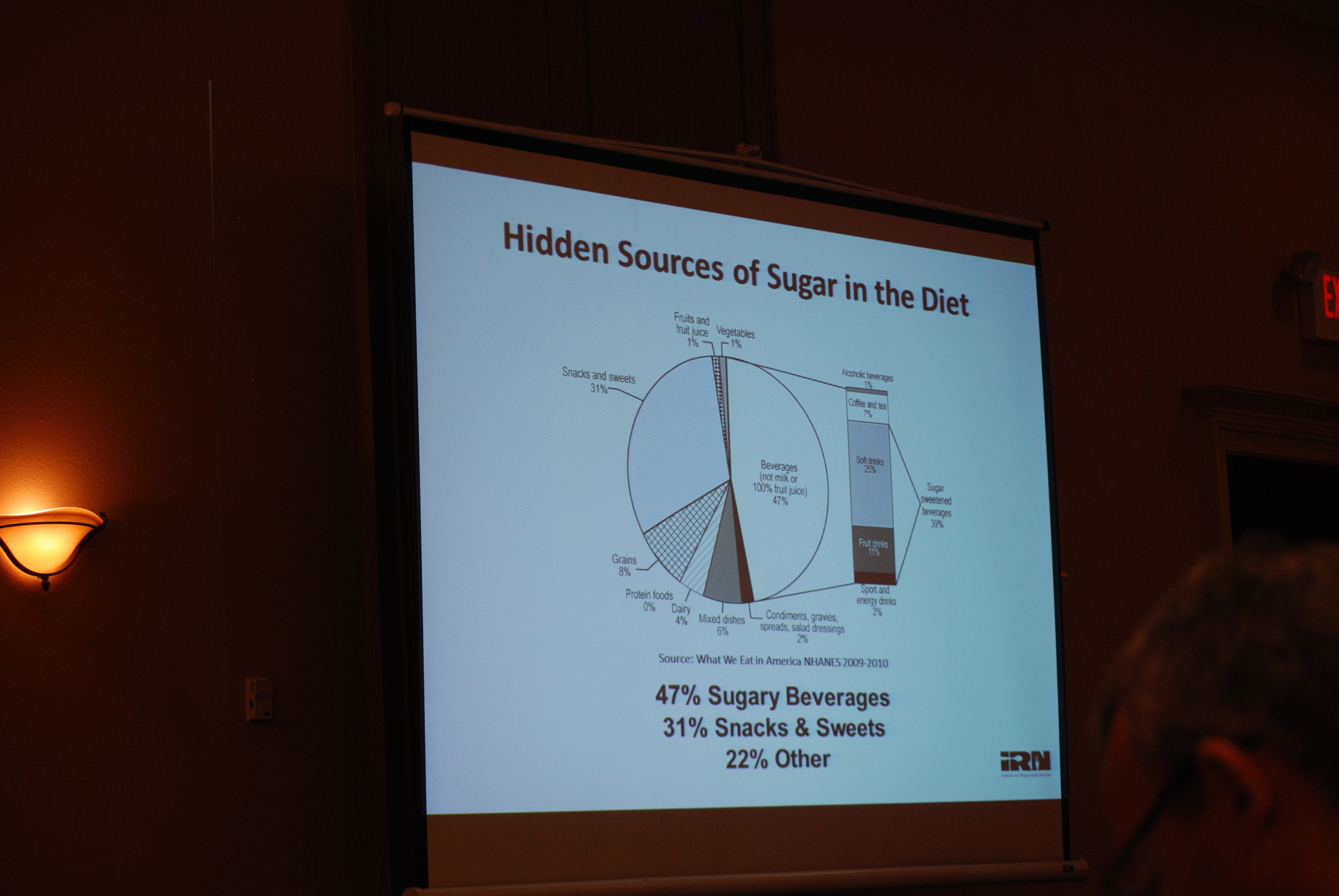
“Sugar is hidden in our food supply. 47% in sugary beverages.”
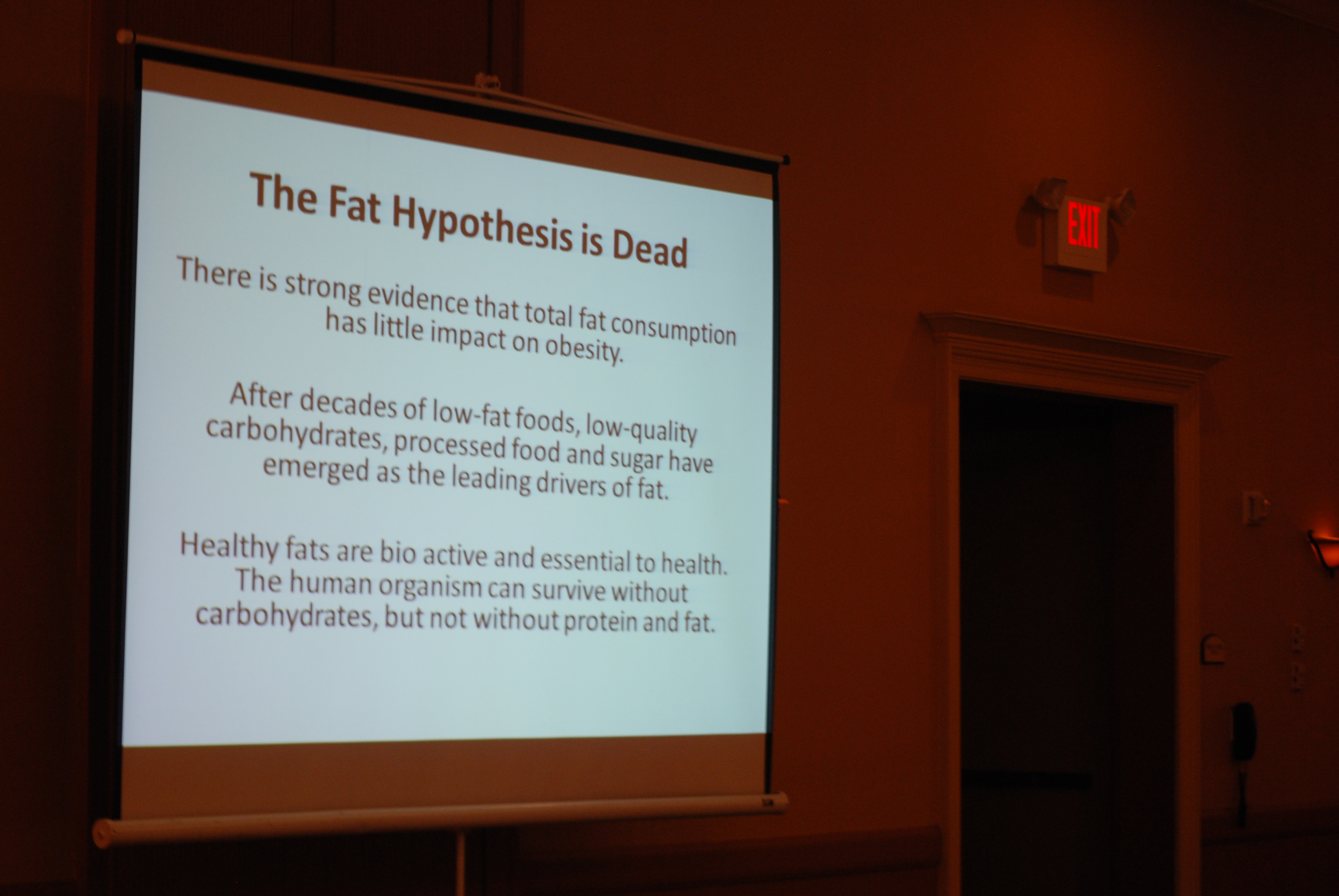
“Total fat consumption has little impact on obesity.”
“if you look back at the last decades at the low food marketing scam which has been selling us low quality carbohydrates with processed food and added sugar in it.”
“The human organism can survive without carbohydrates but not without protein and fats.”
All of us in healthcare need to embrace this and learn more and make it part of our lives the daily conversations with our patients so I hope we can engage Wolfram in more of these conversations.
Like for instance. What do you do for a fatty liver besides cutting out all the bad foods?
Thank you Wolfram for coming to our conference and we hope to hear lots more from you!
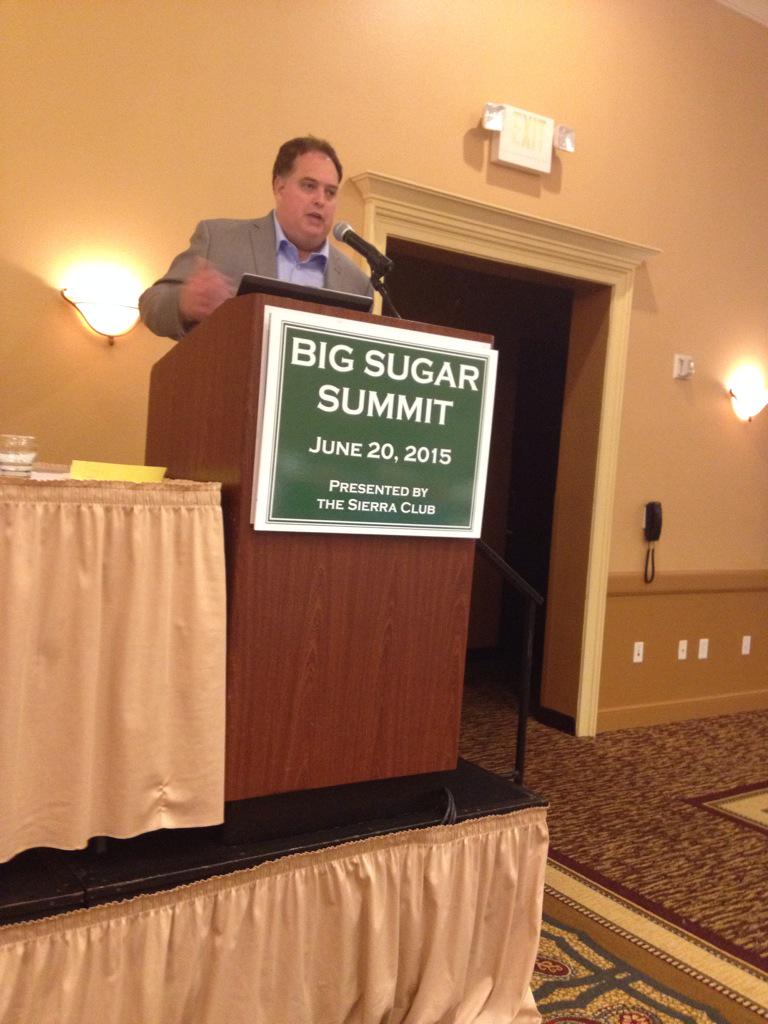
Big Sugar Summit: Julia Hathaway, Is Big Sugar Burning Your Lungs?
burnt sugar field pahokee
Here is our amazing friend Julia Hathaway at the Big Sugar Summit! I learned so much from her speech and now I know all the things that can be done with sugar cane if it is green harvested. Brazil and Australia do it!
We can green harvest too. Imagine something good coming out this whole mess!
“Application of pesticides on Brazilian sugarcane fields is negligible and use of fungicides practically nonexistent. Major diseases that threaten sugarcane are fought through biological control, introducing natural enemies to fight pests and advanced genetic enhancement programs.
Brazilian sugarcane growers also apply relatively few industrialized fertilizers, using on average 75 kilograms per hectare. That’s 50% less than the amount typically applied to corn in the United States and 30% less than what’s used for beet sugar in Europe.
Brazilian sugarcane needs fewer chemicals due to the innovative use of organic fertilizers created during sugarcane processing. For instance, sugarcane mills recover residues called filter cake (which is rich in phosphorus) and vinasse (loaded with potassium, organic matter and other nutrients), which they use in place of traditional fertilizers.”
Is Big Sugar Burning Your Lungs?
You can help by going here and filling out this questionnaire.
“Hundreds of environmentalists gathered Saturday in West Palm Beach, determined to clean up Palm Beach County’s sugar cane industry.
CBS12 attended Sierra Club’s Sugar Cane Summit, talking with activists about what they call our country’s love of fructose and the dangers the crop potentially poses to you and your family.
Wolfram Alverson, a California nutritionist attended the event, telling CBS12 America is too dependent on sugar, saying with each passing year more and more cases of childhood diabetes are diagnosed.
“In fact we’re seeing type 2 diabetes in the womb now so it’s being transferred from mothers to their children, even before they’re born,” said Wolfram Alverson.
Another troublesome aspect of the industry is how the crop is harvested and what gets left behind.
Julia Hathaway with Sierra Club says it’s common practice for some sugarcane to be burned, sending toxic fumes into the air and possibly into our water supply.
Leftover crops she says could be recycled and used for good.
“That can be used to make products including bio-plastic and parts you can use as mulch,” said Julia Hathaway.
For now, Hathaway says she and her fellow activists have their work cut out for them, raising awareness so lawmakers and companies can make changes, for a better Palm Beach County. “It’s a big problem and it’s a big hill to climb but we’re worth it and we should stand up for ourselves.”


















 cyndi lenz