“The Center for Responsive Politics (CRP) is a non-profit, nonpartisan research group based in Washington, D.C. that tracks the effects of money and lobbying on elections and public policy. It maintains a public online database of its information.
Its website, OpenSecrets.org, allows users to track federal campaign contributions and lobbying by lobbying firms, individual lobbyists, industry, federal agency, and bills. Other resources include the personal financial disclosures of all members of the U.S. Congress, the president, and top members of the administration.”
“Just as water flows downhill, money in politics flows to where the power is. And the Center for Responsive Politics is there to help you follow the contours and learn about these connections. This section of the Action Center contains a wealth of information about the unhealthy influence money can have on our elections and government politics.
The Basics. From frequently asked questions to our money-in-politics glossary, from the 10 Things Every Voter Should Know about money in politics to our Follow the Money Handbook, and iPhone App, this section of the Action Center contains a wealth of information about the unhealthy influence money can have on our elections and government politics. Begin your learning here.
Sheila Krumholz has been the CRP’s executive director since December 2006, having previously served for eight years as the CRP’s research director. She first joined the organization in 1989 and served as the assistant editor of the first edition of the printed volume Open Secrets.”
On Scandal this past year even Olivia Pope made sure her candidate had “Big Sugar” money. I can’t find the clip but I think it was when she was prepping the very awesome Susan Ross character.
Shelia told us this: “Votes still trump money and that’s bad news for Donald Trump and good news for Democracy.”
I’m sending this blog post to my state rep, rick scott and my state senator. None of these people actually care about anyone especially older people who are ill. They are under some kind of delusion that these people can have help. In the case of Ms Harrell she thinks people can go to a free clinic if they have no health insurance.
Right now if you call the Elder Hotline they are wonderful about getting assessments done but they have one problem. There are no funds to help. People are put on a list by need and usually people with dementia are on top of the list. I have no issues with these folks. They are doing the best they can. But no money is no money. It’s could be months before people get services.
And thats for people over 65.
What happens to the younger person who is not on Medicare that get’s diagnosed with
Alzheimer’s Disease or dementia?
Where do they go and how do they manage? What about the people who live by themselves?
Lisa Genova graduated valedictorian, summa cum laude from Bates College with a degree in Biopsychology and has a Ph.D. in Neuroscience from Harvard University. She is the author of the New York Times bestselling novels Still Alice, Left Neglected, Love Anthony, and Inside the O’Briens.
“Dr. Alice Howland (Julianne Moore), a linguistics professor at Columbia University, celebrates her fiftieth birthday with her physician husband John (Alec Baldwin) and three adult children. During a lecture, Alice forgets the word “lexicon”, and during a jog becomes lost on campus. Her doctor diagnoses her with early onset familial Alzheimer’s disease.”
Julianne Moore won a well deserved “Oscar” for her performance.
“Alzheimer’s is a pretty brutal disease — and as Moore pointed out in her acceptance speech for Best Actress at the 2015 Oscars:
I’m very happy — thrilled, actually — that we were able to hopefully shine a light on Alzheimer’s disease. So many people with this disease feel isolated and marginalized, and one of the wonderful things about movies is that it makes us feel seen and not alone. And people with Alzheimer’s deserve to be seen, so that we can find a cure. “
“An estimated 5.3 million Americans of all ages have Alzheimer’s disease in 2015.
Of the 5.3 million Americans with Alzheimer’s, an estimated 5.1 million people are age 65 and older, and approximately 200,000 individuals are under age 65 (younger-onset Alzheimer’s).
Almost two-thirds of Americans with Alzheimer’s are women. Of the 5.1 million people age 65 and older with Alzheimer’s in the United States, 3.2 million are women and 1.9 million are men.
Although there are more non-Hispanic whites living with Alzheimer’s and other dementias than people of any other racial or ethnic group in the United States, older African-Americans and Hispanics are more likely than older whites to have Alzheimer’s disease and other dementias.”
Why is there an issue disclosing the diagnosis?
“disclosing a diagnosis
Most people living with Alzheimer’s are not aware of their diagnosis.
Despite widespread recognition of the benefits of clear and accurate disclosure, less than half (45 percent) of seniors diagnosed with Alzheimer’s disease or their caregivers report being told the diagnosis by a health care provider, compared with 90 percent or more of those diagnosed with cancer and cardiovascular disease.”
I’d like to remind everyone that Alzheimer’s is a bipartisan disease. It doesn’t really care if your rich or poor, Democrat or Republican.
In Palm Beach County there are more than 55,000 people affected by Alzheimer’s disease. In Martin County there are more than 6,400 people and close to 9,000 people in St. Lucie County affected by Alzheimer’s disease.
Alzheimer’s Community Care operates nine Specialized Alzheimer’s Care and Service Centers with locations throughout Palm Beach, Martin and St. Lucie Counties. All are licensed in accordance with the higher standards of Florida’s Specialized Alzheimer’s Day Care Act of 2012. The cost for a full-day, up to 10 hours, is $65, while half-day care plans begin at $40. The organization provides dementia-specific care for the patient and his or her caregivers.
This is great if you have 40 Bucks a day.
I’m not in any way criticizing the wonderful people from any of the organizations that do this work. I applaud them. I am however criticizing our representatives for not even having this on their radar and telling people if they have no health insurance they can go to a free clinic which btw was line item vetoed by Rick Scott.
Please watch ” Still Alice.” It’s an amazing movie. You all know someone just like Alice. My heart breaks for these people and for the people who love them who bravely take care of them the best they can every day. You are the unsung heros.
“I would like to take this opportunity to bring attention to the plight of the Florida Everglades in the hopes of inciting awareness and support for our struggles to help, protect, and defend this unique ecosystem for the next generations.
The Everglades is our mother. Until recently, it has protected and nurtured us. In our time, the delicate balance of the Florida Everglades has been pushed beyond its breaking point, and the Everglades is dying a slow death. We once were able to drink the clean water of the Florida Everglades. We were able to swim in its waters and eat from the land. Mismanaged by governmental agencies over the past 50 years, the water in the Florida Everglades is now heavily polluted. For this reason, crucial elements of our way of life are no longer possible.
The dire situation in the Everglades is a direct reflection of the struggle of the individual tribal member. We were once people who were able to thrive independently within the sanctuary of the Everglades, and our position has always been to be left alone to live as we used to live before Columbus. Our original way of life has been made virtually impossible because the land that we used to depend on is not the same. In a sense, we have been forced to come out into the non-Indian world and learn how to be a part of it and live in it. One of our responsibilities as members of the non-Indian world is to emphasize the quandary of the Florida Everglades to create positive change. The Comprehensive Everglades Restoration Plan was started around the year 2000. Thirteen years and over a billion dollars later, it has been unsuccessful in doing what it was purported to do—to re-establish the original path of water from Lake Okeechobee into Florida Bay.For example, the one-mile bridge that was recently constructed on the Tamiami Trail for the purpose of restoring sheet flow to Florida Bay has not done so. Yet there is a two-mile flyover bridge planned for the same purpose.
Historically, the problem with the restoration of the Everglades has been fragmented efforts with no solid, unifying direction. Projects have been based on the perspectives of people versus what is actually required for the Everglades to survive.
For the Miccosukee people, true restoration is to allow water to flow uninterrupted from Lake Okeechobee and wash out into Florida Bay. And that water must be clean. Only when the polluted water is cleaned can the Florida Everglades and its wildlife begin to recover.”
Here, Chairman Colley Billie is speaking to the Department of the Interior. If you follow the link you can read the whole thing.
‘However, the Tribe strongly opposes the National Park Service’s (NPS) continued efforts to
construct a series of massive skyway bridges on the Tamiami Trail (Trail) including the currently proposed 2.6 mile bridge that will cost $193M because: (1) the bridges will not be permitted to operate as designed due to flooding and water quality concerns; and (2)there already exists a series of culverts that could effectively deliver water, during high water seasons such as if properly maintained at a fraction of the cost. At a minimum, NPS should be held to the requirements of the FY14 Omnibus with respect to securing all the should be held to the requirements of the FY14 Omnibus with respect to securing all the necessary funding for the project before being allowed to move forward with bridging.
My question is why is no one listening to Chairman Colley Billie and the Miccosukee Tribe? This goes beyond Florida to the Federal Government who apparently does not care at all and are willing to let our friends, the Miccosukee Tribe of Florida, be polluted. This is shameful.
We have a lot of priorities. This needs to be on the top of the list.
How can we get behind this and make sure that the Miccosukee Tribe has clean water? This must be done.
Please send a message to your US Congressman about this issue. Your more than welcome to use this blog post and the video. If you live in Florida send to your representatives so they clearly understand what they have done by completely ignoring all of us.
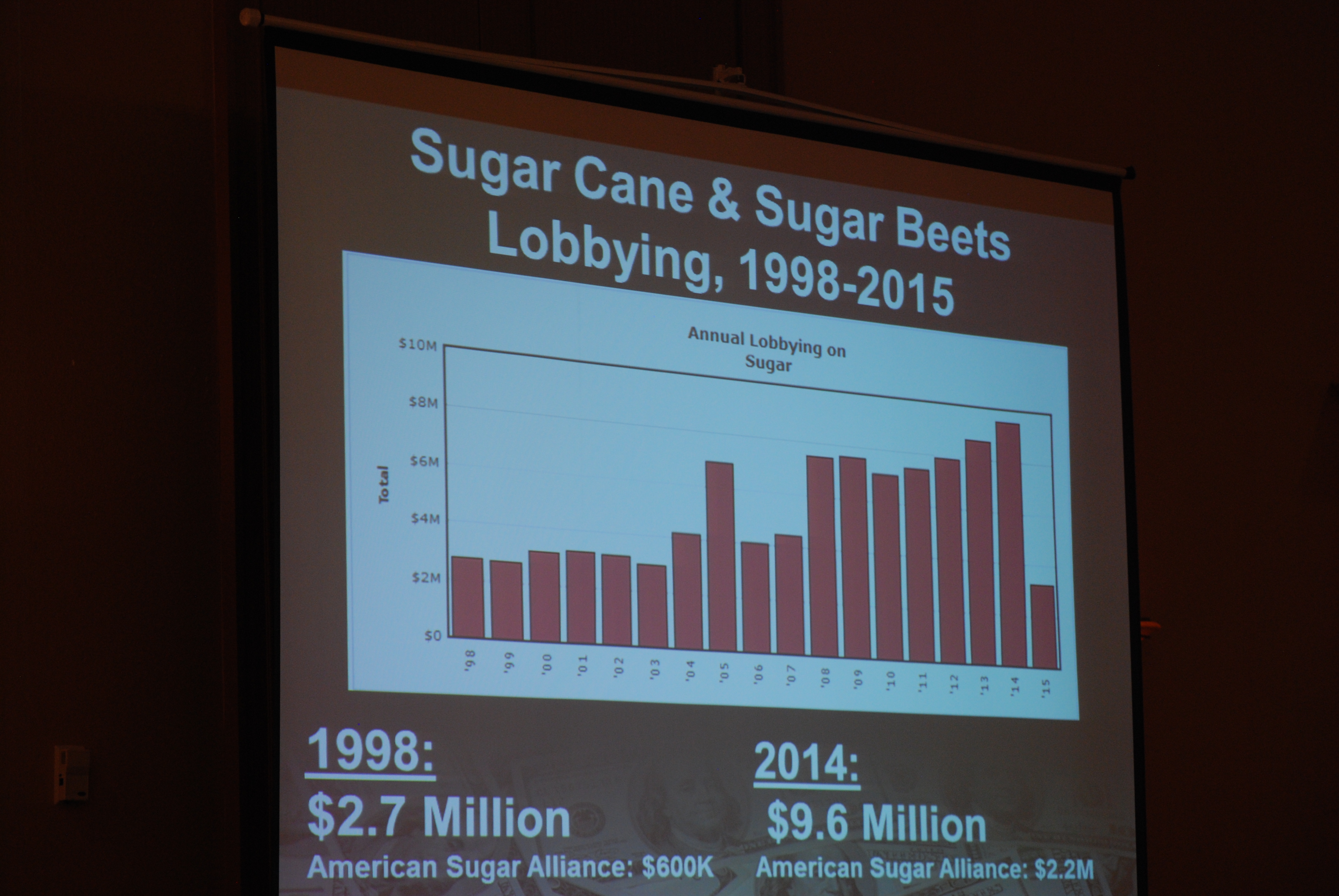
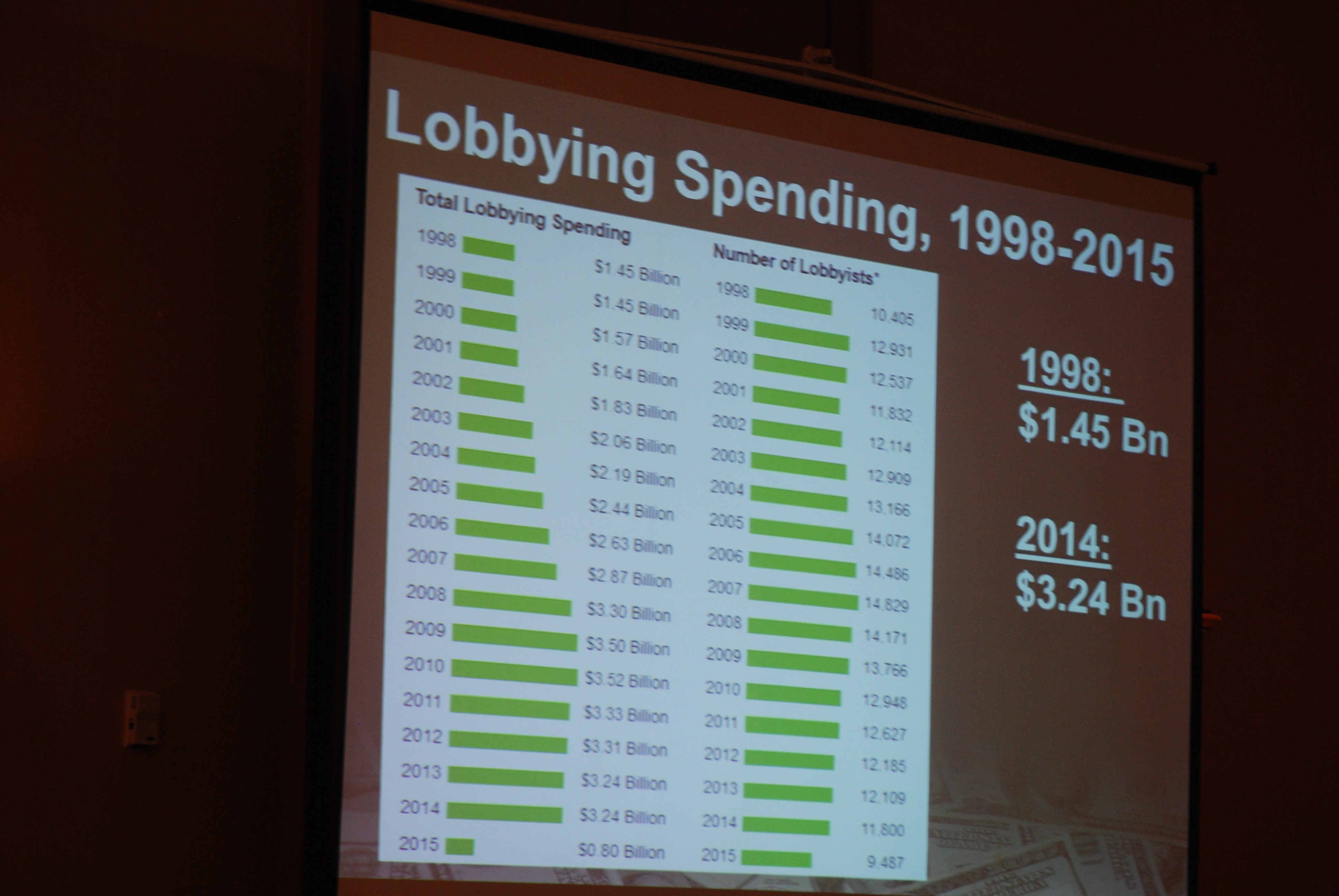
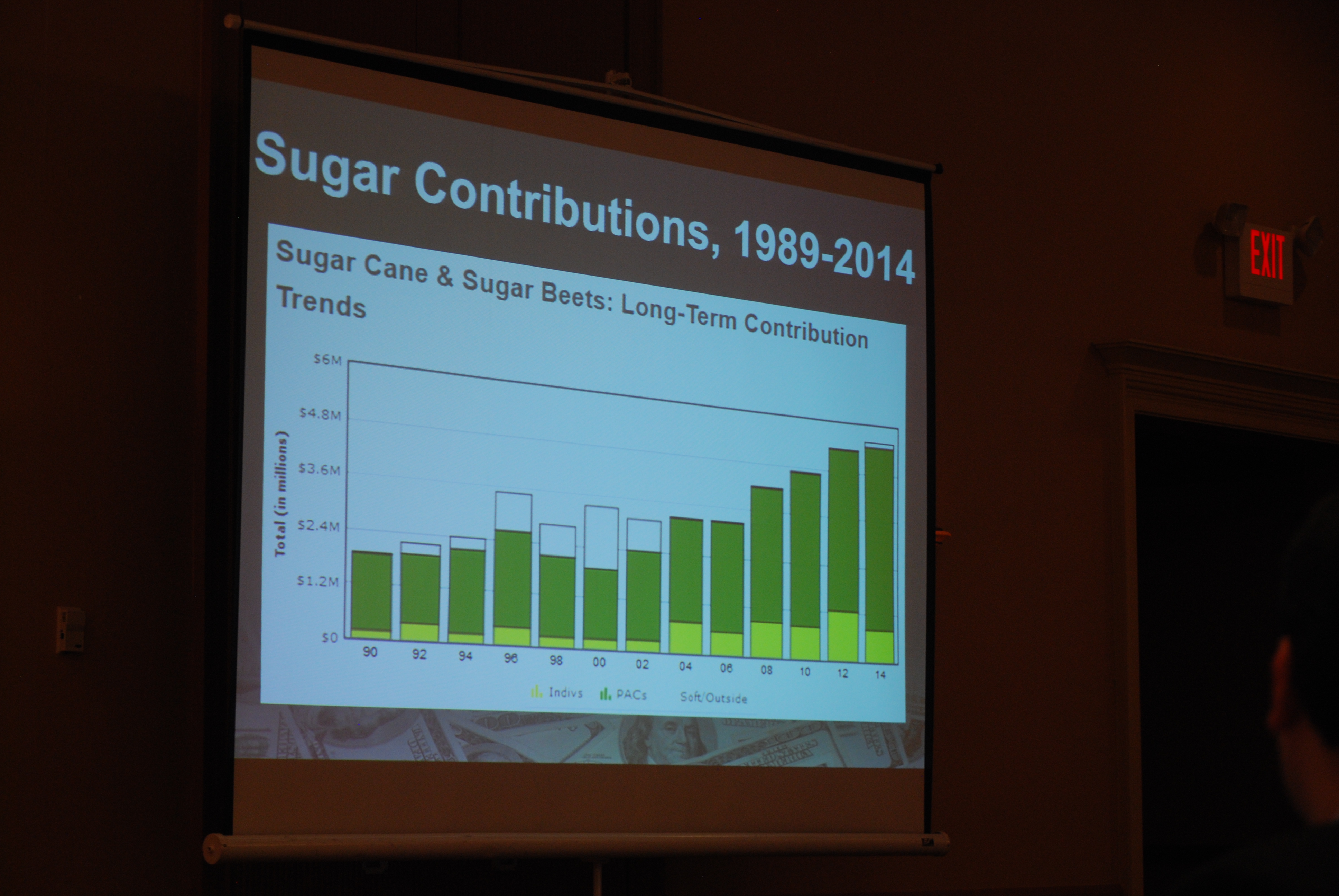
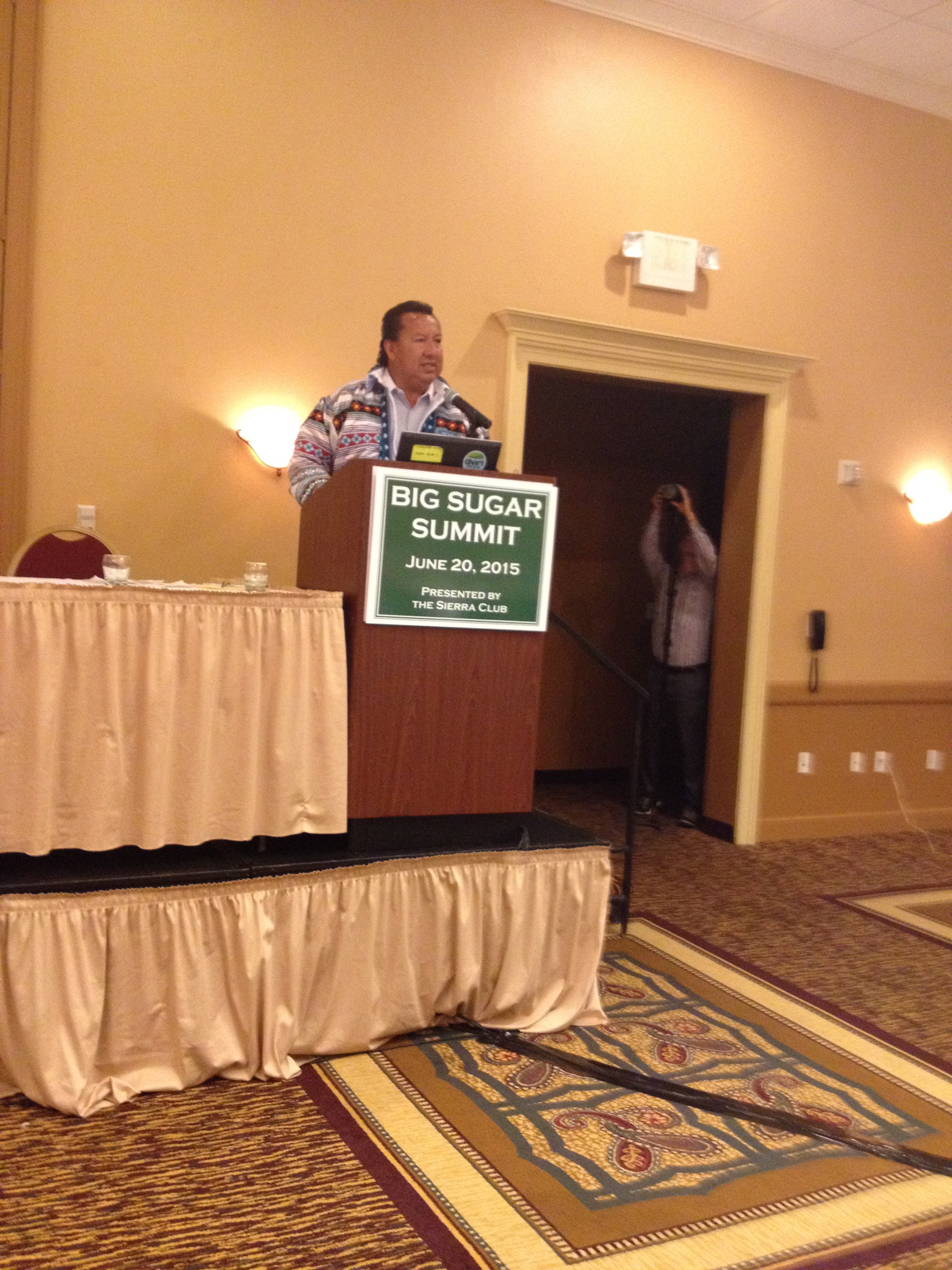
In a few week we’ll be going to the Sugar Summit that is being put together by our great friends, the Florida SIerra Club. I thought it was a good time to bone up on who’z who and what’s what.
Please feel free to chime in. Even at sugarcard2 – we want to hear from you!
Yesterday, my friend Jules and I went out to Clewiston. The headquarters for US Sugar Corporation resides there.
They call themselves ” America’s Sweetest Town.” Maybe sweet in sugar but not sweet people. The last time I went out there was to shoot “The Sugarland Rally”
The Sugarland Rally was a really sincere effort to bring people together to discuss our water issues together. Lead by our friend Justin Riney. This was their message.
An open letter to Florida residents from The Sugarland Rally Committee:
Dear Florida,
Please read these important details regarding a bicoastal rally we have planned for September 1st on Lake Okeechobee. There are multiple organizations involved in planning this event, and we need your help immediately to get the word out.
The Sugarland Rally will unite the east and west coasts of Florida in a peaceful, historic demonstration to speak out against the pollution of our estuaries from Lake Okeechobee discharges. We support both immediate and long-term solutions, but ecosystems and communities along the St. Lucie and Caloosahatchee Estuaries are in crisis. We cannot afford to wait for ecological and economic collapse. We urge all stakeholders–especially local, state and federal governments–to act immediately.
We chose Clewiston as a central location to unify east and west at Lake Okeechobee, the source that is polluting our estuaries, and because we believe Florida’s sugar industry can be part of the solution. Please don’t misinterpret our intentions–we are NOT holding a rally at Clewiston to protest or point fingers at “Big Sugar.” It’s quite the opposite, actually. We invite Florida’s powerful sugar industry to join us in crafting an immediate solution to the ecological and economic crisis caused by discharges from Lake Okeechobee. Here’s a golden opportunity to earn the respect, loyalty, and trust of Floridians for generations to come–to squash the stereotypes–by standing with the people in support of a solution. Without the healthy longevity of Florida’s land and water, we’re all out of business. Our children and grandchildren are out of business. We invite Florida’s sugar industry to stand with us in support of preserving the wonderful land and water that keeps us all in business. We must think longer term, we must think sustainably, and the time to act is now.
Our message is a peaceful one to emphasize a powerful sense of unity needed among ALL Floridians, and to urge local, state, and federal governments to act immediately to stop the pollution of our estuaries from Lake Okeechobee discharges. We are all entitled to healthy land and water, and it is our responsibility as citizens, working with our government, to preserve these treasured assets and ensure their longevity for generations to come. Let’s all unite as Floridians in support of both immediate and long-term solutions. The Sugarland Rally will be a peaceful demonstration that we can all be proud of.
Join The Sugarland Rally conversation on the event page at http://www.bit.ly/sugarlandrally, and please share this post with as many concerned Floridians as possible. This is a call to action, and we need your help.
Respectfully,
The Sugarland Rally Committee
This was a rally to have a discussion to pull us all together. US= east coast, west coast, and the people of Clewiston. For us it was to make sure we respect the people that live in the south of the lake and make sure they are safe. Human being stuff. Community stuff.
Here is the video I shot. As you can see at the beginning we were quit stoked to be there.
After the rally we went on the invitation of the Mayor to the Roland Martin Marina for some food. When we got there they refused to serve us. Every person in the room stared us down and honestly if they had guns they would have shot us down.
We went next door where I met up with friends Bob and Lisa Riney (parents of justin) and ate lunch and my friends did end up getting a few drinks because Mayor Roland showed up.
Mind you, I’m the video girl, who’s only job was to document the event. And I was starving, hot, tired. So so much for Southern Hospitality. So much for olive branches.
Afterwards in the Clewiston New’s more hate came from the people who were quite verbal, quite nasty and totally unwilling to listen to any kind of reason.
To this day, I still believe in the mission of the Sugarland rally and our extended Olive Branch.
I can’t tell you why. I’m not a psychic. I can only tell you what happened.
In spit of that, I still worry about the people who live there and how much work is being done on the dike and always hope they will be safe.
When we went out yesterday I even wore my Marshall Tucker Band T shirt. I mean who would shoot a video girl with a Marshall Tucker Band Shirt? (Really didn’t stay there long enough to find out)
This stop BTW just a pit stop on our way to STA 5/6.
Robert Coker is Senior Vice President, Public Affairs, of United States Sugar Corporation. He is responsible for managing the company’s federal, state and local government affairs department and the company’s corporate and charitable giving programs encompassing numerous community and employee-relations activities. As a member of senior management, Coker also actively participates in corporate matters involving real estate, environmental regulation, budgeting and allocation of capital.
He is a former Chairman of the Board of Regents for Leadership Florida. He serves on the board of directors for the Florida Sugar Cane League, the Board of Trustees of BIZ-PAC of Palm Beach County and is a member of the Board of Governors for the Florida Chamber of Commerce. He is a member of the Board of Trustees and serves on the Executive Committee of Florida Taxwatch.
Malcolm “Bubba” Wade
Sugar execs, w/ Gaston Cantens of Florida Crystals and Robert Coker of US Sugar, just huddled in back room of #IndianRiverLagoon hearing.
Malcolm S. Wade, Jr. is Senior Vice President, Corporate Strategy and Business Development of United States Sugar Corporation. He has been employed by the Company for more than 27 years and has been a member of the senior management team for over 20 years. Wade, a certified public accountant, joined the company as Director of Internal Audit in 1982 and subsequently was named director, vice president and senior vice president of the Administrative Service Group and is currently senior vice president of sugar operations.
For more than 20 years, Wade has been involved in developing and overseeing the Company’s environmental responsibilities. Through his appointments by two governors and the South Florida Water Management District to working groups on South Florida environmental issues, Wade has helped shape public policy regarding Everglades Restoration.
In March 2005, Governor Bush appointed Wade to a four-year term on the South Florida Water Management District’s Governing Board, a position he resigned in 2008 due to the State’s proposed acquisition of U.S. Sugar.Previously, Wade was a member of the team representing South Florida farmers that spent more than a year negotiating with the Interior and Justice Departments, the State of Florida and the South Florida Water Management District to resolve the legal disputes over Everglades Restoration. He represented farmers on the technical mediation committee that crafted the Technical Mediated Plan for Everglades Restoration, which was adopted by the Florida Legislature in the spring of 1994.
He was appointed by Gov. Lawton Chiles to the Governor’s Commission for a Sustainable South Florida, which worked for four years to establish a consensus plan for Everglades Restoration. The work of the commission became the framework for the Comprehensive Everglades Restoration Plan (CERP) approved by Congress and is currently being implemented throughout south Florida.
Wade’s work on restoration issues continued with his appointment by Gov. Jeb Bush to the Governor’s Commission for the Everglades. He is a past member and co-chair of the South Florida Water Management District Water Resource Advisory Commission (WRAC) as well as a past member and chairman of the Lake Okeechobee Advisory Committee of the WRAC. He is also a past member of the District’s Lower East Coast Water Supply Planning Committee and the Budget Review commission. In addition, Wade served on the South Florida Agricultural Council Water Commission, the Caloosahatchee Water Management Advisory Committee and is a director of the Everglades Agricultural Area Environmental Protection District.
Wade is a Certified Public Accountant and a Certified Internal Auditor. He is a member of the American Institute of Certified Public Accountants, the Florida Institute of Certified Public Accountants and the Institute of Internal Auditors.
Judy C. Sanchez is the Senior Director of Corporate Communications and Public Affairs for United States Sugar Corporation. She joined U.S. Sugar in 1994, transferring from its South Bay Growers vegetable division where she worked as a Marketing Specialist.
Mrs. Sanchez attended the University of Florida College of Journalism and Communications and graduated from Florida Atlantic University with a degree in communications. A fourth generation farmer, she has spent most of her life in and around the sugar cane industry, both in Florida and Louisiana. She currently serves on the board of directors for the Western Palm Beach County Farm Bureau, Childcare of Southwest Florida, and the Agricultural Institute of Florida.
She lives in Belle Glade, Florida, with her husband and two sons.
Judy follows me on twitter so I hope she reads this. We night not like what Judy does or says but for her boss’s she does a great job! Check out the tweets!
So you know when you call someone on the phone and you talk and talk and then they interrupt and say ” You got the wrong number.” Then your embarrassed and apologize and try to figure out what number should have been called. Sometime’s you just dialed wrong and sometimes you have the wrong number.
Or you go to the wrong house and the kindly people at the door direct you to the correct place. That!
You know human things that we do. Honestly. Politeness. Respect of our fellow human beings. Every day life with our fellow travelers.
So, our good friend of the Indian River Lagoon and awesome blogger Jacqui Thurlow-Lippisch wrote this blog.
“A few months ago when the South Florida Water Management District was ignoring a desperate and pleading public that had come before them begging for the purchase of the US Sugar Option Lands through Amendment 1 monies, to help save the St Lucie River/Indian River Lagoon and Calooshatchee, I drove to West Palm Beach and met with high level officials. They were very nice but it was a frustrating meeting. Basically I asked them, “What are you doing?” “Why are you acting like this?”
The answer?
“Commissioner, you know the power isn’t in our hands anymore anyway…”
“What do you mean?” I inquired.
A conversation around the table ensured:
SFWMD: “Well after the debacle that occurred 2008-2010 with then Governor Charlie Christ, the recession, and the attempted buyout of all of US Sugar’s lands, basically a water district was trying to purchase a corporation…..the Florida Legislature got fed up. So later, in section 373.556 of Florida Statutes, the Florida Legislature made sure the District would never be in a position to do that again….Significant legislative changes have occurred related to water management budgeting with substantial ramification for Water Management District land transactions. In 2013, Senate Bill 1986 provided that certain District land transaction should be subject to the scrutiny of the Legislative Budget Commission. As this bill renewed the authority of the Governor to approve or disapprove the SFWMD budget, as with all water management budgets of the state, we can no longer do things we have done in the past like oversee giant land purchases using the monies from our ad-valorem taxes…There is a lot more to it but that’s the main difference now. You are talking to the wrong people….”
I stood there just staring…..”I didn’t know this gentlemen, so how do you expect the public to know this ? Are you telling me, the SFWMD has no power to purchase those Sugar Lands?”
“I am telling you the legislature is in charge of the budget and we don’t have enough money to buy the lands, and couldn’t without their approval….”
“So why don’t you explain that to the public?” I asked.
Stares….
Long awkward silence….
The reply was more or less: “It’s best not to get involved in such a discussion…..”
I lectured them on the importance of communication and education and said they certainly still have influence even if they say they “do not” …..but this did go over particularly well… the meeting ended. I shook their hands. I felt like an idiot. I drove home.”
Poor Jacqui.
We were the uninvited.
“Shall I tell you who taught you the things you’ve done. The things you’ve said”
So my question is who does that? Why not just say so. Why not just say “Your barking up the wrong tree?”
If its “our money” we’d like to keep it and not waste it on housing people. We need a real solution. Stop wasting our money on a solution that doesn’t work and hurts people.
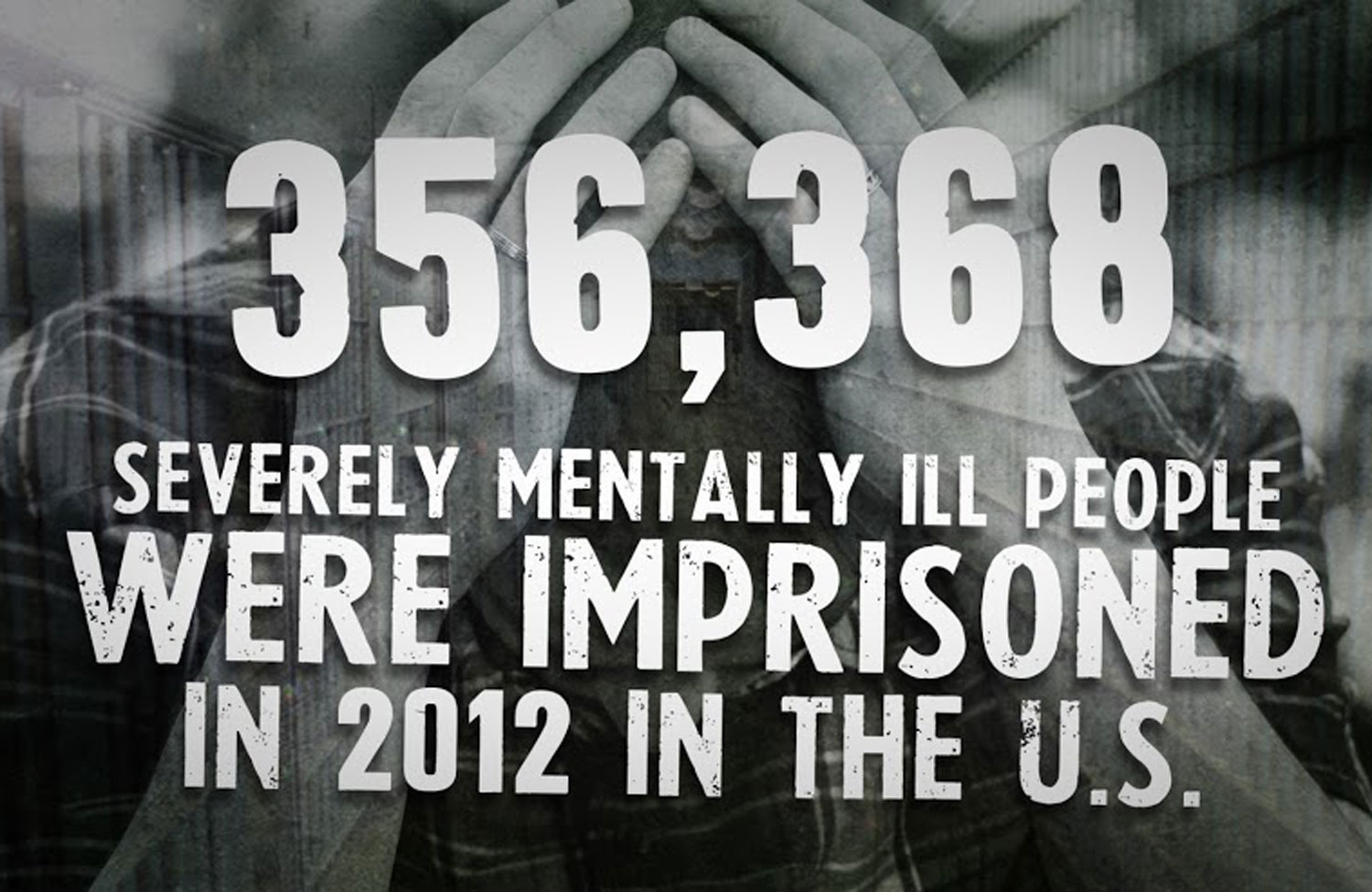
“During the 1960s, there were well-intentioned public policies to close most mental health institutions, some of them dens of abuse and neglect, and replace them with community mental health centers, which could dispense medication to people who needed it. But states failed to follow through with either sufficient community mental health centers or funding for treatment.
As a result, many states, including Florida, shifted the burden of dealing with the mentally ill to counties, which lacked appropriate treatment options. Ultimately, jails became the first resort for people whose mental illness contributed to their commission of crimes.
As a result, county jails have become de facto mental institutions at massive costs to taxpayers without resolving long-term problems of the ill, Treasure Coast sheriff’s spokesmen agreed.
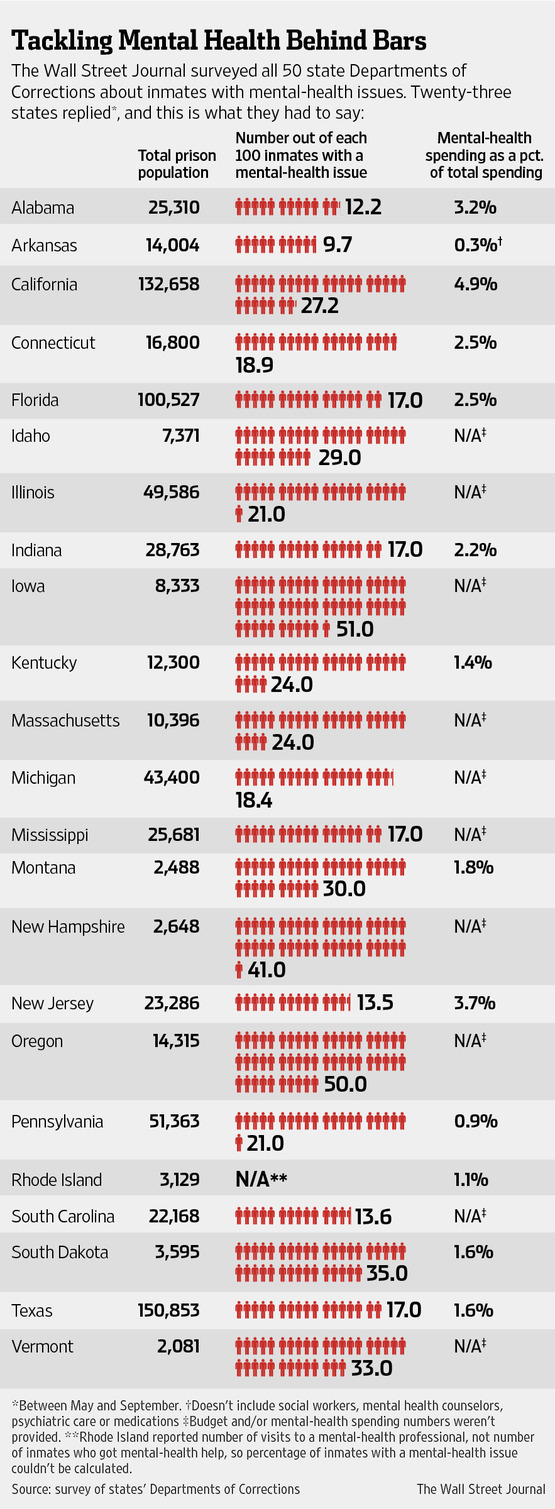
Nationally, about one in five inmates suffers from a diagnosed mental illness. Those numbers are even higher on the Treasure Coast, local officials said. And, the numbers have been climbing, in part because of the economic downtown as well as the rise in pain killer addictions.
The St. Lucie County Jail is the largest mental health institution in the county, housing about 240 mentally ill inmates daily. Over the past year, the jail housed 9,452 inmates with mental health issues, compared to 5,431 five years ago.
St. Lucie contracts for health, mental health and dental services at an annual cost to county taxpayers of about $4 million. Meantime, the mentally ill stay five times longer and cost six times more than other inmates, he said.”
And, while those with mental problems may stabilize with medication in jail, many cannot afford to medicate when they are released and find no other place for treatment.
“This causes havoc with the judicial system,” Tighe said. “The courts have no place to send them. It’s just a vicious cycle.”
Officials acknowledge that what’s happening in these wards is reminiscent of the mental asylums of the last century. But they say the only other option is to lock the mentally ill in solitary confinement for weeks on end.
This is, after all, a jail. And this is one of the few in the country with doctors and nurses, psychologists and correctional officers trained in how to handle psychotic episodes. And there are rules: Inmates can only be forcibly medicated with a doctor’s orders. Leather restraints and padded rooms have time limits.
“Sometimes I would even commit a crime just to make sure I would get my meds,” says inmate Joseph DeRiggi. “Here, there’s a little more understanding because they know us: ‘OK, DeRiggi, we know what you’re on. You’re good.’ That’s just the way it is.”
But jail is an expensive place to get medication. It costs almost $200 a night to house a mentally ill person here; health clinics cost a fraction of that.
Plus, their cases clog the courts with largely minor offenses. That lengthens jail time for everyone. The average stay is now eight days longer than it was a few years ago. Adding eight days costs county taxpayers $10 million more every year.
The Community Mental Health Act of 1963 (CMHA) (also known as the Community Mental Health Centers Construction Act, Mental Retardation Facilities and Construction Act, Public Law 88-164, or the Mental Retardation and Community Mental Health Centers Construction Act of 1963) was an act to provide federal funding for community mental health centers in the United States.
The CMHA provided grants to states for the establishment of local mental health centers, under the overview of the National Institute of Mental Health. The NIH also conducted a study involving adequacy in mental health issues. The purpose of the CMHA was to build mental health centers to provide for community-based care, as an alternative to institutionalization. At the centers, patients could be treated while working and living at home.
Only half of the proposed centers were ever built; none were fully funded, and the act didn’t provide money to operate them long-term. Some states saw an opportunity to close expensive state hospitals without spending some of the money on community-based care. Deinstitutionalization accelerated after the adoption of Medicaid in 1965. During the Reagan administration, the remaining funding for the act was converted into a mental-health block grant for states. Since the CHMA was enacted, 90 percent of beds have been cut at state hospitals.
The CMHA proved to be a mixed success. Many patients, formerly warehoused in institutions, were released into the community. However, not all communities had the facilities or expertise to deal with them. In many cases, patients wound up in adult homes or with their families, or homeless in large cities,but without the mental health care they needed.
Essentially we are spending a lot of money to house people when we could spend smarter money to treat people. In this day and age with all the good medications we have these folks could get jobs, have a life, be a part of the world. Instead they are ignored and live in a world which is really no better than the state hospitals that closed down. Another example of our legislators wasting our time and money and not advocating the people who must be advocated for.
prisons collectively are the biggest mental-health
facilities in the state. . . . Jails have
become asylums for thousands of inmates with
mental illnesses whose problems and needs
far exceed what jails can provide.”
Food for thought when we are all binge watching “Orange is the New Black.’
Excellent video about CIT (Crisis Intervention Team Training)
Which is great but we have to have a place where people are bought that not jails.
“Diversion programs work better than incarceration – for everyone. In cities like Seattle, San Antonio, and Salt Lake City, we see that successful solutions are a viable option to help end serious social problems. These services alter the course of people’s lives in a positive way and save taxpayers huge amounts of money. We cannot continue to isolate and imprison people who suffer from mental illness, substance abuse, or homelessness. We must treat them with compassion and care to better serve our communities and our pocketbooks.”
“More specifically, state Sen. Joe Negron, R-Palm City, advocated cuts to so-called soft services, which include mental health and drug-addiction programs, because many of these services address what Negon views as “a lack of willpower, a lack of discipline, a lack of character.” Negron was the chair of appropriations for health and human services in the state Senate.”
This attitude has got to change. We cannot have legislators that do not believe in taking care of our most vulnerable people and do not believe in science.
Mental illness knows no parties. It is a bipartisan disease.
Let’s educate our legislators. Let’s make a difference.
Let’s make June “Educate your legislators on mental illness month.”
Society is Judged By How They Treat the Most Vulnerable.
Brain circuit problem likely sets stage for the ‘voices’ that are symptom of schizophrenia
Scientists have identified problems in a connection between brain structures that may predispose individuals to hearing the ‘voices’ that are a common symptom of schizophrenia. Researchers linked the problem to a gene deletion. This leads to changes in brain chemistry that reduce the flow of information between two brain structures involved in processing auditory information.
Here is a video by ROCHE that is a simple explanation on schizophrenia.
The biology of schizophrenia.
Mental Disorders as Brain Disorders: Thomas Insel at TEDxCaltech
Project L.I.F.T. combines job-training, community service and behavior modification with pioneering community solutions during difficult economic times. “At-risk” youth members of Project L.I.F.T. have the opportunity to literally affect the lives of hundreds of individuals in a positive way through innovative interventions and service learning experiences.
This sense of self-management and community responsibility will equip at-risk youth with problem solving capabilities to provide insight into why they choose certain negative behaviors and how to successfully intervene to avoid those behaviors in the future.
Each day, members of Project L.I.F.T. receive the opportunity to learn hands-on job skills, guided by professionals in designated fields. The projects that members work on and learn from are then made available to families in need. Surrounded by positive mentors, members are also provided with a safe and healthy environment to build valuable and meaningful relationships, which help them grow mentally and develop skills to prevent relapses. During this process, members are given opportunities to work on their “self” through structured behavioral interventions led by state licensed mental health professionals.
The product of the Project L.I.F.T. experience is not only a “Restored Youth,” but a youth who is better prepared to live and work independently.
I met up with Matt Churchey at Paddlefest and he told me about Project Lift.
“The South Florida Water Management District is directed by nine Governing Board members who set policy for the agency. They reside within the agency’s 16-county region and represent a cross section of interests, including the environment, agriculture, local government, recreation and business. Governing Board members are unpaid citizen volunteers appointed by the Governor and confirmed by the Florida Senate. They generally serve four-year terms.
The South Florida Water Management District encompasses two major watershed basins, the Okeechobee Basin and the Big Cypress Basin. The Big Cypress Basin also has a Basin Board, with appointed members setting policy. One Governing Board member also serves as the chair of the Big Cypress Basin Board.
The Governing Board appoints the Executive Director, who directs all South Florida Water Management District activities. The Florida Senate confirms this candidate.”
Glades, Highlands, Okeechobee, Orange, Osceola and Polk counties
Education:
J.D., with honors – University of Florida College of Law
B.S. in Business Administration, Business & Finance – University of Florida
Occupation:
Attorney with Shutts and Bowen LLP
Professional, Business and Service Affiliations:
Board Member, Smart Growth Alliance
Wekiva River System Advisory Management Committee
Member, West Orange Chamber of Commerce
President, West Orange Political Alliance
Former Member, East Central Florida Regional Planning Council
From wikipedia:
“Shutts & Bowen LLP is an Am Law 200 Florida-based law firm with over 240 attorneys in seven offices in the State of Florida and one office in Europe. Shutts & Bowen was founded in 1910. Frank B. Shutts came to Miami in 1909 and became the legal representative of Henry M. Flagler and the Florida East Coast Railway Company. In 1910 he formed a professional association with Henry F. Atkinson. In 1912 Crate D. Bowen joined the firm which settled on the name Shutts and Bowen in 1919. In 1910 Shutts organized the Miami Herald Publishing Company and was its President and principal stockholder.[2] Shutts and Bowen is among the List of largest U.S. law firms by number of lawyers. Its offices are located in the Florida cities of Miami, Fort Lauderdale, West Palm Beach, Orlando, Tampa,[3] and Tallahassee. Its Tallahassee office is headed by Bobby Brantley.[4] According to statistics submitted to American Lawyer, Shutts & Bowen recorded $127.5 million in revenue for the year 2012 with profits per partner averaging $682,000.”
“Daniel O’Keefe, a real estate attorney in the Orlando office of Shutts & Bowen, is the new chairman of the South Florida Water Management District, the state agency that oversees water resources in the Everglades and 16 counties.”
What he wanted to do when he started.
Our runoff from (Orlando’s) Shingle Creek makes it to the Kissimmee chain and Lake Okeechobee, and that’s ultimately got to be cleansed. Storing more on private and public lands during the wet season, rather than just flushing it out — that’s been a successful and effective strategy, paying for that storage instead of just buying more land.
» Two other items also are a focus of mine: An assessment of lands — the district owns something like 1.4 million acres. We really need to take a serious look at that and ask ourselves, ‘Is it serving its purpose?’ If some is not, and we’re just paying to own it, should it be (sold as) surplus? We could take the money and find better ways to use those dollars. And the last thing is water supply. Just how much do we have? From all sources, surface, aquifer and alternatives such as reuse and desal, and what about the next 30 to 40 years? We expect to have a draft water-supply plan by September.
“Recognizing that a healthy ecosystem is vital to a healthy economy, the South Florida Water Management District (SFWMD) is making significant progress on dozens of initiatives and projects to improve water quality and increase storage.
“The most effective way to achieve restoration is by completing the host of projects now being designed or under construction across the region,” said SFWMD Executive Director Blake Guillory. “Major progress is being made, from wildlife returning to the Kissimmee to heavy construction work south of Lake Okeechobee on reservoirs and treatment wetlands that will help protect coastal estuaries and the Everglades.”
Reservoir south of lake Okeechobee? no kidding. do tell!
There are other Daniel O’Keefes.
This one is missing in Australia if you come across him.
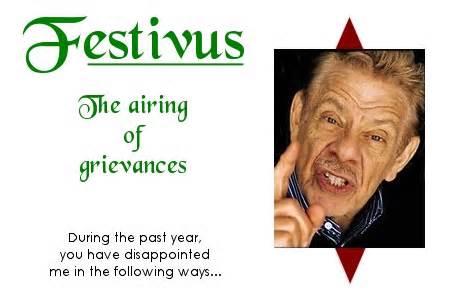
Daniel Lawrence O’Keefe (February 25, 1928 – August 29, 2012) was an editor at Reader’s Digest,[1] author, and the inventor of Festivus, an annual secular holiday now celebrated on December 23.[2] His son, Dan O’Keefe, was a writer for the Seinfeld[3] television show and incorporated the family holiday into an episode of the program,[1] and in 2005 published The Real Festivus.
Why bring this up? Because of Daniel Lawrence O’Keefe we have some great memes for Daniel O’Keefe Chair of the Board of Governors at SFWMD.
check em out.
Need I say more?
well just a little more.
I think Daniel O’Keefe understands our disappointment. My main one is his seeing us as “uneducated” and not taking the time or having respect to sit down and hash this out.

















 cyndi lenz