When will our medical community step and do something about people getting sick and dying in the Indian River Lagoon

When will our medical community step and do something about people getting sick and dying in the Indian River Lagoon?

I just want to say THANK YOU to our TC Palm reporters and also to Eye on Miami for actually paying attention to this issue and being a supportive voice and advocate for our Indian River Lagoon.

DSC_0085

Three years ago we were talking about this. Before I even got involved in the water but doing research for a potential documentary I read reports about people going into the water and getting sick and dying. Then when we got organized and starting talking to each even more information came forward. One of our local citizens has been collecting data but there is really nothing that is out there and a part of our hospital system and health department.

Here is Robert Lord from Martin Memorial talking about our unhealthy water at our rally last year.

Our friend, Cliff Barnes suggested we called it Lagoon water born flesh rot disease after Gov. Scott.  I said “Rick Rot.” Some people said “Rick Scott Rot.”

Some one even invented this.

RIVER_ROT_RX_WEBSITE_PIC_grande

(Here is the website https://www.facebook.com/PrepConsultantsPC/app_410312912374011?hc_location=ufi)

Last year this happened.

http://www.tcpalm.com/news/indian-river-lagoon-bacteria-killed-fort-pierce-man-in-2014_97423759

Bill Benton went swimming in the Indian River Lagoon on a Saturday afternoon. He was dead by Tuesday, a rare fatality from Vibrio vulnificus bacteria.

The bacteria occurs naturally throughout the lagoon year-round, but infections increase in summer, according to researchers at Florida Atlantic University’s Harbor Branch Oceanographic Institute in Fort Pierce.

Benton was among seven people who died from Vibrio vulnificus in Florida in 2014. It’s unknown whether Vibrio vulnificus is to blame in the July 20 death of Port St. Lucie resident David Trudell, two days after a fin fish punctured him while fishing in the lagoon. Doctors attributed his death to the incident, but did not determine what type of bacteria it was.

Then this happened.

http://www.tcpalm.com/franchise/indian-river-lagoon/health/bacteria-from-indian-river-lagoon-fish-fin-puncture-kills-port-st-lucie-man_79674879

We all knew what it was.

“A 65-year-old Port St. Lucie man died Monday, two days after being stuck by a fish fin while fishing in the Indian River Lagoon.

David John Trudell died from a blood infection as a result of a bacteria that entered his body because of the fin prick, said Treasure Coast medical examiner Dr. Roger Mittleman.

The type of bacteria could not be determined, Mittleman said.”

Why were there no blood cultures drawn at the time?

Then it happened to one of our own River Warriors. Because our friend Gayle posted the above article our friend Barb took her husband Bruce to the ER.

She wrote this

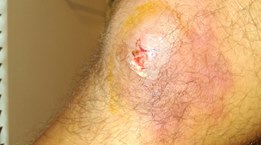
Took Bruce to the ER yesterday for an infected left leg. He had a sore on his knee on Monday, went in the IRL on Wednesday. We took several church families out on our new catamaran and anchored off Sailfish point (near the Walgreen house). Of course they all jumped into the IRL from the deck of the boat.

Yesterday Bruce’s knee and leg was black and swollen, hot to the touch and oozing. He had a fever. He NEVER complains of pain but I forced him to the ER. GOOD thing. The doctor thinks it is a blood infection from the bacteria from the IRL water on Wednesday. We will get the culture back on Monday to see what the bacteria actually is.

Gayle Ryan’s link to the TC Palm article regarding the local man who died within two days of a fish fin puncture bringing in bacteria from the IRL into his system, probably saved Bruce’s life. I wouldn’t have taken a closer second look at Bruce’s knee had I not read her article link. The doctor lanced and drained the “volcano” the size of a grapefruit on his knee. His whole leg was swollen and hot to the touch.

Today Bruce’s leg ‘s swelling is down and it is not throbbing anymore. He is on Bactrim and Keflex. Doctor said he was so correct to come into the ER when he did, could have become so dangerous to Bruce. Thank you Gayle Ryan.”

It looked like this.
11231257_10206985109846931_6511913140618739585_n

Here’s is a great piece from our friend at Eye on Miami.

http://www.eyeonmiami.blogspot.com/2015/07/floridas-water-crisis-impacts-compound.html

“This post on Face Book should remind Miami that the current water crisis is not just one in a series of crises: it is a cumulative event where impacts are compounded. The mismanagement of fresh water resources in South Florida is mainly to benefit the big campaign contributors to state legislators and to Gov. Rick Scott. Big Sugar.

In a just world, state legislators would be made to swim in the Indian River Lagoon, then see how much they like gambling with people’s water to benefit their patrons.”

You got that right  Mista Gimleteye!

DSC_0022

A friend of mine asked me if I would go on the news. I said no. This is not about me. What I will say is our local Health Department and People running the hospital need to read the newspaper. Then they need to come up with a plan to alert the physicians in the area and come up with some sort of tracking system and people need to be warned before they go in the water.  I know that everyone has a lot on their plates but this is something we have to do. What if I didn’t know any of this and my grandson had a cut and I took him in the lagoon and he died?

You can check the salinity level

http://www.tcpalm.com/franchise/indian-river-lagoon/health/worried-about-vibrio-check-salinity-levels

“Water quality sensors in the lagoon and its tributaries can’t detect the deadly bacteria’s presence, but the salinity level is a good indicator of whether there’s Vibrio. The bacteria can’t live in saltwater, but thrives in stagnant, nearshore, freshwater — particularly near rainfall runoff discharges.”

Really so the millions of gallons of freshwater discharges have nothing to do with that? Really?

SFWMD and ACOE you need to be aware. After all we have begged you to fix the issue with the discharges. It comes down to one thing: Salinity of the water. So besides all the other damage that you do we can add killing people to the list.

So we know this

http://www.tcpalm.com/franchise/indian-river-lagoon/health/cuts-are-key-to-infection-by-indian-river-lagoons-deadly-bacteria_66884711

“Healthy people who boat, fish and swim in the Indian River Lagoon are not likely to get a potentially deadly bacterial infection, especially if they take certain precautions, according to a researcher conducting a premier study of Vibrio vulnificus.

It’s people with cuts and weak immune systems like the elderly, infants, alcoholics, diabetics and those with other long-term illnesses who are at most risk and need to take the threat most seriously.”

HEALTHY PEOPLE ARE NOT LIKELY TO GET AN INFECTION! NOT LIKELY.

But

“The people most likely to get it — in this order — are: lagoon fishermen, seafood processors and waders or swimmers.”

http://www.tcpalm.com/opinion/editorials/editorial-health-officials-must-improve-tracking-reporting-of-waterborne-illnesses_15574383

And the longer this vacuum persists, the greater the threat to Treasure Coast residents who swim, boat, wade, paddleboard and fish in the waterway.

“The bacteria, which is also found in estuaries like the St. Lucie and St. Sebastian rivers, occurs naturally and is not linked to pollution, Barbarite said. Quantities vary depending on climatic conditions.”

But it is connected to the Salinity of the water which also is what kills everything else like our oysters. So by forcing millions of  gallons of fresh water down the river into the lagoon the salinity is changed.

“Most likely in spots near freshwater discharges.”

“29.5 percent of cases resulted in deaths (2004-13)”

People affected: Those with Alcohol Abuse, Liver Disease, Diabetes, Heart Disease

I can’t wait to see the spin. Because just two years ago we were assured there was nothing wrong with the water.

http://www.tcpalm.com/opinion/editorials/editorial-health-officials-must-improve-tracking-reporting-of-waterborne-illnesses_15574383

“and the longer this vacuum persists, the greater the threat to Treasure Coast residents who swim, boat, wade, paddleboard and fish in the waterway.

Two recent incidents — one fatal — have ratcheted up the importance of identifying the microbial culprits, case by case, and establishing cause-and-effect relationships between exposure to tainted lagoon water and bacterial infections.”

“Health officials and health care providers need to get ahead of the issue. Given the fact doctors don’t have a protocol for testing or reporting waterborne illnesses, it’s easy to see why so many questions remain unanswered.”

It should be standard procedure for doctors to report all suspected cases of waterborne illnesses to the Florida Department of Health.

Moreover, this information needs to be collected in a database. Over time, this knowledge may reveal trends that prove beneficial in protecting lagoon aficionados and treating those who contract waterborne infections.”

http://www.floridahealth.gov/about-the-department-of-health/about-us/mission-and-vision.html

MISSION :

To protect, promote & improve the health of all people in Florida through integrated state, county, & community efforts.

VISION :

To be the Healthiest State in the Nation

VALUES (ICARE) :

I nnovation: We search for creative solutions and manage resources wisely.

C ollaboration: We use teamwork to achieve common goals & solve problems.

A ccountability: We perform with integrity & respect.

R esponsiveness: We achieve our mission by serving our customers & engaging our partners.

E xcellence: We promote quality outcomes through learning & continuous performance improvement.

” Salt is the key to safe water.”  by Tyler Treadway

I’ll post the link when I can find the article. According to Gabrille Barbarite death are rare but how do we even know this if no one is reporting or logging water born illnesses?  So I would refraise  that to ” We have no earthly idea how many people have gotten sick from the Indian River Lagoon.”

“Some areas of the lagoon are safer than others.”

You can check the LOBO and Kilroy water sensors.

http://sea-birdcoastal.com/lobo

http://www.oceanrecon.org/cfiles/kilroy_manateepocket.cfm

But keep in mind salinity can change with rain or out going tide.

What do we need now?

Our local lawmakers need to all talk to our health departments and our hospitals and doctors and urgent cares and come up with some kind of reporting system.

Warnings need to be posted for people with immune system disorders, alcoholics, people with liver diseases, diabetes, heart disease , the elderly and infants etc. We have this information now. We have a duty to warn people.

Our wonderful Dr Edie Widder from Orca said in this piece that she suspects these cases have gone unreported for years. She also said she does not think that clinics and doctors are not taking the time to culture the bacteria. How hard is that? One Agar plate zoom zoom zoom done! Or a blood culture. 2 second blood draw.

The world has gone a little wild and we have seen it up close and personal this past year with our legislators. Lets not let this  happen with the people are suppose to be taking care of us. I’m sure there is a grant out there that someone can get to do what needs to be done and there are plenty of volunteers in the medical field that would be willing to help.

If we don’t speak up nothing will be done.

Where do we start? Please add your suggestions to this blog post!

Let’s make this happen.
Atrazine: It brings bad things to life!

We spent a lot of time talking about the discharges to our rivers from Lake O. We talked fertilizer. We have a fertilizer ban.

We really don’t talk about pesticides and herbicides and they are everywhere.

Invisible to us.

Today I want to talk about Atrazine.

https://en.wikipedia.org/wiki/Atrazine

“Atrazine is a herbicide of the triazine class. Atrazine is used to prevent pre- and postemergence broadleaf weeds in crops such as maize (corn) and sugarcane and on turf, such as golf courses and residential lawns. It is one of the most widely used herbicides in US] and Australian agriculture.]It was banned in the European Union in 2004, when the EU found groundwater levels exceeding the limits set by regulators, and Syngenta could neither show that this could be prevented nor that these levels were safe.

As of 2001, Atrazine was the most commonly detected pesticide contaminating drinking water in the United States.Studies suggest it is an endocrine disruptor, an agent that can alter the natural hormonal system. In 2006 the U.S. Environmental Protection Agency (EPA) had stated that under the Food Quality Protection Act “the risks associated with the pesticide residues pose a reasonable certainty of no harm”, and in 2007, the EPA said that Atrazine does not adversely affect amphibian sexual development and that no additional testing was warranted. EPA´s 2009 review concluded that “the agency’s scientific bases for its regulation of atrazine are robust and ensure prevention of exposure levels that could lead to reproductive effects in humans.” EPA started a registration review in 2013.

The EPA’s review has been criticized, and the safety of atrazine remains controversial.”

http://www.ncbi.nlm.nih.gov/pubmed/16967834

Int J Occup Environ Health. 2006 Jul-Sep;12(3):260-7.

European Union bans atrazine, while the United States negotiates continued use.

Abstract

“Atrazine is a common agricultural herbicide with endocrine disruptor activity. There is evidence that it interferes with reproduction and development, and may cause cancer. Although the U.S. Environmental Protection Agency (EPA) approved its continued use in October 2003, that same month the European Union (EU) announced a ban of atrazine because of ubiquitous and unpreventable water contamination. The authors reviewed regulatory procedures and government documents, and report efforts by the manufacturer of atrazine, Syngenta, to influence the U.S. atrazine assessment, by submitting flawed scientific data as evidence of no harm, and by meeting repeatedly and privately with EPA to negotiate the government’s regulatory approach. Many of the details of these negotiations continue to be withheld from the public, despite EPA regulations and federal open-government laws that require such decisions to be made in the open.”

PMID:
16967834
[PubMed – indexed for MEDLINE]
http://www.nrdc.org/health/atrazine

Banned in the European Union and clearly linked to harm to wildlife and potentially to humans, the pesticide atrazine provides little benefit to offset its risks. In 2009, NRDC analyzed results of surface water and drinking water monitoring data for atrazine and found pervasive contamination of watersheds and drinking water systems across the Midwest and Southern United States. This May 2010 report summarizes scientific information that has emerged since the publication of our initial report and includes more recent monitoring data.

Approximately 75 percent of stream water and about 40 percent of all groundwater samples from agricultural areas tested in an extensive U.S. Geological Survey study contained atrazine. NRDC found that the U.S. EPA’s inadequate monitoring systems and weak regulations have compounded the problem, allowing levels of atrazine in watersheds and drinking water to peak at extremely high concentrations.

The most recent data confirms that atrazine continues to contaminate watersheds and drinking water. Atrazine was found in 80 percent of drinking water samples taken in 153 public water systems. All twenty watersheds sampled in 2007 and 2008 had detectable levels of atrazine, and sixteen had average concentrations above the level that has been shown to harm plants and wildlife.

Given the pesticide’s limited usefulness and the ease with which safer agricultural methods can be substituted to achieve similar results, NRDC recommends phasing out the use of atrazine, more effective atrazine monitoring, the adoption of farming techniques that can help minimize the use of atrazine and prevent it from running into waterways.”

http://www.panna.org/resources/specific-pesticides/atrazine

Atrazine in drinking water

“Atrazine is one of the most widely used herbicides in the U.S., and is found in 94% of U.S drinking water tested by the USDA — more often than any other pesticide. An estimated 7 million people were exposed to atrazine in their drinking water between 1998 and 2003.

The highest levels of contamination are in the Midwest where it is widely used on corn fields. USGS monitoring shows drinking water concentrations typically spike during the spring and early summer as rains flush the freshly applied herbicide into streams — and into local water supplies.

Data from the EPA’s Atrazine Monitoring Program show that atrazine levels in drinking water can spike above the legal limit of 3 parts per billion in some U.S. water supplies. Although the EPA bases its limit on an annual average (not seasonal peaks), the monitoring results reveal alarming levels of human exposure.”

In Florida

http://sofia.usgs.gov/projects/eco_risk/atrazine_geer03abs.html

To determine the distribution and concentration of atrazine at south Florida sites, multiple water samples were collected from several canals/ditches at each of two agricultural sites every two weeks from February through June, 2002 . Adult toads were collected from two sugarcane agricultural areas Canal Point (CP), and Belle Glade (BG) as well as from a University of Miami pond/canal (reference site with little to no atrazine use or agricultural input) during April-June 2002. Adult Bufo marinus were collected from these three sites: Canal Point (N=55), Belle Glade (N=50), and University of Miami (N=24). Body weight, length, and coloration were recorded, blood was collected, and gonads were removed and weighed. This species is sexually dimorphic, with females having a mottled appearance and males having a solid coloration. Sex was identified as follows: the presence of ovarian tissue and absence of testicular tissue = female; presence of testes and absence of developing eggs, oviduct, and ovarian tissue = normal male; and presence of testes with developing eggs or oviduct or ovarian tissue = intersex . Macroscopic identification of additional testicular anomalies included: segmented testes, abnormal shaped testis, twisted or curled testes, and multiple testes. Gonads from each individual that had testicular tissue were both macroscopically and histologically examined. Blood plasma was analyzed for phospho-lipoprotein (an indirect measure of vitellogenin) and estradiol and testosterone concentrations were analyzed using RIA procedures.

DSC_0020

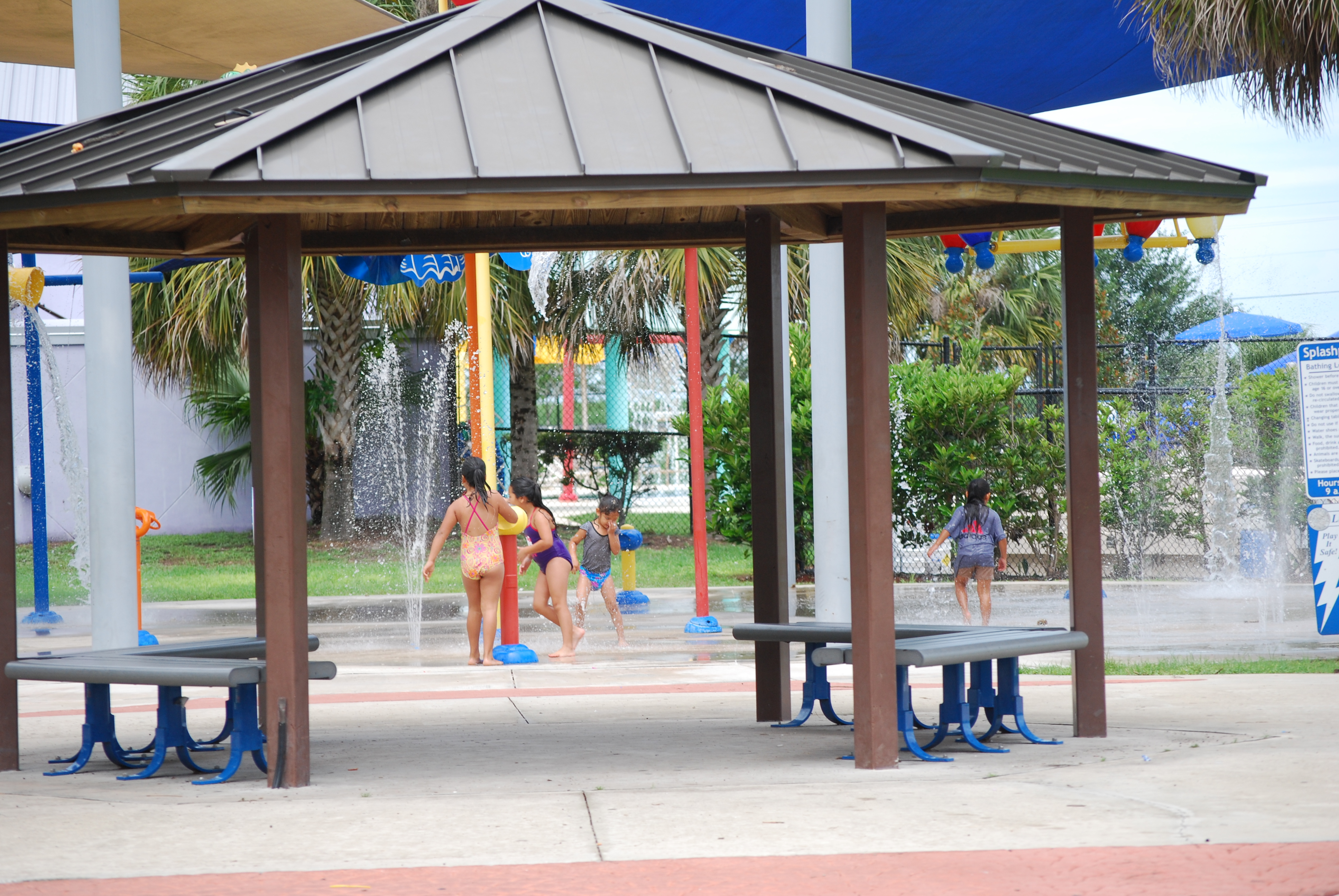
Children at a water park in Belle Glade directly across from a huge sugar cane field.

DSC_0014

Playground at Pioneer Park in Belle Glade directly across from a huge sugar cane field.

Atrazine levels were highest at Canal Point during March, but were highest at Belle Glade in February. B. marinus tadpoles were potentially exposed to atrazine concentrations as high as 20ppb during development at Canal Point and 26ppb at Belle Glade during 2002. Toads collected from the nonagricultural /reference, University of Miami, site exhibited the characteristic gender-specific pattern which correlated to subsequent gonadal morphology and histology. However, all toads collected from both agricultural sites, Belle Glade and Canal Point, exhibited the distinctive female pattern, although subsequent gonadal morphology and histology demonstrated male, intersexed, and female toads. The frequency of males exhibiting “testis abnormalities” was not significantly different among sites. The frequency of intersexed animals was significantly different among sites: 39 percent and 29 percent of the individuals at the agricultural sites, Canal Point and Belle Glade. No individuals from the non-agricultural/reference site were intersexed. The types of abnormal female tissue found in association with testicular tissue varied between CP and BG. Plasma sex steroids did not differ between intersexed and normal males. However, plamsa phospholipoprotein (an indirect indicator of vitellogenin was increased in intersexed males to levels which were similar to those for vitellogenic females.

Sugar cane in Belle Glade

Sugar cane in Belle Glade across from Pioneer Park

The purpose of this preliminary study was to determine if animals found in sugarcane exhibit reproductive abnormalities similar to those seen in African Clawed Frogs exposed to atrazine in the laboratory. The incidence of testicular anomalies, other than intersex were similar across sites. However, the incidence of intersex was increased for both agricultural sites as compared to the non-agricultural/reference site. Nonetheless, Bufo marinus adults were active and breeding at all sites. Data suggests that agricultural exposure, including exposure to atrazine, may explain the differences in the percent of intersexed individuals and length of oocytes between Canal Point and Belle Glade sites. However, we can not conclude that atrazine is responsible for these abnormalities, since other agricultural chemcials are likely present at both sites. In addition, water quality analyses were not conducted for the non-agricultural/reference site (University of Miami) and exposure to atrazine at this site is unknown. The University of Miami site is expected to have low levels of atrazine, but is probably not atrazine free. Further research should be conducted to determine whether atrazine is capable of causing the effects we have documented in B. marinus under controlled laboratory conditions as well as expanded field studies of these and other sites. Nonetheless, these results indicate an increased incidence of intersex in toads exposed to agricultural contaminants. The implications of these data to future and ongoing restoration is unknown, however, a redistribution of water resources in the greater everglades ecosystem could result in additional exposures for amphibian populations in this sensitive ecosystem.

Contact: Timothy S. Gross, USGS-FISC, 7920 NW 71st St., Gainesville, FL 32653., Phone: 352-378-8181 Ext 323, FAX: 352-378-4956, Tim_s_gross@usgs.gov”

A Million people a day are exposed to Atrazine. Atrazine is used in sugar cane fields.  Read this or watch the videos and weep.

https://en.wikipedia.org/wiki/Tyrone_Hayes

In 1997, the consulting firm EcoRisk, Inc. paid Hayes to join a panel of experts conducting studies for Novartis (later Syngenta) on the herbicide atrazine.[1][3] When Hayes’ research found unexpected toxicities for atrazine, he reported them to the panel, however the panel and company were resistant to his findings. He wanted to repeat his work to validate it but Novartis refused funding for further research; he resigned from the panel and obtained other funding to repeat the experiments.[1][3]

In 2002 Hayes published findings that he says replicate what he found while he was working for EcoRisk,[1] that developing male African clawed frogs and leopard frogs exhibited female characteristics after exposure to atrazine, first in the Proceedings of the National Academy of Sciences (PNAS)[4] and then in Nature.[5][6]

In 2007, Hayes was a co-author on a paper that detailed atrazine inducing mammary and prostate cancer in laboratory rodents and highlighted atrazine as a potential cause of reproductive cancers in humans.[7] At a presentation to the U.S. National Institute of Environmental Health Sciences in 2007, Hayes presented results of his studies that showed chemical castration in frogs; individuals of both sexes had developed bisexual reproductive organs.

In one of the 2005 e-mails obtained by class-action lawsuit plaintiffs, the company’s communications consultants had written about plans to track Hayes’ speaking engagements and prepare audiences with Syngenta’s counterpoints to Hayes’s message on atrazine. Syngenta subsequently stated that many of the documents unsealed in the lawsuits refer to “ideas that were never implemented.”,

The Bookshelf by Darcy Flierl

Guest Blogger. Please enjoy the incredible writing of Darcy Fileri

The Bookshelf

by Darcy Flierl

Who would think a silly, made from plywood, spray black painted bookshelf, could mean so much? I’ve had it since I was 17 years old. It was given to me when I was provided my own “half a house” in our residence. I had my own bathroom, bedroom, TV room and living room furnished with a very cool papason couch and chair. I even had a private entrance.

I can see the room in my mind’s eye. The coffee and end tables, black granite and iron décored, were heavy and stable. They had been my parents at one time. My mom had acquired them while working at a furniture store, several years before I was born. She enjoyed decorating my room with a spree at Pier 1 Imports. She found this great table with a book shelf as its base and even found a bookshelf tapestry to match it. I really miss the large green hand carved fish that sat firmly on one of the granite tables. I often wonder which move I decided I know longer needed it? I have a vague recollection of a fin breaking and being glued back on and then breaking again and just giving up on it.

Continue reading

Fruit Stands are Ripe for Learning

Fruit Stands are Ripe for Learning

by Darcy Flierl

It was a Saturday unlike other Saturdays in Martin County. The cool temperatures offered a relief of the summer months which extended well into our fall season. Families were moved to begin the Christmas season. Perhaps that is why so many people felt compelled to stop at my six year old daughters avocado stand she set up with her daddy.

She had been begging us for months to let her start a “We Help Animals Club” that would result in her getting   “clients” that would allow her to walk their dogs on a regular basis. Of course that means, my husband and I would be walking these dogs with her on a regular basis – a little too much of a commitment when we both already have full time careers.

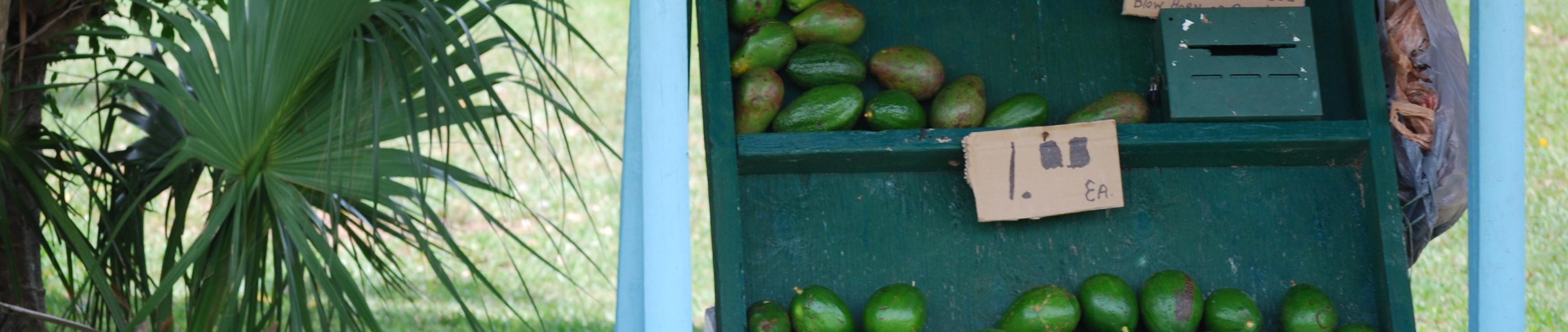
The idea of selling avocados was a direct result of our lemon tree not having any lemons. There we were with my daughter behind a table with a hundred or so avocados piled high and her daddy on the corner holding our homemade sign that read, “Avocados $1.00”. Car after car, people would stop to buy fresh produce from my little first grader. At times she had a line of 5 people deep wanting to purchase her goods. I watched as she would greet her customer, find out their needs, discuss the price of their purchase, take their money and extend her gratitude- which was often her jumping up and down as she would stuff the dollars into her pink fluffy piggy bank that sat on the table.   Some people would stop just to see what this little girl was selling and would decline the avocados. My daughter learned so many lessons with this experience.

Avocado Stand

This avocado stand was a lesson in learning about the joy of working, how to talk with people, the art of talking about money, how to accept rejection and ultimately a lesson in gratitude. Maybe the people most grateful were her parents. These passer -byers took the time to pull over, turn around, do U-turns and walk a block or so, simply to support a little girl’s efforts. I wonder if they know that on Saturday they made our community a better place to live, that they enriched the life of a child and a family, that they took time to make a connection and develop the strengths of a young girl.

I encourage you all to build positive relationships with young people and support their ideas. You can do this by letting the young boy down the street mow your lawn, by learning the names of the kids in your neighborhood and taking the time to greet them by name or simply stop by the next lemonade stand or in our case, avocado stand.

My daughter sold out of Avocados that day and with each avocado sold-she became a stronger, more powerful, healthier and valuable part of our community.

—–

Darcy Flierl is a Licensed Clinical Social Worker, Certified Addictions Professional, and Certified Yoga Teacher currently offering individual and family psychotherapy in Stuart, Florida.  She also enjoys teaching in the Human Services Department as an Adjunct Instructor for Indian River State College and is Consultant for Non Profits along the Treasure Coast.

She has held board positions on for a variety of local and statewide agencies from the Department of Juvenile Justice’s State Advisory Group to CHARACTER COUNTS! and others.  Darcy has received a variety of awards for her community work such as;  Soroptimist’s Rising Star Award, the Community Champion Award from the United Way and for community advocacy from the Tobacco Free Partnership and was a 2013 Nominee as a Woman of Distinction.

Besides working to make Martin County a healthier place, she donates her time doing River Advocacy for the Indian River Lagoon and raising awareness about many issues effecting young people and families.  She treasures her time with her husband, and children attending local events and enjoying Martin County’s recreational opportunities.

For more information about Darcy you can visit her website at:  http://www.darcyflierl.com

headshot