Is Hillsborough NC haunted?
According to the internet the town of Hillsborough NC is indeed haunted. In fact it is widely considered one of the states most haunted and historically active towns. Established in 1754, it has a deep and turbulent history stretching back to indigenous Occaneechi settlements, colonial conflicts, the Revolutionary War, and the Civil War.
Notable Hauntings and Lore
Poplar Hill
- Original Construction: Built around 1794 by Scottish immigrant James Hogg on land near the Eno River that once belonged to the Occaneechi tribe.
- The Carr Family: In 1891, wealthy Chapel Hill industrialist and former Confederate soldier Julian Shakespeare Carr and his wife, Nannie Graham Parrish Carr, bought the property. Nannie called the estate Poplar Hill.
- Redesign: The Carrs hired Jules Gilmer Körner (also known for creating the Bull Durham tobacco advertising persona “Reuben Rink”) to remodel the plain farmhouse into a Greek Revival-style plantation home with a front porch colonnade and French windows. Nannie Carr died in the house in August 1915.
The Paranormal Reputation (“Nannie”)
- The Maxwell Tenancy: The home gained modern notoriety after musician Tom Maxwell and his family moved into the property in September 2014, nicknaming the house “Nannie” after Nannie Carr.
- Reported Hauntings: After experiencing relentless unexplained phenomena—including disembodied voices, phantom footsteps, and a pervasive sense of dread—the family broke their lease and moved out less than a year later.
- Media Coverage: Maxwell detailed the experience in a viral essay for the Bitter Southerner titled “We Salted Nannie: A True Southern Ghost Story,” which brought widespread attention to the property’s ghost lore and dark history.
The Rock House
Located on Laurence Road in Hillsborough, North Carolina.
Construction: Built between 1928 and 1929 by Mack and Julie Rigsbee.
Architecture: Made of white flint rubble rock with rope-and-grape-vine style mortar, a steeply pitched hip roof, gabled dormers, half-timbering, and a slate front terrace. The property also features matching white flint outbuildings, including a detached two-car garage, a pump house, an outdoor swimming pool, and a low stone wall.
Prohibition Lore: Local history and lore associate Mack Rigsbee with Prohibition-era bootlegging (such as distributing East Lake Rye). Architectural anomalies like concealed roof tanks, oversized bathtub drains, and hidden storage areas fueled rumors of moonshine production or storage. Rigsbee eventually defaulted on his mortgage in 1931.
The Regulators
The haunting and history of the Regulators in Hillsborough, North Carolina, stem from the 1771 War of Regulation and the subsequent executions.
The History: The Regulators and Hillsborough
Memorials & Markers: The site of the hangings is marked by a 1963 marble slab monument by the N.C. Society of the Colonial Dames near Hughes Academy, as well as the official Regulators Hanged Historical Marker (G-23) at 110 S. Churton Street.
The Uprising: From 1768 to 1771, backcountry North Carolina farmers known as “Regulators” rebelled against royal governor William Tryon, corrupt sheriffs, excessive taxes, and illegal fees.
The Defeat & Hangings: After their defeat at the Battle of Alamance on May 16–17, 1771, six Regulators—Benjamin Merrill, Captain Robert Messer, Robert Matear, James Pugh, and two unnamed men—were publicly hanged in Hillsborough on June 19, 1771.
Ghost Tours
You can explore the town’s history and reported spirits firsthand through guided experiences:
- Haunted Hillsborough Tours: A 2-hour, 1.5-mile guided walking tour covering downtown historic sites, cemeteries, and execution locations, led by local historical guides. Tours typically run on Friday and Saturday evenings, with tickets priced around $12.50 for adults.
- The Haunting Hour
Hillsborough, the oldest town in the Triangle, has a long history full of mayhem, mystery, and… murder?! Join the Alliance for Historic Hillsborough (with help from the Orange Community Players) for the annual Haunting Hour performances in the downtown historic district where you may encounter some ghoulish former residents!
Call the Visitors Center for dates, time, and current ticket pricing (previous year pricing: Child (12 and under) $10, Adult $20
150 East King Street
Starts at Visitors Center
Hillsborough, NC 27278
Phone: 919.732.7741
Haint Doors
Haint blue refers to the regional Southern and Lowcounty tradition of painting porch ceilings, doors and window trim a soft shade of blue-green to ward off malevolent spirits known as haints.
A what?
A haint is a restless, malicious ghost or spirit from Southern United States Folklore,rooted heavily in Gullah Geechee and African-American traditions.
Origins: The term comes from Gullah Geechee culture (derived from the word “haunt” or African/European linguistic roots like the Welsh haint or “hanter”.
Top Haunted Locations in North Carolina
The Devil’s Tramping Ground (Chatham County): A barren 15-to-40-foot circle in the woods near Bear Creek where local folklore claims the devil paces at night. Legend says nothing will grow within the circle, and objects placed inside overnight are supposedly thrown out.
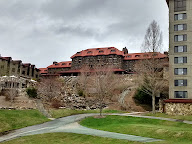
The Omni Grove Park Inn (Asheville): A historic 1913 hotel famously haunted by the “Pink Lady”—the apparition of a young woman in a pink ball gown who is frequently reported floating or lingering in Room 545.
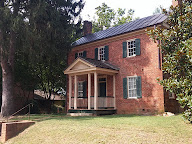
The Brookstown Inn (Winston-Salem): Built in 1837 as a cotton mill and later converted into a hotel, this site is widely associated with the ghost of Sally (a mill worker pushed down an elevator shaft) and sightings of a woman in a Victorian dress
.

Battleship North Carolina (Wilmington): A decorated World War II naval museum where staff, caretakers, and visitors have reported phantom footsteps, hatch doors slamming, and shadow figures of sailors.

Ocracoke Island (Outer Banks): Often cited as one of the most haunted coastal areas due to its dense concentration of public, family, and military cemeteries—along with the ghost of the pirate Blackbeard (Edward Teach), who was beheaded in the local waters in 1718.

Helen’s Bridge (Asheville): A stone access bridge built in 1909 near the historic Zealandia mansion, tied to tragic local legends of a mother searching for her lost daughter.

Lydia’s Bridge (Alamance County): A well-documented roadside legend on Lydia’s Mill Road where drivers have reported picking up a young woman in a white dress who vanishes from the back seat before reaching her destination. Reddit·r/NorthCarolina +7

